The Clearing with Katherine May
Poorna Bell’s New Zealand vista
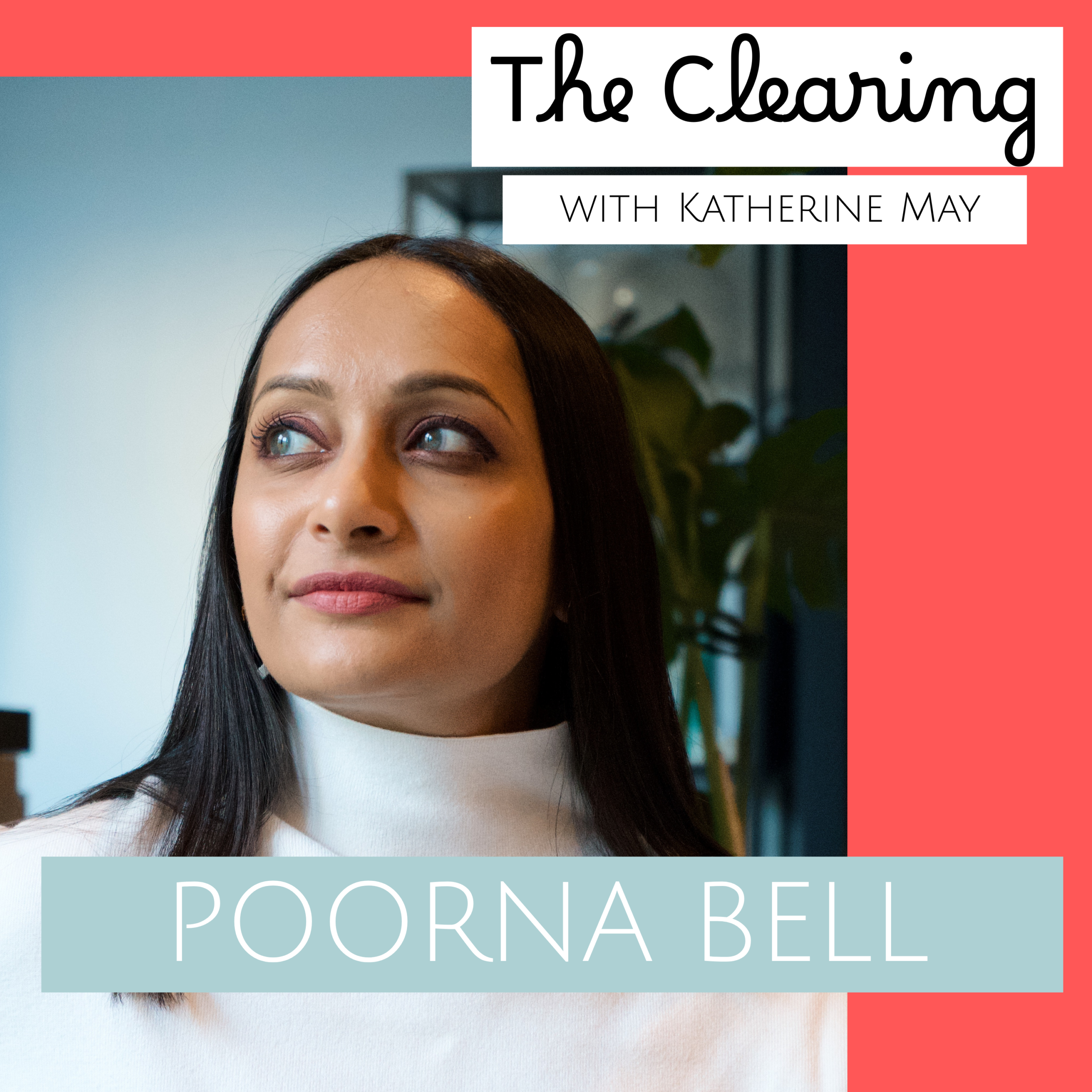
Floor to ceiling windows overlooking a temperate blue ocean off the coast of New Zealand is where this week’s guest, journalist and author Poorna Bell, dreams of rest and retreat.
Since the death of her husband in 2015, Poorna has become well-versed in making the most of the everyday. As a result this is a conversation filled with the joy of small things. From relishing the prospect of unstructured days, to finding unquantified pleasure in movement. From an appreciation of the smell of toast to being able to say no to picnics. And why she never wants to receive another present again. Ever.
Transcript
Please note this is an automated transcript and as a result it may contain errors
Katherine May: [00:00:00] Hello, Katherine here. That sounded ominous. Sorry. It’s probably ’cause I feel quite ominous. Uh, you catch me in the middle of packing to go away. A, I am heading to Sri Lanka for a few days, uh, which is very exciting to go to the Ceylon Literary Festival. Such glamor is rare in my world, trust me. But I’m owning this ’cause it’s great.
I can’t wait. Ah, and uh, the worst bit is the packing, isn’t it? It just makes me so anxious. I, uh, well, I have list upon lists stored in my phone. I have a list for every eventuality and every time I pack a go somewhere, I go through the [00:01:00] checklist and, uh, worry. You know, I just worry. I worry about not having the right things.
I worry about missing the important things. I worry about not having enough clothes. I worry about having too many clothes. I am always convinced that my case is gonna be too heavy and they’re gonna send me back again somehow, and I’ll have to not get on the plane. I don’t know, I can’t make sense of all the things I worry about.
It’s just worry itself. It’s such a long way to go. It’s such a big thing to do. And I am here to tell you, I am not used to the concept of going somewhere hot in the middle of winter. It’s not, it’s alien to me as a concept. Um, and I think I’m just a bit unclear about how to truly handle it anyway. I have a full case, only one case.
That’s good, [00:02:00] right? I’m only going for five days. Uh, only one hand. Luggage bag. Also a key principle of my packing because if I have too many things about me, I will lose something and I think I’m nearly good to go. I think my taxi comes at six 30 tomorrow morning and just doing this really got me thinking about the podcast and the questions that I ask my guests, which are all about going away, getting away from it all, about taking some time to yourself and being not just somewhere else but someone else for a while.
And it just made me think that we don’t often acknowledge the difficult parts of travel, the stress, the way that what seems so [00:03:00] tantalizingly different in prospects can feel different in a very challenging way. When we actually get there, it’s funny because as you or as I pack my case, I couldn’t talk for everybody else, but as I pack my case, I feel like I’m making a set of decisions about who I am and how I represent myself.
So often, I pack a completely different set of clothes to the clothes that I wear every day. And what am I doing there? I wonder, am I trying to lie about myself to present a different kind of personal together, or am I trying to tell a truth that I don’t feel comes across? Most of the time it’s. Of course compounded because of these things.
She says, [00:04:00] just tucking an extra dress into her case that she had decided not to pack before. We are meeting new people quite often, and so it’s a chance for reinvention, but the problem is our tired old selves often rear up once we are there, and it’s not quite the same as we hoped. Anyway, this all leads really nicely to today’s episode, uh, which is the wonderful porn of Be Who many of you will know from her brilliant journalism, um, including Her Substack, which is called, as I was saying, great title.
I think one of the most well-known issues that she writes about is grief, uh, particularly as she wrote about her husband’s suicide. This is an episode that is quite [00:05:00] fun, quite light, but I just wanted to let you know that we do touch on eating disorders somewhere along the way. Uh, nothing particularly heavy, but if that feels tricky for you today, then please feel free to avoid it.
But instead, I can promise you a lovely episode about the joys of getting away from it all. Pauler and I share the pleasure of just gazing out over the sea, uh, which is a joy to talk about for me. Uh, and it really kind of put me in a very calm space. Um, but we also talk a lot about both of our desire to move our bodies, but also to escape the idea of self-improvement behind that.
Just doing things for the joy. I think joy is the word that comes across a lot in this episode, actually, and I will hand it over to you for your judgment, but yeah, maybe this is a good one to lie back, not think about packing
Poorna Bell: a [00:06:00] suitcase and really immerse yourself in. I’ll be back after the podcast to say goodbye hopefully with everything zipped up.
Katherine May: Pauler, welcome to The Clearing. It’s so lovely to have you here. Um, how are you feeling at the moment? Are you in need of a rest in general, or are you feeling very refreshed?
Poorna Bell: Um, not at the moment. Uh, wait, I just realized that sounded like I was saying I wasn’t refreshed. I actually do feel relatively refreshed because um, I’ve just come back from holiday.
Oh, nice. Um, however that was, it was not a relaxing holiday, felt like, um, it felt like being in an immersive experience around sleep deprivation. ’cause I was visiting family in India and, um. Near my parents’ flat, which is an cul-de-sac, which you would assume would be really quiet. Um, there are some very aggressive church bells that go off at 5:00 AM [00:07:00] then, then there’s this enormous school playground that kicks off at 6:00 AM and they have a cleaner who comes in to help out from time to time at 7:00 AM So I basically, I didn’t sleep.
I didn’t sleep for about 10 days, Katherine, but
Katherine May: Okay, okay.
Poorna Bell: Yeah. But when I came back, I slept for about the first night. I had about 14 or 15 hours. I don’t,
Katherine May: wow.
Poorna Bell: Yeah. I feel like I went into a different dimension, but that sleep just, I think fixed my brain and I’ve slept really well since then. So I feel really fresh.
Katherine May: That’s great. Are you the kind of person who can do that big catch up sleep? Is that unusual for you? Yeah. Yeah. That’s amazing.
Poorna Bell: Yeah. I’ve, I’ve, um, I mean, I always worry about jinxing myself, but I’ve always been a good sleeper. And even when I’ve got stuff going on that’s deeply stressful or worrying, um, I think it’s my superpower.
I can always get to sleep at some point. Yeah.
Katherine May: How lovely. I really, I’m [00:08:00] pretty good at getting to sleep.
Poorna Bell: Mm-hmm.
Katherine May: Staying asleep is more of a challenge, like, you know, have that look kind of middle of the night meander through my subconscious that is, uh, not always that fun, but, um, but I, I am really envy people that can do long sleeps.
’cause I just can’t, I’m a, I’m awake. Uh, I’d be awake before your church bells anyway. I’d be like, oh, hi church bells. You know. It must be so nice. So I, you know, if I get overtired I’ve gotta go to bed really early to get along sleeping because I’m gonna be up in the morning.
Poorna Bell: Yeah. I mean I definitely feel the older I’ve gotten, I can’t sleep in really past a certain time.
Katherine May: Yeah.
Poorna Bell: But I think that when I, like when my body actually really needs sleep, you know, like when it needs to catch up on things, it’s like this switch goes off and it just is able to do it. But also because everyone’s very keen to tell you what their tips are of how to get over jet lag and [00:09:00] I just need to sleep as much as possible until my brain feels okay and then it’s fine.
So, yeah,
Katherine May: that, that sounds very reasonable.
Poorna Bell: Yeah.
Katherine May: So tell me, we are gonna take you into the clearing in a minute, but are you the kind of person that gets away from it all quite often? Are you kind of, I dunno, the sort of person that craves solitude or, or do you just carry on like so many people seem to just carry on through the year, which is.
Interesting to me.
Poorna Bell: I think I am, I’m a bit of both, so I feel like in recent years I haven’t had as much time, let’s say for example, traveling or taking myself away for, um, so when I say solo trips, I mean the kind of trips that really take you out into nature, you know, where there’s not really much of anything around.
And, and I think that part of that was during w was I think caused by the pandemic. And I think that before the pandemic I [00:10:00] could spend really, really long periods like that alone traveling. And after that, I just felt. I could do it for maybe a week, but anything longer than that, I just felt quite uncomfortable.
Um,
Katherine May: that’s really interesting.
Poorna Bell: Yeah. Yeah. And I think that in the last couple of years, I think also because I’ve just wanted to spend time with family and friends, um, it, it has usually always been with someone else apart from the odd solo trip here and there. But I think it’s funny you mention this, ’cause my 2026 intention is to do more where I’m just taking myself out to somewhere that’s just a bit quiet and a bit more outdoorsy and it doesn’t have to be, you know, like a really expensive, um, adventure trip or anything like that.
It can literally be like two days maybe somewhere. Mm-hmm.
Katherine May: That’s so lovely. I, um, I interviewed Pico IA last year and he, I think it’s every 13 weeks he goes on a retreat. I, I could be wrong [00:11:00] about that number. But he just has this rhythm of, and he retreats to a monastery in the hills in California, and it sounds absolutely idyllic.
Spends several days in complete silence. Not writing necessarily, not kind of trying to be productive, but just resetting. Um, I, I aspire to that kind of rhythm. I mean, life is, you know, life is busy and it’s hard to do. Um, but I’m, I’m interested to know, because actually you’ve written a lot about becoming single, um, in, in not quite your middle years, but as you were, you know, thinking you were maybe not, not about to, um,
Poorna Bell: yeah.
Katherine May: What’s, what’s it like as a, a sort of solo traveler to retreat? Does it always feel safe to you?
Poorna Bell: It depends on, I think the type of travel that I do. I think that, um. What I, I’ve done like various [00:12:00] situations of it, and I’ve, I’ve sort of arrived at a version of it that makes me feel comfortable. And I think that I used to be a travel, uh, writer and a travel editor, you know, um, many years ago, uh, earlier on in my career.
And there was this real, um, romantic romanticism around that kind of travel writing where you do, you, you go off the beaten track and you’d have like predominantly male travel journalists, like talk about, you know, just bragging about all of these places, right? And so it kind of fix this idea in my head that that’s what authentic travel was, that you would just go somewhere with like your belongings not on your back, the end of the stick.
Yeah. And then you just like see where the wind takes you and, okay, cool. Maybe that works for some people, but that doesn’t work for me. And I, I definitely don’t really think it works for. And some women might be okay doing that, but I just think that for me, as a solo traveler, [00:13:00] I, I need to feel like as if someone knows where I am, that I’ve got some form of like a phone on me or, you know, safety is definitely, um, something that’s at the, for forefront of my mind.
Yeah. And just being comfortable. Like, you know, some people will say things like, you know, oh, when you dine now alone solo, you, you shouldn’t take your phone with you or just do the whole point of it is that you do what you want. You know, you don’t, you don’t have to, there’s no
Katherine May: like, yeah.
Poorna Bell: All through style book that you have to take off and a adhere to you.
Just the whole point of solo travel is you do exactly what you want, when you want to, according to the version of it that makes you feel comfortable. So for me, when I go to remote places or I go and do something adventure, travely. I prefer to do some part of it where I’m doing it with a group, like a talk, whether it’s like a guided thing or whatever it
Katherine May: is.
Yes. Yeah.
Poorna Bell: Um, if I’m not [00:14:00] doing any of that, then I prefer to be in places like cities where everything is accessible and, you know, I, I feel kind of like held by it so I can dip in and dip out as much as I want. But I think I sort of learned the hard way that, like, that, that feeling of being remote where I don’t have access to anything, uh, that’s not a comfortable place for me.
I want to know that there’s a, there’s some sense of infrastructure around me. I think more
Katherine May: of a romantic idea than, than in the practice. That makes loads of sense to me. Well. I am really excited to know what, what your vision of a dream retreat will therefore be. Um, so welcome to my clearing. Um, it’s, it’s whatever clearing you want it to be.
So describe the landscape we find ourselves in as you head to the, the place you dream of to truly get away from it all.
Poorna Bell: I think the, the presence of the ocean of the sea is very, very important. [00:15:00]
Katherine May: A hundred percent.
Poorna Bell: Yeah. Um, I think any kind of dwelling that sits within view of the sea, something with floor to ceiling windows where it looks like the sea is, or it’s almost just a portal into that like wide open space.
Katherine May: Yeah. Yeah. How lovely. Um, so, so we are looking at over what sea is it though, because that, that’s such a variation, isn’t it? Like it, I’m, I live by the, well, the sort of channel stroke North Sea, um, which is maybe not the most, uh, beautiful Blue Sea to look over. What sea would you be staring over?
Poorna Bell: Um, it definitely is not the North Sea.
I can,
Katherine May: I won’t tell that
Poorna Bell: personally.
Katherine May: It’s
Poorna Bell: fine. I can say categorically it’s not the North Sea and yeah, it’s, it’s not, it’s not, you know, anything like the, um, [00:16:00] the Atlantic or, or it, it needs to have a bit of warmth to it. Um, not necessarily something so warm as, um, I don’t know, like somewhere that I visit very often is Thailand, so, so maybe not something as warm and as blue as that sea.
Um, if I, in my mind’s eye, it’s the kind of seed that I would maybe. Sea around New Zealand, possibly on a summer’s day. Okay.
Katherine May: Okay. So I amma, I’ve never been to New Zealand tragically, um, and I hope to rectify that one day, but I imagine that sea is still quite wavy and crashy, but also quite clear and, and kind of very clean, I think would be my vision of that.
Poorna Bell: Yeah, it um, I think the reason why that’s my reference point is because a lot of solo travel that I did, uh, where I just sort of hired a car and just went by myself and, and into some pretty remote places, and that is [00:17:00] a country that I actually feel quite safe doing that, um, in, is that was the kind of sea that I would, I, I would come across quite a lot and.
NN again, not to disparage the North Sea too much, but
Katherine May: the North Sea, that’s sea. That’s fine. The North Sea can take it. It’s
Poorna Bell: fine. Yeah. Like the North Sea, like literally feels that it’s got razor blades hidden, you know, beneath the waves. That’s, that’s what it feels like to me.
Katherine May: Yeah. I think we have to take that on the chin.
I mean, I think Southern Water can, uh, can take some of that responsibility.
Poorna Bell: Yeah. Yeah. So, so for me, a New Zealand sea has, has been both. It’s been something that is warm enough for me to swim in, which I have done. But it’s also, it is something that yeah, can sometimes have a bit of bite to it, you know?
And depending on which part of the coastline you’re on, it can be a bit crashy, but sometimes it can be really still and almost like a mirror. And then I think [00:18:00] for me, when I think about that space, I’m just sort of like looking out onto this expanse and there’s just sunlight, you know, hitting the water in.
A million different ways that just feels really, really calming.
Katherine May: This sounds gorgeous. Um, yeah. You said that your, your dwelling would have floor to ceiling windows, which I love. Tell me a bit more about it. Are we, are we cabining or are we spa hoteling here?
Poorna Bell: Definitely a cabin. Um, I would say that it feels to me like a w uh, even though I don’t know how well it will hold up against the elements or the practicality of it, but like a wooden cabin with, you know, a couple of bedrooms and like a really large open space, um, that kind of comprises of a kitchen and a living room and.
Isn’t like super low [00:19:00] ceiling, but you know, is, is cozy enough? ’cause I, I didn’t realize this until recently. I am really not a fan of high ceilings.
Katherine May: Interesting.
Poorna Bell: Yeah, I know. People love them. People love them. No, I’m really not. No.
Katherine May: You like to feel enclosed and held, I guess, in your space. Yeah,
Poorna Bell: I do. Yeah,
Katherine May: I understand that.
Poorna Bell: Yeah, I was just, I was watching, um, I’m sort of obsessed with like Carrie Bradshaw’s house in like the last season of Van, just like that. But at the same time, I would hate to live somewhere like that. Like my sister and I were debating whether or not we’d want to live somewhere like that. And we were just like, it’s just too big.
Um, which is interesting for me to know because I always thought I’d want somewhere huge and the answer is no. You
Katherine May: know, we grow up, you know, you’re, you are almost trained as a child. Say, when I grow up, I want to live in a mansion. I mean, I’m not really sure what a mansion is anymore, but it’s. Actually, you know, there are practical things about that that [00:20:00] I think now, like I don’t wanna clean any bigger house than I have already.
I can’t keep up, I couldn’t manage a bigger garden. I, but also just the sense of waste that we are supposed to aspire to. I, I just make a mess in more rooms. I’m not sure if it improved my life at all, really.
Poorna Bell: No. And the, this is gonna be such a bizarre reference given that this is so opposite to your demographic, but I was listening to this podcast where Craig, David was, was talking, we know Craig David we’re okay.
I know
Katherine May: totally from the nineties in, in all fairness. But
Poorna Bell: I think he, he was talking about this period of his life where he literally just lived in a hotel room, not like. It wasn’t a suite, it wasn’t like a big hotel room. It was like a very small, enclosed space while he was, I think writing or recording or something and someone said to him, but you [00:21:00] could afford to be anywhere and do anything.
And I think it was something about, it was about the dimensions and it was about kind of feeling held within that space. Yeah. And I, I think the idea of having space in a house where I don’t go there regularly really unsettles for me. I don’t, I
Katherine May: know, yeah. There’s, there’s something almost like haunted house about having, yeah.
About not being able to master the space, you know, not being able to kind of be conscious of it all at once. No, I, I totally get that with those high ceilings too. You know, it start to echo. Okay, so we’re in this, I mean, we’re in this gorgeous cabin, amazing view. What kind of thing are you doing during this retreat?
What does rest look like to you?
Poorna Bell: Um, I think rest to me is having a day where like [00:22:00] nothing needs to happen in it by a particular time. So there’s no appointments in this day, you know, um, things. It doesn’t mean that I don’t do things in the day, but it means that they happen at the pace that I naturally feel that I want to move within.
And I had a day like this, um, I trialed this with my sister actually. We had a day where we had to get somewhere and then do a couple of things. But we, we just did it at our own pace, and it was the most relaxed, it was like one of the best days I think I’ve ever had. And it wasn’t like anything spectacular happened in that day, you know?
Katherine May: Yeah.
Poorna Bell: But it, it was just like, as an anchor point for rest, I think. Um, that to me was, that to me was, and I still think about that day whenever I try and recreate a day of rest for myself, I’m like, remember when you had that day when a [00:23:00] few things were planned, but you didn’t have to do them by a particular time?
Like, let’s just do that.
Katherine May: That’s, that’s like escaping adulthood. That feeling to me, just
Poorna Bell: the, yeah,
Katherine May: I dunno about you, but whenever my calendar is full, I just get the absolute dreads. Like, it doesn’t, they don’t have to be bad things, but just the kind of, the sense that I haven’t got any agency over my time for the entire day.
I just, I hate that feeling.
Poorna Bell: Yeah, I, I agree. And I think conversely, when I don’t have anything planned, like I live alone and I really love the space that I live in, and I love the, I just love the whole vibe of it. It’s like my favorite place in the entire world.
Katherine May: That’s great. That’s how it should feel.
Poorna Bell: Thanks. I mean, it’s taken a very long time to, to realize that, but I think it’s the place that I can’t wait to spend time in, and it’s the place that I can’t wait to get back to. And so I’m already looking [00:24:00] ahead to when can I have a day where I’m at home and I don’t have any plans. And that feels like, it feels like a treat almost.
Katherine May: Yeah.
Poorna Bell: Um, yeah. So, so I would say that if in this sort of space, this kind of imaginary space, I would say that I love making breakfast. So it would include some form of just a really slow breakfast.
Katherine May: Lovely. What, what sort of breakfast are we talking?
Poorna Bell: I really love eggs. So it would be something with like either eggs, um, and bacon or smoked salmon or toast.
I love the smell of toast, so it would be something, smell
Katherine May: of toast is the best smell. Yeah.
Poorna Bell: Um, and even though, I mean, I love reading, but I would say that I find it really difficult to just, you know, how some people like during the day will go, okay, I’m just gonna spend my day reading.
Katherine May: Yeah.
Poorna Bell: [00:25:00] Unless I’m on holiday.
I find it really difficult to, to do that. So reading is always something I do before I go to bed usually.
Katherine May: Yeah.
Poorna Bell: I would say during the day it would probably be a mixture of, especially if we are by the sea. Um, I love kayaking and I love paddleboarding, so it would probably be something like that.
Katherine May: Yeah, you are very fit, aren’t you?
I mean, you’re probably like, no, no, but you, but you are very fit. Like I, I get the sense that you’ll need to be in motion to, to feel satisfied.
Poorna Bell: Yes. Yeah. Yeah. I, I would say that something that involves something that involves moving myself, um, or some kind of interaction with the landscape, I think is really important to me.
I get, I get a lot of joy out of it, and I think that it’s very, it’s, I’ve learned to appreciate that not [00:26:00] everyone loves that. For example, I had a friend, I have a friend rather, who for a week, uh, over Christmas, she didn’t leave her house at all, like she did not. She did not leave her house or her sofa or her bed, and that was an amazing time for her.
I think for me,
Katherine May: I would die.
Poorna Bell: I would die. Yeah. I, I would die. I, I couldn’t, I couldn’t fathom that. I couldn’t imagine it, but I also feel like the kind of movement that I do, oh, this is gonna sound really judgemental, but it’s really not meant to be. It’s because I genuinely enjoy it and need to, versus some people that I know who will go, oh, okay, I’ve gotta go for a walk because I have to work off.
Katherine May: Right? Yeah.
Poorna Bell: This dinner I had, or, you know, and, and I, I, I just don’t like that at all. I just, I, I hate that actually, and I don’t like that [00:27:00] energy around me, and I just think. I because, because the energy ends up being really frantic and really hectic and I’m just like, do that on your own time. But the walk that I’m gonna go on, I, I just want to do at my own pace.
I don’t want you to be doing jumping jacks while we’re
Katherine May: good. Well, I, yeah, I mean, I, for me, that that kind of punitive energy around moving your body is just so, I find it quite upsetting. I mean, I, I love walking, I love swimming. I actually, in the, in the right frame of mind, can really enjoy going to the gym.
’cause I kind of love putting my earphones in, listening to music and just getting into it without thinking too much. Like that can actually be really pleasurable. But I, a couple of friends, uh, last year. Texted me to say, where’s we are starting doing a walk at six o’clock every morning before breakfast, so, uh, so that we can really kickstart our metabolisms.
And I was like, hard. No, absolutely not. Love [00:28:00] walking, love, you know, love being with you guys. But that is, yeah, just that intention is enough for me to say, no, no, I’m out. I’m not, I’m not doing it to punish myself or to burn calories before I have my breakfast. I’m walking for the joy of walking or, or not at all.
Yeah.
Poorna Bell: And, and also also, no offense to your friends, but that’s not how metabolism works.
Katherine May: Oh, everyone’s got like a sort of weird Yeah. You know, weird idea of how to trick their metabolism into, I mean, I remember when I first started writing about cold water swimming and I would say like 60% of the posts before I really started biting back at people were either.
I bet that really kickstart your metabolism, whatever the hell that means. Or have you lost weight and it’s like,
Poorna Bell: oh God.
Katherine May: Yeah. All the nose to those, all the nose, you know, no, I’m not gonna even answer it. But also, can we just not think about that all the [00:29:00] God time? Please. Let’s just have some relief from it.
Poorna Bell: Yeah. I, I, yeah, I, I hear you on that. I think it’s just, um, I find that for me, movement has to be something that is, is anchored in something different. It, it just can’t be the, the punishment route. And, um, and it’s really, yeah, I feel really sad for people that don’t get to that point, you know? Um, but also I just feel, I don’t know how you feel about it, but I, I feel like I’m of the age where now I just like either listen to what people say and just don’t say anything, or I just leave the room,
Katherine May: just let it wash over you.
I used to. I used to get into fights about this kind of thing. Yeah. And I, there’s, it’s not productive. I just, I just nod and
Poorna Bell: yeah.
Katherine May: And, but also I do, I do try and remove myself from that kind of company. Now I have to say, I, [00:30:00] you know, I, I struggle with eating disorders when I was younger, and I, you know, that never, that patterning never leaves your brain.
Poorna Bell: No.
Katherine May: And I’ve really recognized that it can be very challenging for me to, to be hearing that messaging because there’s like a little istic part of me that is like, oh yes, I, I’m gonna hook onto that, you know? And I, I just can’t, I just can’t be there.
Poorna Bell: Yeah. I, I hear you on that.
Katherine May: But you’ve written about the joy, conversely, of being strong, and, and that’s a very different kind of a, a paradigm, isn’t it?
I think
Poorna Bell: it’s, I mean, I would say that. It, it freed me if I’m, if I’m being really honest, I think that, um, you know, I mentioned that I was in India for a couple of weeks and that that experience is always massively triggering around food and around body size because people just [00:31:00] comment on it all the time, like all the time.
And before going there on a trip, because, you know, I’ve got a lot of family there and I spent part of my childhood growing up there. Even the anticipation, even the anticipation of a trip, like sets off this like, hum you know, at the back of my head of like this sort of like. Narrative, but this time round, I have to be honest, it was, I mean, it was there, like it’s, you know, it’s, it’s always there around certain things.
It’s just that the volume of it is quieter.
Katherine May: Mm.
Poorna Bell: But this time round, I just thought, you know, especially when I see, um, like older relatives who are struggling with things health wise, that I just think, man, like, you know, all of these things that I, that I talk about either through my writing or on podcasts, which is that sort of recentering around what’s actually important in your older age and
Katherine May: Oh, yeah.[00:32:00]
While you’re doing
Poorna Bell: these things. And, but seeing the, like, the real time consequences play out for people, right. Because they, they were, and they are so hyper fixated on being as thin and as small as possible.
Katherine May: Yeah.
Poorna Bell: That they neglected like any kind of, Hey, so what am I gonna do to like, grow strong bones?
Like. What am I going to do to make sure that I’m rested and nourished properly and seeing the, the impacts on on them? That is actually very, very sobering for me because there was sort of a point where I was just like, or also there’s no, um, I, I, I dunno if you’ve had this in your life, but what I’ve realized is there’s no body weight.
There’s no kind of like point at which you really think, oh, this is great. I feel Yeah.
Katherine May: Yeah.
Poorna Bell: I feel like there’s no noise around all of this stuff. So I think that my, yeah, [00:33:00] that’s right. My personal experience has, has been that it has to be about reducing the volume, and I do think that sport for me has helped a lot with that because it doesn’t, like when people talk to me about this stuff and, you know, whether it’s, whether it’s like metabolism or, oh, I’ve gone for a run and I didn’t eat anything before, I, I’m just like, this is all just.
What, what you are talking about doesn’t have like a translation into, into something that’s like useful. Like it’s, it’s all just like noise. And so I think figuring that out and trying to just focus on, okay, so how, how long am I gonna walk today? Like, you know, where am I gonna walk to? Like, what is it that I’m gonna do?
What will my body allow me to do? I would rather focus on that stuff than figuring out, you know, all, all of the other stuff that comes with it.
Katherine May: Like, being able to ask the question, how does this make my body feel?
Poorna Bell: Yeah.
Katherine May: And the answer is not punished. But [00:34:00] instead, like, actually, you know, for me, I love to be in movement.
Um, I find it very hard to sit still for long periods of time, and so I want to walk until my legs feel satisfied. That’s my aim until my legs feel really like, oh, I’m, mm, I’m cooked now. Thank you very much. That’s a, that’s a really gorgeous feeling. Or I wanna swim until I feel calm. I’ve got no, I mean, and you know, another co you know, the big cold swimming questions are like, how long do you stay in?
How cold is it? How far do you go? They’re just not relevant. They’re not relevant questions. When you are doing something for joy and for the endorphin rush of being in the water, and I always say, this will disappoint you. I don’t measure the time, I don’t measure the temperature. I don’t go anywhere. I tread water.
It’s not, everything has to be quantifiable to do something for you and that, that’s something is just not always [00:35:00] thinness.
Poorna Bell: I was talking to someone about, um, I sort of started to take up martial arts a couple of years ago and. I mean in, in one way, people dunno what questions to ask. So, so the questions have been very good.
Katherine May: How do you measure this?
Poorna Bell: Yeah, but like one of my things was realizing that I can do cartwheels and I was like, I’m 45 years old and I can do forwards and backwards rolls and I can do cartwheels. And I realize I sound like a child. It’s
Katherine May: such
Poorna Bell: a cool thing to be able to, you know, telling you what I did in a playground.
But I’m really proud. I’m really proud of that. And if I said this to, to someone that had asked me a serious question, they would just look at me like, are you okay? But yeah, I think that is important to me because it indicates to me that my body has a mobility, has a level of mobility that I just didn’t think I would have at this age.
Katherine May: Yeah.
Poorna Bell: So, yeah.
Katherine May: But that’s a capacity for fun as well. I, I spent my late twenties trying to learn to turn a [00:36:00] cartwheel. I’ve never been able to do it. I’m too long. I’m just, yeah. It just doesn’t work. It just doesn’t, you know, I’m, I don’t form a wheel. I just form a kind of Yeah. Length of ribbon that, that paint somewhere.
I certainly couldn’t do it now. Just be. Okay, so we are, we are taking glorious unquantified movement during this retreat.
Poorna Bell: Yeah.
Katherine May: Um, is there anything you bring with you when you travel or that you’d like to bring with you to this kind of retreat? Something maybe of sentimental value or something comforting that reminds you of home?
What, what kind of, what do you travel with?
Poorna Bell: Um, this is a really difficult question because I don’t, I don’t really have attachments to things like that. I don’t, I don’t know, I dunno how that makes me come across, but
Katherine May: That’s fine. I think that’s absolutely fine.
Poorna Bell: Yeah. Like, there, there are things that I [00:37:00] have in my, in my flat, in my home, which I obviously love.
Katherine May: Mm-hmm.
Poorna Bell: Um, but obviously apart from like maybe the pictures on, on the walls and my photographs. It sounds terrible, but if it all burnt down, it would be really sad. But I would be okay. You know, there’s nothing that I would really think, oh my God, that, you know, and, and I think that that has got to do with some unexplained sense of just wanting to shed things as, as each year goes on.
Like, for example, I really like, I don’t want to receive presents, I’ve tried to say this to every friend, every person that I know, unless it’s a bunch of flowers or food or something from your garden.
Katherine May: Yeah.
Poorna Bell: I, I never want to receive anything, you know, because I just, I just don’t wanna acquire any, any more stuff.
Katherine May: Mm-hmm.
Poorna Bell: So I can’t think of something beyond a [00:38:00] pair of slippers, which I realize isn’t a sexy answer. I will always take my slippers with me. But, um. But I would say that the thing I probably would value the most, um, it’s not sentimental, but it is, um, it is for me, a symbol of independence, which is a little bag that I carry around my neck that’s waterproof.
And, um, and so when I remember like a few years ago when I would go traveling solo and I would go to the beach, and I remember the first time I realized like I, I was like, oh my God, but how do I go for a swim because there’s no one to watch my stuff? And
Katherine May: yeah.
Poorna Bell: And it made me, actually, it’s a really complicated question.
Really weirdly vulnerable. Yeah, I know exactly. Because I just thought, oh no, like this is the point at which you might kind of need someone.
Katherine May: Mm-hmm.
Poorna Bell: And I had this little like, pink bag, which I, I still have, um, that I brought with me on my [00:39:00] next trip. And I have this, uh. I love doing this. So I’ll have the bag around my neck so I don’t have to worry about anything.
It’s got my phone, it’s got my like cards, whatever. And I really just love lying on my back in the sea and just looking straight up at the sky,
Katherine May: like a sea otter,
Poorna Bell: like a sea, like a sea otter. And I know it sounds really silly, but that little bag allows me to do that.
Katherine May: Yeah. To do that. Yeah.
Poorna Bell: Yeah. So because of of mind, isn’t it?
I don’t have to think someone gonna like nick all of my style. I, I literally don’t have to think about anything and I don’t have to have someone with me. I don’t have to have someone like a floater next to me either. It’s just, it’s just like one of my favorite things to do. Yeah,
Katherine May: that makes loads of sense.
I’m really interested in your lack of attachment to possessions as well. Okay. I, I really understand that. I’m actually very similar. Like I, I love my stuff, but I, I would let go of any of it mostly pretty willingly.
Poorna Bell: Yeah.
Katherine May: [00:40:00] Um. I wonder, and you might not want to talk into this, and that’s really fine, but it seems to me that that’s quite often a feature of people that have been really intimate with grief and they’ve had to clear through someone else’s life.
Yeah. And there’s something about that experience that changes your, your view of like owning things and how much it ultimately matters. I, maybe that’s not on the list.
Poorna Bell: Yeah, no, I, I think that, I think you’re onto something there, because I think that, like when my husband passed away, I remember that, so this was 10 years ago, and I remember that in the first month I could get like lots of stuff done, you know?
Right. Like I could be really. Sort of like, okay, this needs to be done. That needs to be done. Yeah. And I was very kind of like businesslike about the, the practicality of it, right?
Katherine May: Mm-hmm. Mm-hmm.
Poorna Bell: But there was like a bunch, there was so much of his stuff that was in the [00:41:00] loft, right? And I didn’t deal with it then.
And I then had to deal with it like about nine months later when I was planning to move out of that flat. And that literally felt like walking through tar. I just, the whole process of it was really difficult. And I think the, what you kind of realize, I mean, it changes I think over time, but I’ve given like various bits of his things away to, you know, friends and family who might have wanted it.
I’ve also kept like a few bits here and there, but I haven’t kept a lot of it, you know, because I think I just realized that A, someone else could use it, and B, some things do have like a very sad attachment to it. But also it is just stuff like,
Katherine May: and we all have so much stuff.
Poorna Bell: People have so much stuff and, and also that’s just not what a person is after they die.
Like I would say that it’s more in the photographs, it’s more [00:42:00] in like recordings of his voice. It’s more in things like that. Like that is something that I think is like very precious. But like other things like, you know, like I had to sort of consider, I wrote a piece about it on Substack actually, where I had to consider about what to do with his watch because I just, I just, that watch like pissed me off
Katherine May: was that the really expensive watch,
Poorna Bell: really expensive watch.
I
Katherine May: remember reading this,
Poorna Bell: that watch has pissed me off for about 10 years and I was like, okay, I think I need to do something about this watch. So it’s, and, and at the time, like when I took it into the. The watch shot. ’cause initially I just took it in to get it serviced. Also did not realize how much it costs to get a watch service.
Katherine May: Really? Oh God.
Poorna Bell: Outrageous. But the guy like, said something like, he was, he was so lovely, but he, he said this line, and he said, ’cause again, I was all very like, kind of like, you know, [00:43:00] stuff my emotions in and I’m
Katherine May: Yeah.
Poorna Bell: Being very
Katherine May: like, this is like
Poorna Bell: practical. Do
Katherine May: the, yeah.
Poorna Bell: Yeah. And then he said something like, you know, I can tell that he really loved this watch.
And there was a moment where I was like, oh my God. Like I just almost just wanted to snatch the watch away from him and just go, no, I’m just gonna like keep it. And then I had a moment when I got home and I was like, you know what, what are you gonna do? Like, are you just gonna then keep this watch in a draw for another 10 years?
So,
Katherine May: because he loved it, but you hate it. Like, what do you do with that piece of information that’s so complicated.
Poorna Bell: And also it’s, it’s a watch. It’s like, it’s meant to be, it’s meant to be worn. It’s meant to like any, any possession that you have that’s like. A piece of clothing or a piece of jewelry, it’s meant to be worn.
It’s not meant to be kind of like hoarded, like a dragon. And so I think there’s a part of me that I think, I, I think you’re right. I think grief has had a part to play in it, but also that your things like your [00:44:00] material possessions are just not the things that matter, you know? And I, and I don’t know, I remember growing up and, you know, like whether it was my mom or like other, other, other relatives, you know, they would get so upset, like if something broke, you know, like if it was like a little vase or an artifact or something.
I mean, just unbelievably upset. And I, I don’t know what it was in my brain, but like, I just remember looking at it, thinking, I don’t want. I don’t want to be that. Like I, I don’t want
Katherine May: be that attached
Poorna Bell: that to be my reaction. And I, I understand why it is, you know, they, we, we are sort of like one degree removed from our parents, right?
In terms of like, my parents grew up with not very much money. And so those things were like hugely valuable to them. But I do remember thinking, I think this was maybe like some statue of like an old man playing a [00:45:00] fiddle. We hated the statue and one of, one of us, like accidentally had people,
Katherine May: houses used to be full of this stuff, didn’t
Poorna Bell: they?
Yeah. Like, I mean, you can picture it, you don’t even need to like see it to, to No, just statue.
Katherine May: I, I can, I can actually see it. Yeah. Yeah.
Poorna Bell: Um, and something happened to his fiddle. I dunno, we dropped it or something. And
Katherine May: as it always does.
Poorna Bell: As it always does, yeah. And I do remember the last time that happened, I was like, Ooh, I just don’t wanna be that, like no one’s died.
Like. That’s okay. But, but I think the unfortunate thing is when you are a kid and you don’t show that you are that upset about it, I think that that infuriates
Katherine May: because you’re not, I’m
Poorna Bell: not taking this seriously. It’s like, no,
Katherine May: I am dyspraxic and I’ve broken a lot of things in my time and I’ve broken a lot of things that like friends, parents house, you know, like really embarrassing.
Yeah. Like I’ve kicked over some ornament and I am always so careful in my house to really [00:46:00] not have valuable, precious things out that I’d get upset. Like I just don’t own them. I don’t own those things. Like they’re just things. But also I still can remember being that child that just couldn’t not break stuff all the time.
Poorna Bell: Yeah.
Katherine May: And just thinking. Why, why are we, I’m haunted by my friend’s. Awful. Paul Pottery Dolphin that I, that I smashed and I, she was just, the mother was so upset. Yeah. And I, there’s like, even looking at it as an adult, I think a, I would’ve concealed my level of upset out of politeness to that child who obviously didn’t do it deliberately, but b, why?
Yeah, why, why? Yeah. No, so I’m so with you.
Poorna Bell: Yeah.
Katherine May: I love what you’re bringing there. I think that’s just so nice. ’cause what that gives you is this freedom to swim and to like, to be, to have peace of mind. I think that’s such a lovely choice. Would you like to bring, as well, [00:47:00] some kind of item of culture to entertain you or to absorb your attention?
A record, a book, a painting? Like is there something that, that would sort of occupy your curious brain while you’re there?
Poorna Bell: Um, I had a long think about this and I think that I got bogged down in the details of thinking about it. So, because I was thinking about a book and I just thought, yeah. But you’d read that book really quick, uh, quickly, and you just
Katherine May: went through it.
Poorna Bell: Yes, I did. I did get very bogged down in the details. So if I had to pick something, uh, it would be a book and it would be a, um, a book called Kitchen by an, a Japanese author called Banana Yoshimoto.
Katherine May: Yes, I know it. Yeah.
Poorna Bell: And, um, and I adore that book. I’ve read it countless times because of how cozy it is as, as a book.
Yeah. You know, and anything that involves descriptions of [00:48:00] food and warmth and just being comfortable is, is, is lovely. But I would read that book in a few hours, that’s why.
Katherine May: Yeah. Well that’s okay though, because then you will have had, have got that tho all those images kind of fresh in your mind.
Poorna Bell: Yeah.
Katherine May: There was a beautiful new edition of it last year that Faber bought out. Lovely. Tuck was Har Back, which I
Poorna Bell: lovely.
Katherine May: May have bought for myself. Can’t possibly say. Um, but I, I have and Rebecca who edits my, um, Substack as well, we have this kind of whole category of books that we love that are books that feature itemized feasts.
You know, the kind of anything from those kind of Enid blight picnics to the sort of Harry Potter universe does quite good feasts. Um, we read Children of Green, no, as a group read last year and there’s Yeah. Uh, in fact that’s, that’s more of a Christmas stocking, but it’s [00:49:00] still like these, I love a book that talks about.
The detail of food. Yeah. And, and, and just really relishes it. There’s, there’s such a pleasure in that.
Poorna Bell: Is this why we all like picky bits? Sorry,
Katherine May: I just, yes. We like picky bits and we like books with picky bits into
Poorna Bell: Yeah. I’m just thinking of like a sort of famous five situation.
Katherine May: Oh,
Poorna Bell: famous situation of like sandwiches and, yeah.
Oh my gosh. Okay. Well that’s a connection I didn’t, hadn’t made before.
Katherine May: I am also still, this says a lot about me as well, but I’m still obsessed with the description of chutneys in, um, midnight’s children. I still, yes,
Poorna Bell: I
Katherine May: still think about that all the time.
Poorna Bell: Yeah. Yeah. That is
Katherine May: the green one. The green one is the one I want.
Poorna Bell: Yeah, yeah, yeah, yeah. Descriptions of food I think are, it’s an interesting one because I read piglet and, um, and, and that’s like a very. [00:50:00] Like the food descriptions are super visceral, but it, um, it’s really interesting how you interpret things differently. My sister read that book and she loved it, and I read that book and it made me really uncomfortable.
And so I think what I, what I need is actually descriptions of food within a certain context. Like it has to be safe and it has to be warm and friendly and not because the person generously given it has like an issue with stuff.
Katherine May: Yeah. Yeah. I, I think there’s, there’s something about kind of gentle abundance that, that feels, you know, in, in the way that actually, if someone serves you a meal, that’s kind of how you want that to feel.
There’s a, there’s a generosity to it that isn’t judgemental and I think some, some books put too much of a slot on it and that, that’s just uncomfortable.
Poorna Bell: Yes. Although, funnily enough. I really don’t like picnics. [00:51:00]
Katherine May: I’m with you. I, I love the thought of them.
Poorna Bell: Yes.
Katherine May: But they’re really inconvenient and uncomfortable.
Yeah. And you’re just constantly trying to like, hold down a napkin with a stone and
Poorna Bell: Yeah.
Katherine May: Trying to find somewhere to sit. And there’s insects and I’m not, I’m not there for it.
Poorna Bell: No, but you can’t, the thing is, if you, if you say it to people, they look at you like you are a monster. Like really? Who doesn’t like picnics?
And I’m like, people who like easy access to the loo and like, know bugs in their hummus. I was like, why am having back
Katherine May: to my chair?
Poorna Bell: I know. I was like, why am I having to explain the practicalities of a picnic? But yeah, I understand If you’ve got children, you know, and it’s like a really cute thing to do, maybe even in your garden.
Like, I could stretch your garden picnic
Katherine May: near the dishwasher.
Poorna Bell: Yeah. But yeah, no, like a shall we meet, meet in a public park and have food is not a, it’s not a thing.
Katherine May: Okay. The thing I hate the most about picnics. And even the thought of it is bringing home the dirty [00:52:00] plates and having to push all the dirty plates together and take them home.
And then No,
Poorna Bell: no. You have to just put it in a bonfire. Like there’s no, just
Katherine May: burn it.
Poorna Bell: Yeah.
Katherine May: You really are very not attached to your possessions.
Just burn the lot. That’s it. It’s over. Yeah.
Poorna Bell: Sorry. It was, um, it’s a single use picnic and that’s it. Done. Yeah.
Katherine May: Smash the plates. But it is, that’s, I hate, I absolutely hate that about picnics. It’s the, the pack up afterwards and all those half feet note.
Poorna Bell: Yeah.
Katherine May: About, about no picnics on your retreat. Just picky bits.
No, thank you. Just like an endless like tapas kind of flow coming towards you of lovely, delicious little pick picky bits.
Poorna Bell: I think so, and also I think that I. What I really love is the idea of being able to go into the sea and then have a really warm towel and a warm environment immediately after [00:53:00] so that I’m not uncomfortable, um, and, and cold.
And that, that to me is sort of being able to spend a day just doing that constantly. Just going in and outta the water is just lovely.
Katherine May: Really lovely. Almost like an, a sort of contemporary version of your mum with the towel ready to wrap it around you, that, that kind of moment where you are envelope in a towel.
Yeah. Great.
Poorna Bell: Yeah,
Katherine May: I love that. That sounds gorgeous. So the time has come to leave, but is there, like, when do you know when it’s time to go home? You’ve traveled a lot, you’ve, you’ve, you know, you’re experienced in this. Is there a, is there a distinct point for you when you think I’m, I’m done now. I, I wanna, I wanna leave.
Poorna Bell: There, there has been for sure. I mean, I’m, I miss my home when I’m leaving it to go to the airport. You know, I, I, I actually start to miss it from that point. But, um, in the past I have [00:54:00] just allowed myself when. I know it’s time to go home. I just go home. It’s, it’s not something that’s ever happened to me, obviously when I’m traveling with other people, but when I am solo, um, I remember I was trying to sort of recreate the magic of my pre COVID, you know, trips and, and I was out in Thailand and I’d been there maybe on my own for about two weeks or so, and I was supposed to spend another week there.
And, um, and I also had some sort of like, messy relationship stuff that was kind of taking place back in London. And I just said to my sister, I said, look, I don’t wanna rush back to take care of that stuff.
Katherine May: Mm-hmm.
Poorna Bell: But I said, I don’t really want to be, I don’t wanna be here anymore. Like, I feel like I’m actually only staying here to prove a point.
Katherine May: Right.
Poorna Bell: And actually, I really feel there’s deep, deep yearning to be at home.
Katherine May: Mm-hmm.
Poorna Bell: And. I just changed my flight ticket. And I think at the time I was sort of really beating myself up [00:55:00] about, you know, but you’re wasting the money. And I think that when you consider, I guess like how precious even a week is really out of your life.
Katherine May: Yeah.
Poorna Bell: I just thought, no, I, I, you know, if I’ve, if I’ve got the means and okay, it might be slightly uncomfortable financially, I would rather just be home. So that’s what I, I did. And that was about maybe 2, 2, 3 years ago.
Katherine May: That’s interesting. So you had, you really knew when you were ready.
Poorna Bell: I just knew. Yeah. I knew it was time.
It was time to, you know, and people thought, I, I, I was mad because it was like mid Feb and, you know, the weather here was horrible. Yeah. But I just said, I just need to be, it’s not, it’s not even about being back in the uk. I said, I need to be in my own home. Yeah. And I need to, I need for those like variables to be known rather than me.
I
Katherine May: think,
Poorna Bell: you know, being
Katherine May: away. Yeah. The best breaks. Kind of rev you up for the next phase, actually. And, and you, ideally, the ideal situation is [00:56:00] that you are just ready to get back to it. You’re feeling kind of recharged and I, I, I love it when that lands just right. You know, when I’m ready to like, yeah, come on, then I’m gonna hit the ground running.
Now I, I’m feel rested. I, I think quite often it feels a bit soon for me, but my family always wanna be home way before I do. I’m me. Yeah. Yeah. I’ve got weeks left in my, in my wonderlust, whereas they’re always like, oh, wow, it’d be nice to get back to the, you know, to our hour beds an hour. So, you know, like the, the very specifics, which I really get, but I always, I always think there’s something out there, you know?
Poorna Bell: Yeah.
Katherine May: There’s something out there for me that I, yeah.
Poorna Bell: Yeah.
Katherine May: And just finally, is there something you would like to bring back home as a souvenir of your lovely seaside retreat?
Poorna Bell: I always want to bring back either a stone or a seashell and I do, and then I put it in the bin. So,
Katherine May: oh, you’re so unsentimental, [00:57:00]
Poorna Bell: man.
Because I bring it back and then I look at it and I think, wasn’t that a magical time that ended the moment you came through the front door? So, yes,
Katherine May: I, yeah. Okay. I will, I will accept that. I, I like to bring home stones and shells too, but I often put them in my garden like as well. That
Poorna Bell: is lovely. Oh, maybe I should do that.
Okay.
Katherine May: Yeah, it it, I mean, it’ll confuse future archeologists if nothing else, which I think is an important gesture to me. Yeah. You know, 3000 years time they’ll be like, how did that get there? And I love that. Just
Poorna Bell: keep them on their toes. Yeah.
Katherine May: Poorer. Thank you so much. It has been just a joy. Thank you.
Poorna Bell: Thank you so much for having me, Katherine.
Katherine May: Welcome back. Hope you enjoyed that one. One of the things that I think really came across for me was porn’s discussion of solo travel and all the intricacies of that. [00:58:00] I actually have to say, and this may be a terrible confession to make, but I love traveling alone. I find it so much more relaxing and light to just not have to worry about organizing a family and just organizing myself.
I always feel like if something goes wrong when I’m traveling alone, then I can handle that. But if something goes wrong while I’m traveling with others, then that’s a pretty different story. And, uh, I’m delighted to say that I’m traveling alone tomorrow. I do like a bit of solo time. It’s funny, isn’t it?
How much we invest in these moments of travel. I’ll be home again by early next week. I just, uh, wonder what is, uh, looming so large in my mind about it, apart from the weight of my suitcase, of course. But it was really, really [00:59:00] good to talk to someone else about that feeling of just ease that I think I’m craving to.
I’m gonna get myself all zipped up and ready to go. My labels are on, I dunno if you do this too, but I have a pile of clothes ready for tomorrow morning, so I don’t even have to think about it. All I need to do is put my makeup bag in my case tomorrow morning after I’ve made myself presentable to the world.
I’m full of all these schemes at the moment. Listen, if you dunno porn’s work, but loved her episode, and indeed, why wouldn’t you do Check her out on Substack, uh, as, as I was saying is her newsletter. It’s brilliant. Uh, but also she has a new book coming out more or less as this podcast goes out. So if it isn’t out on the day, uh, you’ll be able to catch it in a few days time.
It’s called She Wanted More, [01:00:00] and it really is about the pivots that women make. When they’re proper grownups, when they’ve reached the, the fullness of their age into ambitions and desires that they’ve perhaps carried with them from a long time. That noise in the background is my cat scratching her claws next to me just to add a really delightful soundtrack as I’m talking to you.
I hope you don’t mind. She had a good time, didn’t you, Bebe? Hello. I will stop rambling and I will take myself away. But, uh, have a great week and I will see you back in another week with another really brilliant guest. All right. Until then, take lots of care. Bye.
Poorna’s Links
- Poorna’s Substack As I Was Saying
- Poorna’s website
- Poorna’s Instagram
Mentioned in the show
-
Banana Yoshimoto’s novel Kitchen
Lottie Hazell’s novel Piglet
-
Lucy M. Boston’s The Children of Green Knowe
About Poorna
Poorna Bell is an award-winning journalist of 23 years, author and a digital editorial expert, having previously worked as UK Executive Editor and Global Lifestyle Head for HuffPost. She’s also published three non-fiction books and two novels, and won Stylist’s Rising Star award for 2019, Red magazine’s Big Book Award for 2019 and a Sunday Times Sports Book Award in 2022. She specialises in women’s issues, diversity, fitness, pro-ageing and mental health, and freelances for The Times, Sunday Times Style, Grazia, The Guardian, Red magazine, and Stylist among others. She is also a columnist for The i Paper. Poorna is an experienced public speaker, from doing keynotes to moderating events for FTSE 100 companies, hosting and running seminars for corporations. She has spoken on Channel 5, ITV, and BBC News, and is a regular fixture on BBC radio. She is an ambassador for the suicide prevention charity CALM, and for children’s literacy charity Bookmark.