The Clearing with Katherine May
Kaitlin Curtice’s sanctuary of the subconscious
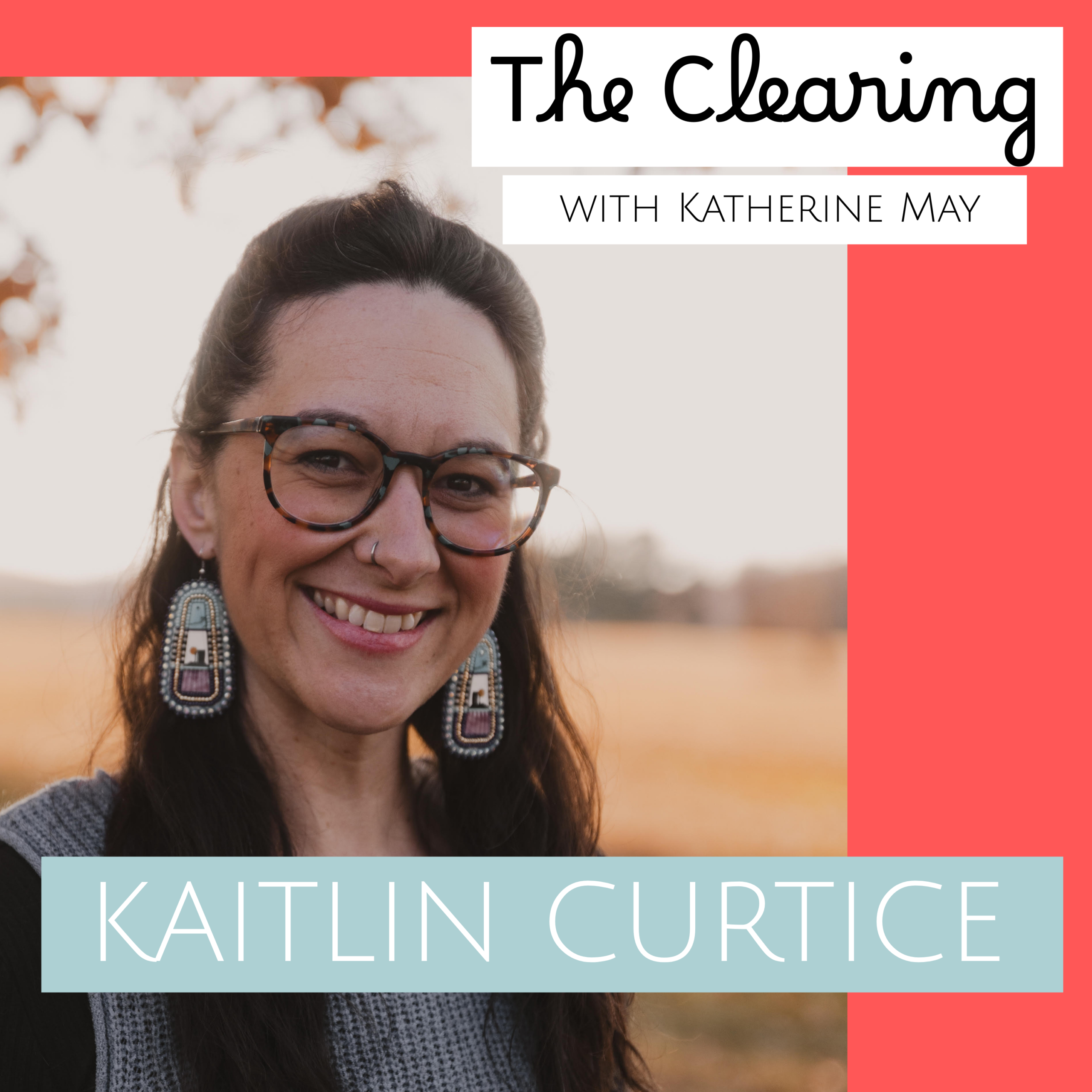
Author, storyteller and enrolled citizen of the Potawatomi nation, Kaitlin Curtice, shares her beautiful image of the perfect retreat, created by her own consciousness during the Covid pandemic.
Exploring this space together, Katherine and Kaitlin discuss the little-appreciated power of ageing, looking for stories beneath the stories, the art of listening, feeling the presence of the ancestors and asking permission from the stones and shells before you bring them home.
A wonderful episode of Indigenous wisdom, stillness and calm – the perfect moment of retreat.
Transcript
Please note this is an automated transcript and as a result it may contain errors
Katherine May: [00:00:00] Hello, welcome to The Clearing. This is Katherine May and I am just getting into 2026 a little later than everyone else. Because I took a bit of a holiday right at the beginning of the year, mainly to avoid everyone’s New Year’s resolutions. I’m back just as the fervor is dying down. I’m also climbing some stairs.
I’m not sure this is wise while I’m recording a podcast intro and. I’m playing catch up, but actually I really needed a bit of a slower start this year. It’s done me the world of good. [00:01:00] I’m feeling optimistic and I’m taking myself out for a little. Damp January walk to go and see the sea, make sure it’s still there.
It’s important to check. I find,
I hope. You are doing very well indeed and that the world hasn’t been too much of a shock this year. It’s been a rough start, hasn’t it? We’re all still gazing at this kind of overheating planet of the word, trying to figure out. How the hell we approach it. There’s a lot more to come and it makes me feel really certain that a [00:02:00] focus on rest is more important than ever.
Rest is the only way we’ll sustain the energy to get through this. And if we don’t actively. Figure out how to rest in these times, how to retain our energy. It won’t come to us Forbidden, that’s for sure. Begins to feel like a bit of a mission.
Never begin a podcast. Climb your big step of stairs. That’s a top tip for you. So. I am here to introduce this week’s guest, who is my good friend, Kaitlin Curtice. She is an indigenous American writer who [00:03:00] spends a lot of her time speaking, writing the Liminality Journal on Substack. And generally, I think it’s fair to say installing her own brand of very gentle, kind activism, bearing witness to the ills of the world, but also working to figure out how we can make greater contact with the landscape around us and how we can.
I guess I’d say feel more fully human in that context.
It was so nice to talk to her, and I loved that she had this beautiful still calm [00:04:00] image ready made for us in her head. A place that she’s been retreating to for a long time. It’s so, so fascinating exploring those kind of fantasy worlds that all of my different guests have. Every single person has been different so far, and I love that.
I really wondered when I began this podcast if everyone was gonna basically say the same thing. You know, if there was gonna be an archetype that all people fell into, but that hasn’t been the case at all. It’s been. So, so interesting to me to dig into all of these different worlds and to feel the rest [00:05:00] come out of them.
Anyway, that’s enough from me, but, uh, do take a listen to Kaitlin. It’s a very calming conversation and I’ll be back later, hopefully a bit less out of breath.
Caitlyn, welcome to The Clearing. It is so lovely to have you here.
Kaitlin Curtice: Oh, thank you. I’m so happy to be here with you.
Katherine May: How does the world find you today? Are you feeling well rested, or are you in need of a bit of a break?
Kaitlin Curtice: Uh, I think I danced between the two, but today has been really nice. I have a, a local coffee shop that I go to twice a week, and um, I go on Mondays because.
It helps me start the week to get up and get dressed and the kids go to school and I go to the coffee shop and write for two hours or so. And it really is a nice, um, slow beginning, slow, but work at the same time. But it’s just, it’s a really, I love, I love [00:06:00] this coffee shop and it’s, um, become a really wonderful routine and ritual for me.
So that really gives me a lot of just like, love and care to my week. Yeah,
Katherine May: that’s lovely. I think writers often have to create their own routines. Mm-hmm. You know, in order to find their way into the week. Um, I think we often. You know, we get very attached to these places that we go to because it replicates that journey to an office where you get that.
Kaitlin Curtice: Yeah.
Katherine May: Severance between yourself. I not like the TVs severance, hopefully, but that break between your, your home self and your work self, I think it’s really important.
Kaitlin Curtice: Yeah. And it can take a while to find it. You know, it took me, um, I don’t have any coffee shops really close by, so I have to go to other little, you know, suburbs or neighborhoods around me and trying to find one.
Where you feel comfortable, where you can keep showing up. You know, it takes a while sometimes. So
Katherine May: it’s gotta be exactly the right one. Everything’s gotta feel Yes, exactly.
Kaitlin Curtice: Unfortunately, [00:07:00] I wish I was less picky.
Katherine May: Yeah, that’s right. Yeah. Wish I could just fit in anywhere, but no, apparently not. Sensitive souls we are.
Um, are you the kind of person who takes themselves away from it all? Takes retreats, takes breaks, takes rests, or do you, are you challenged by that idea?
Kaitlin Curtice: Um, I love being alone, um, and having alone time. And so that, you know, I think the, the biggest constraint for me has always been, of course, fin finances.
Um, and perhaps time.
Katherine May: Yeah.
Kaitlin Curtice: But, um,
Katherine May: yeah, dream budget for all of this would
Kaitlin Curtice: be yes. But I do love retreating and I love, um. Being able to hold, hold space for myself away from daily routine. And I also love that. It makes me really grateful to return to it, you know, to come back home again and say, oh, I did miss, even if the pace is more chaotic with family and life, I did miss this and I [00:08:00] like coming back to it.
Mm-hmm. Um, it’s a nice, a nice dance and it’s taken me a long time to. To appreciate the dance, but, um, I do more, more now I think, as my kids are older. Um, but I really do love, love retreat.
Katherine May: Mm. Well I think you’re gonna have lots of insights for us today, ’cause I know you are someone that does go on some pretty wonderful sounding retreats.
Um, so let me welcome you to The Clearing, which is a landscape of your choice in which you can come and rest and restore and just drink back. Whatever it is you need, whatever’s lacking. Describe this landscape for me. Where are you gonna take us?
Kaitlin Curtice: So the. The first thing that came to mind for me is actually a safe place that my.
Consciousness created during COVID. Mm-hmm. And has remained this really beautiful place. I am someone who, um, wakes up at two or [00:09:00] three in the morning and my mind just goes, it just goes with, uh, anything. You know, I could be, you know, writing projects, things I’m worried about a random to-do list for a week down the road that I just happen to think about.
Um, so sometimes it really takes me a while to get back to sleep. And, uh, during COVID of course, it also brought the, uh, anxiety of the world and the things happening in the world and, and safety and, and all of those, um, yeah, those moments that were just really hard to try to get over. And I,
Katherine May: yeah,
Kaitlin Curtice: I remember really starting this practice then and had kind of one place in my head and it was really interesting because my.
My being my inner world took me to this other one and just created it for me. And one night it just showed up. Wow. You know, and so I thought I’d share about that because it’s really special for me. Oh yeah. And it surprised me. Um. So [00:10:00] this place is a seaside cottage. Which of all the different sort of elements or places to be in?
You know, there’s, we have Oceanside, we have forests and mountains. You know, I often enjoy being in forests, but I think that part of my inner landscape, um, is ocean and water as much as I am actually afraid of water. And, um, there is something powerful and beautiful about. Shoreline. And uh, and I know you appreciate that too, about being on water.
Katherine May: Oh, I’m all about the shorelines. Yeah. I don’t wanna be humble. I just wanna
Kaitlin Curtice: be
Katherine May: beside.
Kaitlin Curtice: Yes, exactly. Yeah. And so, so that’s where my heart and mind took me to this cottage. And, um, there’s a giant window overlooking the water. I can see it. And I am sitting in front of that window in a, um, a really nice chair.
Really cozy, comfy chair, and I’m reading [00:11:00] and there’s a fire going, so it must be kind of chillier time. I actually really enjoy going to beaches when there’s no one there. When it’s colder, you know, autumn or winter.
Katherine May: Yeah. Beaches are too busy in the summer. They’re not worth going
Kaitlin Curtice: to. Yeah. Especially if you wanna go mindfully, and that’s like your, you know, if your mode is to maybe go read or go on a walk and sort of be present or to just be able to freely air your grief and your.
Your life story without other people interrupting. It’s really nice to go and with that solitude, you know? And so, um,
Katherine May: yeah,
Kaitlin Curtice: so yeah, there’s a fire burning and I’m sitting and reading and I’m older. I’m much older than I am now, which is a really beautiful gift for me to. Have, you know, my soul sort of give me this portrait of myself older and wiser.
Katherine May: Yeah.
Kaitlin Curtice: Hopefully than I am now. And so just sitting, seeing myself sitting there in that stillness and, um, it’s a, just a beautiful picture. And, you know, I’m, I’m sitting and reading, there’s a fire [00:12:00] going. I imagine that it’s a pretty small place so I can picture that the, there’s like a kitchen counter and a kitchen off to my left.
And, um. You know, must be maybe some cookies baking in the oven. You know, you start to imagine all your senses waking up of cookies, right?
Katherine May: Yeah.
Kaitlin Curtice: And so
Katherine May: how interesting that this arrived in your mind in one go, and it’s obviously a very complete sensory image. Yeah. And I’m fascinated that you are older than you are now because aging is something that so many people dread.
Mm-hmm. You know, that they associate almost it, it feels in our society. Like we almost associate aging with failure now. Yeah. Like you haven’t done all the right things to somehow arrest yourself in time. Tell me about this idea of being older in, in your, in your, I was about to say dream. It’s not really a dream, is it in your, I don’t know, like perfect distillation of peace?
Yeah. [00:13:00] What does that mean to you?
Kaitlin Curtice: Um, you know, I have, uh, been through. Layers and cycles of trauma in my life. And I, I feel that as I’m getting older there, you know, just being able to move more carefully and more considerately through those cycles with more love for myself, um, that I see as this process of aging and it really doesn’t have.
Much to do with my physical state or you know, where I am at in that way. But it’s that my inner world toward myself and how I’m holding it. Because for so many years being, you know, growing up in a, a really fractured family growing up, pot, otomy, indigenous, growing up within a really, um, tightly constructed religious narrative, um, there was just so much shame.
Yeah. So much shame around my, my body [00:14:00] and my being, and I want to peel those layers off as I get older. And I already feel that now as I’m heading toward my forties. Um, and so picturing myself there
Katherine May: so young and fresh,
Kaitlin Curtice: picturing that you know me in my sixties or seventies, um, still myself. But just holding that tenderness differently, uh, that is really compelling to me.
And I think that so often the, um, the sort of crone inside of me is reminding me of that and pulling me toward her. And, um, that’s really special to me. I think that there’s a lot we can learn from, from them as they pull us toward ourselves and our aging selves.
Katherine May: Yeah. There’s something very, um, peaceful about the idea of having arrived in a place of [00:15:00] self-acceptance.
You know, it, it, she feels like the end of a journey almost as you speak about her. Like I, at the moment, I’m in the middle of it and it’s hard and it’s painful and it’s bumpy, and I, my identity’s in flux. But here I am resting in the person that I’m becoming. It’s really beautiful.
Kaitlin Curtice: Yeah.
Katherine May: Mm-hmm. Where are we in the world in this cottage?
Because there are many different seascapes available. There are plenty of different choices. Are you close to home or are you somewhere across the world?
Kaitlin Curtice: I’ve wondered about this. Um. Cape Cod is not far from us. We live outside Philadelphia and so Cape Cod is six or seven hours away. That’s a closer one that I can,
Katherine May: I love the way Americans say that’s not far like a British person would see that as impossibly far
Kaitlin Curtice: a road trip, you know?
Um, yes, it is true. That is so I laugh every time. I remember that [00:16:00] reality. Um,
Katherine May: we’re not going there ever. That’s too far.
Kaitlin Curtice: Yes. That’s a, that is a closer one. Um, a short flight away is the UK from here. Um,
Katherine May: I love the way you see that as short as well. I do not see that as short my friend.
Kaitlin Curtice: I know. Distance wise, it’s about, it’s about the same actually.
So, works for me. I’m, I am happy to go. And I’ve been traveling to, you know, Northern Ireland. I went to Scotland earlier this year and being on, yeah, the shorelines of those places, being in parts of the UK on water. All of that I feel really drawn to as well. And it’s, it’s things, some of it is moments I’ve not experienced yet.
You know, it’s, it’s just that sort of, um, vision holding for where could this place be? So much so that it feels like one day by some sort of, you know, beautiful circumstance. I’ll end up. Doing a retreat [00:17:00] somewhere or doing something where I end up in a cottage by water and I’ll know, oh, this is the place, like this is the embodiment of that, that place I’ve been holding inside of myself.
Yeah. Um, I think that, that, that’s a beautiful sort of dream for me to hold onto.
Katherine May: I’d love you to tell me a bit about Iona, ’cause you spent time in mm-hmm. Iona, or on Iona, I should say, this year. Um, somewhere I’ve always wanted to visit. Can you tell us a little about that? Because I would, I’d really love to
Kaitlin Curtice: Yeah.
Katherine May: Learn more about what it’s like there.
Kaitlin Curtice: I was there for a, a retreat and um, it was a kind of a writing and story sharing retreat. I was there sharing about my new book. Everything is a story. Um, it was really beautiful. It was. It’s very walkable. So there’s a lot of places to go if you need to be alone. And there’s lots of, um, communal spaces as well if you need to be with people.
And you know, for me it was so beautiful to be, uh, [00:18:00] surrounded by a place that has, uh, just such deep history. Of course, it’s always interesting for me being indigenous. I’m always looking for like the stories underneath the stories. So I’m looking for the.
Katherine May: Yeah,
Kaitlin Curtice: the Celtic stories or the Pagan stories, you know, the, the deeper, um, stories of those who had been there and who, um, engaged with, with the earth and nature and in those deep ways.
And, um, I’ve been really thinking a lot and writing a lot about the elements, the four elements. And on Iona,
Katherine May: yeah. Particularly in your children’s books, which are, which really explore the seasons like very strongly.
Kaitlin Curtice: Yes. Yes. And on Iona, you could feel all of that. It was beautiful. Um, one of my favorite days was, um, taking a hike, a short, short hike, walk up to, um, Duney, which is, um, a small.
Sort of [00:19:00] mountain on the island where there’s a, a sacred, well, one of St. St. Bridget’s Sacred Wells there. And I remember as we were going up, I was gonna lead a short ceremony and, um, my new friend Alistair Macintosh, who’s an incredible Scottish writer, Celtic. Writer and activist, um, was there with me. So we were leading this time together for this small group of people.
And as we were walking up, I just felt, um, the presence and the voices of so many beings, the rocks, the wind, the water, um, the, the air, the ancestors of all those who had been there, the ancestors of, of those beings in nature. And I was overwhelmed with presence. And that was really
Katherine May: mm-hmm.
Kaitlin Curtice: Beautiful for me because it was, uh, yeah.
You know, when you go to new lands and new places, you wanna hold that. Humility of being a guest and I felt that there. [00:20:00] And um, it was just really beautiful to sort of bear witness to the stories that are speaking so loudly from the rocks that are beneath your feet or these stones that have been placed in certain ways or this well that has been used to heal and care for people for centuries.
Like that’s, um, so beautiful to get to encounter that and hold space for it. It was overwhelming and um, I’m really grateful to have had that experience.
Katherine May: I wonder about, as we’re thinking about a retreat, like would that be your choice for a place to rest? That sounds quite. Stimulating, um, would you choose a place that had those layers and depths for you, or would it feel a little, a little clearer I guess?
Kaitlin Curtice: Yeah. I, I’ve realized about myself that I, even in, even at home when I’m working, I have to dance between being in my head and being in my body that I don’t do well if I stay in either one for very long. Mm. Um, [00:21:00] for, for health reasons for. My mental health for all of it. Um, so I’ll, I’ll work for a while and then I have to go have movement, go on a walk, go exercise, make sure I eat something really tasty.
Then I can maybe come back and do some more work again. And that, that dance is very essential for me. So in a retreat setting, to have quiet, to be able to be alone for long periods of time, but then to be able to go places where I can move and breathe and. Be, you know, be outside, be on a walk. Engaging with others beyond myself is also really important.
So I’ve realized it’s best for me to be in places where I can have both so I can do my dance, my regular dance.
Katherine May: You can find that balance by swinging between the two. And so there’s, there’s other people around, although you have your cottage to yourself. Mm-hmm. I think with its beautiful picture window.
Who are those people? Like how, [00:22:00] who would, who would ideally be there for you to feel rested? Is it people you know or, or is it kind of exciting new strangers or maybe not too excite the other? I don’t,
Kaitlin Curtice: that’s a good question and I feel, um, I feel the pull to both because sometimes it is really nice to.
Just engage with strangers for a moment, you know, to share stories and then leave it and just, um, let the stories linger inside of us or on the air. That can be a really beautiful thing. The, the anonymity almost of just showing up to each other’s stories for that moment and then, and then moving on. But I definitely, um, love one-on-one conversations with friends and family and people that I trust, and that’s really important for me.
I find that. Even when I’m alone for extended periods of time, I need some conversations over the phone or, you know, texting someone that, that I love and trust, that really helps ground me as well. Um, [00:23:00] so I think that I would need, I. A few people close by. A, a few years ago when I, um, finished writing my book native, I told my family I need to go to a hotel and lock myself in for two days and just get this done because I just, I knew I needed to get out of my surroundings and get somewhere, but this area was still in Philadelphia.
It was like 20 minutes from where we lived and. I would work all day long and there was a boardwalk where you could go on a walk by some water. So I would get outside and go do that and eventually, you know, I’m by myself working so hard. Um, I ask them to come and meet me there to go on the walk with me.
So then I get to see them. We go on a long walk together, but then they go home and I go back to my room again.
Katherine May: Right. So it’s like a, it’s like about, say it’s like a prison visit, but maybe that’s a bad analogy. Yeah. Just come, just come and see me for an hour or so and then go again.
Kaitlin Curtice: It was a nice thing to have that have the touchstone, you [00:24:00] know?
Um, but then go back to what I, I need. Yeah. And to finish what I need to finish and, um, yeah. Retreat can be. Interesting that way in having, what do we need at the time? Do we just need the pure solitude or do we need those touchstones?
Katherine May: Mm. I think it speaks to how complicated it is for mothers to retreat as well.
I mean, your kids must have been quite small then I guess when you are writing native, um, and there’s, I don’t know, there’s that push and pull isn’t there of, of being desperate for your own space and unable to access it. But then when you do access it. It’s hard. It’s hard to be without them. Like there’s retreating is never uncomplicated again.
I think.
Kaitlin Curtice: Yeah. My kids are, they’re 12 and 14 now, which is such a different space and um, I went on my first, um, you know. Retreat outside the us [00:25:00] uh, last, last year and was gone for 10 days. And then the Iona trip, I was gone for a little over two weeks and you know, so we’re learning how, I’m learning how to do that.
They’re learning how to do that. It’s a new, this is all a new experience for us, the extended time. But I’m really
Katherine May: face,
Kaitlin Curtice: I’m really grateful for it too. And as writers. At least for me, I need that depth of quiet. I try to get it every day in ways that I can.
Katherine May: Mm.
Kaitlin Curtice: But obviously, you know, that image of me and the cottage is I’m telling myself, you know, this will always be important to you to have the quiet of a, a quiet morning with a cup of coffee and a book, and a journal and a fire, or, you know, that’ll always be a need for me in the world.
Katherine May: I am really curious about you saying if there were people around you’d be telling stories. ’cause obviously I have it here. You a lovely book. Everything is a story. Um, [00:26:00] it seems to me. That telling each other stories is way more interesting Yes. Than making small talk. Like so often we meet new people and we talk about the most uninteresting things, and I, it made me think immediately of, um, this, this man I met.
A, a event a couple of years ago who looked me in the eye and he was like, right, I’m gonna tell you my life story to show you how it’s done. And then after that you’re gonna do that back to me and that’s how we’re gonna get to know each other. And I was a bit like, okay. But it was amazing. He, you know, he went through his personal history.
I was born here, my parents. This love I studied, I love that. At college, I met my wife. At this point, we’ve got two lovely children. I did this, this, this, and, and here I am today. Now over to you who said that’s
Kaitlin Curtice: amazing,
Katherine May: but it’s, it was actually, it was fantastic because we could have wasted that 10 minutes we had together saying.
Really boring and inconsequential things [00:27:00] and being polite to each other. And he had just decided that he was gonna shortcut that. And that actually let’s let us not meet, yeah, on shallow terms, let us meet immediately on deep terms. And as I was telling him my story, he wasn’t very satisfied with it. I wasn’t very experienced in it as, and he was like, so, so wait, wait, wait, wait, wait.
No. So what did your mother do? So when did you go here? Like when. And it was great and, and I’ve, I’ve really not forgotten that conversation. It was an act of shared storytelling.
Kaitlin Curtice: I love that. And actually, you know how precious that is for us as authors, the kind of authors that write about our own stories all the time.
Mm-hmm. It’s very different to be sitting in a conversation with someone that feels reciprocal, where you can just speak your story out loud, but there’s, but not to narrate it or to try to write, write it. We’re just. Sharing it just to share it with someone. Mm-hmm. And that, that’s a real gift because I know I’m constantly writing my stories down.
Katherine May: Yeah.
Kaitlin Curtice: And eventually, therefore consumption for [00:28:00] others. And so
Katherine May: yeah,
Kaitlin Curtice: to be able to just share in a moment parts of your story with someone in a different way than you might with different depth and different meaning. It’s such a gift,
Katherine May: I think that. I mean, I meet, you know, we both meet so many people. Um, and that art, that true art of storytelling and, but also, also of story listening because that’s, that’s also what he did in return.
He didn’t just let my story rush over him. He was asking inquisitive questions and it. I, I just, I wanna offer that to your retreat because I think, uh, the, these people who are around who you are not seeing all day, but you’re gathering in the evening to share a story, maybe, maybe round a fire, that would be kind of nice.
Um, I, I hope that they are inquisitive storytellers and inquisitive listeners. So how are you gonna eat in your dream rest? Like, are you the [00:29:00] kind of person that. Rests by preparing food for themselves or, or a particular kind of food, or are you hoping that there’s a canteen here?
Kaitlin Curtice: Um, both. I, uh, I have, this is another thing that I’ve learned throughout the years because I didn’t.
I didn’t grow up in a family where I was taught to cook or to enjoy food in that way, uh, food was more utilitarian, I think, than for the creative process or the enjoyment. And so, um, I’m, you know, my partner Travis, loves cooking. And so I’ve, and I, as soon as I, I got married young and I wanted to learn to cook, but I didn’t enjoy it until I’ve gotten older and have needed to eat.
Um. I have a, a chronic illness, so I need to eat healthy, and that has given me a really beautiful sort of portal into exploring food in new ways. And so if I were to be somewhere long-term on my own with a [00:30:00] kitchen and access to that, I would love to be able to spend time slowly. Preparing meals and enjoying them.
And then on nights where I wanna get out, I would love to go and take a book and sit alone at a restaurant and just read and journal and eat a big meal.
Katherine May: I love eating alone. At a restaurant. Yeah, at a book. It’s nice. Its such a luxury as part of your, you know, you’ve, you’ve. Entered into this long exploration of your indigenous culture that you have it, it’s been like a personal archeology and, and going back past your generations really, has that included food?
I wonder if that’s changed the way you’ve eaten as well.
Kaitlin Curtice: Yeah, yeah, absolutely. I think a few years ago I started incorporating, um, this like wild rice dish into our, especially our, um. Like holiday celebrations. Our winter solstice is a, it’s a wild [00:31:00] rice, um, dish with berries and syrup, so it’s like sweet and savory, but very filling.
And, uh, to just go back to wild rice because that is one of our traditional foods that grows on water and that has this really sacred, um, meaning for us and just holds and, and syrup as well to, to be able to put syrup on and have the berries. Eat that is, uh, such a gift and I’m learning how to do more wild rice dishes, how to incorporate that into my everyday life.
And every time I eat wild rice, I think of us and my ancestors and who we are still in the world. In a colonized world. To be able to connect to a traditional food is such a gift.
Katherine May: You said it’s got a symbolic meaning. I’d love, I’d love you to tell me about that.
Kaitlin Curtice: Um, I think just the, the beauty behind, um, Manin that is what we call wild rice.
That the fact that it, it grows on the [00:32:00] water. That that was one of the, the things that we looked for as we came to the Great Lakes was the food that grows on water. And so to find this rice, this plant that grows on water and the, the whole process of harvesting it is such. A long process that I’ve never been a part of, but get to see people from my tribe.
Um, participating in that and then being able to harvest that rice for me to be able to buy it from indigenous brands that have harvested in traditional ways is such a beautiful practice. And it just speaks to, um, the beauty and power of our relationship to land and to medicine in the ways that we gather.
Foods as medicine, our relationship to it, and that you have to go to the water to get the rice, I think is just, again, speaks to the power of water and how much it gives us in the world.
Katherine May: Mm. There’s so much water washing around [00:33:00] here. Um, it would. Would kind of foraging for your own food, be part of your idea of arrest?
Or would would that just be too much if you’re trying to take a break?
Kaitlin Curtice: Um, I feel like I would need a guide. I would, I think I would need, I would need a guide with me and then I would love to try, you know, but I, I would wanna do it in the right way. There’s a lot to learn with foraging.
Katherine May: You don’t wanna, you don’t wanna be like, slightly worried that you’re gonna poison yourself.
It’s not very restful that it’s not relaxing. Okay. I, I think that’s a very sensible position to be taking actually. I mean, we could invest you with like, magical knowledge of all the,
Kaitlin Curtice: that ahead of
Katherine May: time. Yeah,
Kaitlin Curtice: let’s go for it.
Katherine May: And, and zero anxiety about any of it. Okay. So. One of the questions that I ask people is, is there something you would bring with you from home to this retreat?
It could be practical or it could be comforting or symbolic. What item do you need in order to really feel at home? [00:34:00]
Kaitlin Curtice: Certainly my journals, because I journal every day and may need to bring the current journal I’m writing in, plus my last few so that I can. Continue to kind of see where I’ve been over the last little while.
Back.
Katherine May: Yeah.
Kaitlin Curtice: Um, I read two to three books at a time, slowly like chunks, you know, so I would certainly want some of that. Um. Authors I’ve been reading lately are, um, John O’Donohue and Clarissa Pinkest as who the pairing of the two of them is actually so beautiful. Mm-hmm. Because
Katherine May: interesting kind of combination.
Like one is about finding wildness and one’s about finding deep peace, I would say.
Kaitlin Curtice: Yeah. But they, you know, they, they pair so beautifully together in that even just entering into myth and story and the presence of that, um, cycles of. Seasons and getting older and aging, all of that, I just feel, um, beautifully in both of their writing.
So I think I would [00:35:00] maybe take some of that with me and, um, poetry books by Billy Collins, who’s one of my favorite poets. Um, I would probably have a few of his books around. And then I have, you know, to write, I have these little altars set up. There’s one here on my desk of items that are just really significant to me.
They remind me of. Sort of who I am, and I think I would need to bring along those items and set them up and have them there sort of ready and waiting for me. Um,
Katherine May: can you describe your altars? What kind of items go on there?
Kaitlin Curtice: Right now I have a lot of acorns and some stones have this stone that I got on Iona and it, it just looks like the cosmos, which is so gorgeous.
Katherine May: It’s so beautiful. I’m going just no attempt to describe. Mm-hmm. It, for people listening, it’s a, it’s kind of triangular, isn’t it? Mm-hmm. A, a smooth fat triangle with this [00:36:00] incredible circle, like dark, it’s pale gray, but with a darker circle and then a small circle inside.
Kaitlin Curtice: Mm-hmm.
Katherine May: There’s something about it that’s a little like an egg.
Yeah, that’s true too. Or maybe an avocado.
Kaitlin Curtice: Yeah.
Katherine May: That’s a really good stone.
Kaitlin Curtice: It’s really beautiful, and you can sort of see the spiraling of the lines if you look at it closely. And, um, so that’s just a reminder of the, the cosmos in which I exist. And then, you know, just little, um, little items that were like gifts from people or stones or rocks or things that remind me of a, a certain season in life that I wanna be reminded of, you know?
Um, I think that that’s, I mean, I have multiple. Little stages of things everywhere. Um, and I think that when I write, I just need to be reminded of, of who I’ve been and where I’m headed, you know? And those, those help me kind of hold that.
Katherine May: Mm-hmm. So would you always go on retreat to write? Would you, [00:37:00] would you have a project that you’d be wanting to work on or would you ever
Kaitlin Curtice: I think, um, not be doing it?
I think that I, I think I need to be able to. Count my retreats for quote unquote work, because I think that’s just where I’m at in life. And, um, as a writer, taking a writer’s retreat, not just a retreat, which I know is, um, unfortunate, but that’s, that’s the way I feel. Um, you know,
Katherine May: it’s why we’re traditionally very hard work to live with.
I believe that we never stop.
Kaitlin Curtice: Yeah. But at the same time, I. I love writing. I mean, I, uh, that is how I process the world. So I couldn’t imagine going anywhere and having space to myself and not writing and reading and, and holding that space. I mean, I can’t imagine that. So, um, so I would certainly. Know that that was coming, but I, I do really enjoy being [00:38:00] able to have a project I’m working toward, have something, some topic at least that I want to write on and explore as I’m in a place, and then sort of hold that.
Katherine May: Mm. And as well as your books that you’ve bought with you. Is there another cultural artifact that would inspire you? Like are you someone that looks at paintings or listens to music to get warmed up? Or what, what’s your kind of, uh, like cultural landscape that you like to walk through?
Kaitlin Curtice: That’s a great question.
Yeah. I, I listen to a lot of music when I write and. When I traveled to places to write, music is just a huge part of my whole family’s life. There’s always music playing somewhere in the house. Um, music has always meant a lot to me. I, um, I probably would appreciate having a place that has a piano because I play.[00:39:00]
Every day. And it’s a different creative flow for me. Um, that’s again the, the embodiment part. So to be able to get out of my head and just go and play and sing is really important to me. So even now, anytime I have a trip somewhere, I always wonder if there’s a piano nearby that I can play or, or a guitar.
But. Usually a piano, and that’s a gift when there is one. So on Iona, there was one in this room, and when I knew everyone was in the chapel service, I would go and play piano.
Katherine May: Just see. Is it something that you, would you feel self-conscious if people had watched or you happy to, to share it?
Kaitlin Curtice: No, I don’t mind if people listen in because I’m, I’m just playing like covers of songs or things that I’ve written that I’m just sort of practicing. Um. And I’ve, you know, in, in a past life I was a worship leader in our church, so I, I’m used to singing and being in front of people and so I, you know, I enjoy it when there’s a few people [00:40:00] that come and listen and share, you know, things that they enjoyed about it or playing songs they might, you know, cover songs they might enjoy.
That’s, that’s a lot of fun for me. So.
Katherine May: That’s lovely. And, and tell me what, what songs you’re playing. I mean, are they, you know, is this upbeat, is it sacred music? What’s, what are you, what are you gonna play?
Kaitlin Curtice: Um, I usually look up music. Coldplay songs are really easy for me to play ’cause they’re in the right key for me.
So I do some of those. Um, and they’re slow. Gregory Allen Isakov is a kind of singer songwriter from, um, Colorado here in the us. Um. Glenn Hansard is a, a singer songwriter who has some really beautiful music. Oh my gosh. I’m trying to think of who else. It’s a lot of just the quiet, and then sometimes I’ll.
Uh, play some, you know, faster or louder songs, but, and then a lot of it is just me. Sometimes I take my poetry and just put it to music. So [00:41:00] poems I’ve written, I just try to play them and sing them.
Katherine May: Mm-hmm.
Kaitlin Curtice: And that’s a really fun practice for me as well. So music is just all around me. And I think I write about music in all of my books because it’s just always been a part of Yeah, a part of my journey.
Yeah. So
Katherine May: yeah, it comes
Kaitlin Curtice: up. Yeah, certainly need. Need music around.
Katherine May: Are you someone that can write with music on? I mean, I absolutely cannot. I have to have complete silence and I, I get driven crazy by, you know, my husband who’s always wanting to play music in the background. I’m like, ah, no, it dunno. Can you, can you listen and, and think at the same time?
Kaitlin Curtice: I can, and I think that’s because I’ve been, part of that I think, was writing at coffee shops so much my earlier books, I would go on Saturdays and go to a coffee shop and just write for as long as I could to try to get it, get them done, you know? And um, so the background noise, I think I’ve gotten used to how to hold that.
But I do need, I do often need music that doesn’t have lyrics in my own headphones, [00:42:00] like instrumental jazz or something that. If it’s songs I know really well, the lyrics start to distract me when I’m trying to think for myself. So that gets tricky.
Katherine May: Yeah, it’s difficult, isn’t it? Like I, I’m okay if it has no words.
I think,
Kaitlin Curtice: yeah.
Katherine May: I can’t not listen to the words. I really, I think it’s just, it’s writers in it. We’re obsessed with words. If someone’s saying words, I’m gonna fully process them and everything else stops. But I know other people who, you know, can listen to, listen to podcasts and write at the same time, for example, or listen to, you know, full songs and, and still concentrate.
I just, I, I think music is. Really engrossing for me. And if it’s playing, I’m listening and I’m not there for writing.
Kaitlin Curtice: Yeah. Well, it’s interesting how our senses are such a part of our writing process of what we hear, um, what we see, what we [00:43:00] smell, how an environment feels. You know, it, it isn’t, it isn’t always easy to just show up in a place and be ready and willing to write.
Sometimes, um, there are certain elements we need to make it feel. Feel retreat, like enough to really show up to words and to that space. Yeah,
Katherine May: I am actually, that’s made me think about your original vision of this cottage and, and talking about it as a complete sensory environment. So how does it smell and how does it sound like?
What are those we, I forgot to ask about all the senses. I asked about, you know, what it looked like, but that is only one of the senses.
Kaitlin Curtice: Yeah. Well, and it’s interesting ’cause I lead people in these like safe space exercises where I have them. Find a place in inside of themselves and I ask them this, you know, what do you smell?
What do you see there? What are your senses doing? What does your body feel like, you know? And so in this image of me, I am just safe and [00:44:00] held and cozy and you know, I’m just in, in my element as a writer and reader. I hear the fireplace. So it’s a crackling fire. Um. I imagine I probably have some jazz music playing.
Um, especially when I cook. I do love to listen to jazz and, um, I imagine I either, I don’t really make cookies that often and my, my oldest son is the baker of the family, so if he’s not there, I’m probably not eating cookies. But cookies do smell good. Um, otherwise I’m, you know, baking a chicken and veggies in the oven or something, you know, something savory.
Um. Like that, that just smells like a, A warm, yeah, warm cooked meal.
Katherine May: Delicious food is wafting through. It’s very homely.
Kaitlin Curtice: And I have some coffee next to me. I, that’s always, like, my mornings for me are so important to just sit and have coffee and read a book or write in my journal and just hold that space [00:45:00] for a while before I venture into work.
That’s really, really, really important for me. So to. Have that space somewhere for as long as I need it is such a gift.
Katherine May: Yeah, it’s lovely. Yeah, it’s, I think we need a buffer, don’t we? As writers, we need to not. Bounce straight into work, which we’re often tempted to do. Yes. ’cause we’re like, ah, I’ve got, you know, got stuff on my mind.
Um, or actually I, you know, also, I think we’re often driven by
Kaitlin Curtice: Yeah.
Katherine May: Slight fear. You know, I mustn’t get behind, I must keep up with this schedule that I’ve set for myself. Mm-hmm. I, I need to. I need to keep producing. Um, and sometimes those pauses are the most valuable part of the day. Yeah. The time with coffee in a book or reading someone else’s essay or listening to someone speak.
I, I have to remind myself to do that sometimes. I’m in so such a hurry.
Kaitlin Curtice: Mm-hmm. Yeah. And I, you know, I’m someone who. [00:46:00] It really feels that fine line between like positive and negative stress. You know, I can go from having a really exciting, like really great riding morning to, yeah. All of a sudden my body’s like, you’ve had too much caffeine and you’ve been not breathing properly and you’ve been sitting at this screen for the last however many hours.
Like, it’s time to leave the room and turn everything off and go be embodied for a little bit. Go eat something for a little bit. And, um, and so. You know, being able to hold, hold that and pay attention to our own bodies and our own being. As we write is, um, it’s trickier than you’d think. You know, I know a lot of writers who are like, oh, I forgot to eat lunch today.
And so the, you know, they just kept writing.
Katherine May: I’ve never forgotten to eat lunch in my entire life. I think
Kaitlin Curtice: yes, it’s, it’s not common for me either. I’m often thinking about food, but, um, for some people they just miss, you know, like we miss those cues.
Katherine May: Yeah, yeah. They get so deep in [00:47:00] that they. They just carry on through and then realize they’re really hungry and, and thirsty and, yeah.
Yeah.
Kaitlin Curtice: Things like that. You don’t, you know, I wanna practice my work in a way, whether I’m at home or alone, um, to practice it in a way that feels like I’m. Nourishing. Uh, but when, when we have those spaces where we can be alone and pay attention, it’s, it comes easier.
Katherine May: Well, this has been so lovely and cozy and calm.
Like there’s this lovely sense of calm. How do you know when it’s time to head home? Like, are there, are there signals that you recognize in yourself? Mm-hmm. When you are, you are now. Done. And you, you’re ready for return?
Kaitlin Curtice: Yeah. I think it’s the longing for routine and nesting every time I come home from being away for work, especially if it’s longer trips or if it’s a really stressful trip.
Um, but even for a treat, um, when I get home, I just wanna nest. I want to fold laundry. I [00:48:00] want to, um, clean up my spaces and be back in my office and organize things so that. So that I’m here again, um, get my workspace back to what it usually is. So I know that when I’m like, longing for that and, and wanting that, that it’s time, you know?
And, um, of course when you go at first, you. Might not miss people in places much, you know, so that that lingers back because you’re so excited to have that breath of aloneness and then you are kind of missing the familiarity of home. And I think it, it kind of, uh, pulls us back again. So I can usually.
Really feel that, that sense of wanting to be back playing cards with my partner Travis and drinking coffee with him, or just laughing and talking with my kids or being with my dogs, I miss them a lot when I travel. And wanting to just have those touchstones of home is, is what [00:49:00] pulls me back. Yeah.
Katherine May: So you’re pulled back by this craving for home and this craving for your own life and routine again.
Is there something that you bring back with you from this retreat? An idea or an item? Like what do you bring home?
Kaitlin Curtice: Um, it’s always funny to me how long it takes us to process, um, being, you know, the, the presence of a, of a place. Like when I was on Iona, I still haven’t written. Some, some of the stories of things I know I experienced and I know I want to write about, like, it, I just haven’t accessed them yet.
I haven’t spent time being there in my mind and remembering, you know, so for me to have, um, items like this stone, like to have items from places to remind me of them is really important. Now, I’ll also say as just as an indigenous person mm-hmm. I, um, and I wrote about this on Iona, [00:50:00] about the. The asking of permission when we take even a seashell or even a stone from a place,
Katherine May: you have to ask the stones.
Yeah. And they soon let you know. Sometimes they even jump out of your hands.
Kaitlin Curtice: These are the things I brought home from that trip and there’s only like four or five things that feet. I remember we went to a beach one day and they were like, we’re gonna do this activity where you take a stone from the beach and it represents something, you’re gonna throw it back into the water.
And when we got there, I was. Yeah, I walked up to these stones and I heard them all being like, we don’t wanna back to the water. We’ve been on the shore. Why would we go back to the water? And so I just, I felt almost, I didn’t make people, you know, stop doing this important ritual, but I just sat down with the rocks and just touched them and held them and just, you know, listened to them before I chose anything.
And it was like just allowing them to say, you know, we’ve been here for. Thousands of years we’ve been holding this space [00:51:00] and, and here you are on your journey, but just notice our voices before you engage. You know, just, just see us as we are. And I think that’s always like, um, part of it for me is just saying hello and greeting and, and being that humble visitor, you know, so to, to have that consciousness is important.
But I, um, I find it really beautiful and. Um, meaningful to be able to come back with a piece of art from that place or something from nature, from that place to remind me of the journey so that later when I need to access what I couldn’t access in real time, I have something to hold, something to stare at, to, to be able to get back there, you know?
Katherine May: So like these little points of kind of storytelling connection almost.
Kaitlin Curtice: Yeah. Yeah. Which is, I think a lot of us do that, whether we realize it or not.
Katherine May: Yeah. Well, I think we, we tell [00:52:00] stories through items. Yeah. You know, it, storytelling is actually a very physical activity. Um, and we, we yearn to do it through things, but we’ve been trained to think that it only happens on the page.
So we, we don’t understand that physicality anymore. I think. Well, I hope you find a really lovely stone, like the perfect stone that encapsulates exactly how you felt. Um, and I just wanna say thank you very much for taking us with you. It’s been really soothing. Thank you.
Kaitlin Curtice: Thank you so much.
Katherine May: Can you hear that the crow’s going over? I love a good crow, particularly in winter when they silhouette so beautifully against the winter sky. It’s completely white above head today, and there’s two of them sitting in a completely bare tree. They look fantastic. I’ve made it down to the sea. [00:53:00] The tide’s out very far out today, actually.
A lot of people are very disappointed when they find the tide out, but I love it because the seed bed looks all silvery from a distance and the tide will come back in again. Sure enough, I hope you enjoyed that conversation with Lin. Have you found it as soothing as I did? She’s a very restful presence.
And if you’d like to learn more of her work, there are links in the show notes where you can check her out. She’s a wonder, and we regularly have little writing chats, which I very, very much enjoy.
I am actually feeling really positive about this new year. It is [00:54:00] no secret. That last year was a rough one for me, and this year I’m starting with some optimism. I’m raring to go lots of projects, lots of things to do. Hope it feels that way for you too. And I’ll be back in a week’s time with another conversation that delves deep into rest.
Very different author to Kaitlin. I hope you will join me then. And just a heads up, for those of you listening for free, if you’re finding the ads a bit annoying. All the paid subscribers to my Substack newsletter, the Clearing, get an ad free version in their inbox every week. So if that feels better for you, it’s indeed available.
However, you are most welcome to Carry on listening free as well. It’s good to have you here. [00:55:00] You take lots of care now and I’ll see you soon. Bye.
Kaitlin’s Links
Kaitlin’s website where you can find her books
Mentioned in the episode
Authors mentioned by Kaitlin
Musicians’ mentioned by Kaitlin
About Kaitlin
Kaitlin B. Curtice is an award-winning author, poet-storyteller, and public speaker. As an enrolled citizen of the Potawatomi nation, Kaitlin writes on the intersections of spirituality and identity and how that shifts throughout our lives. She also speaks on these topics to diverse audiences who are interested in truth-telling and healing.