The Clearing with Katherine May
Carissa Potter’s hot springs artist retreat
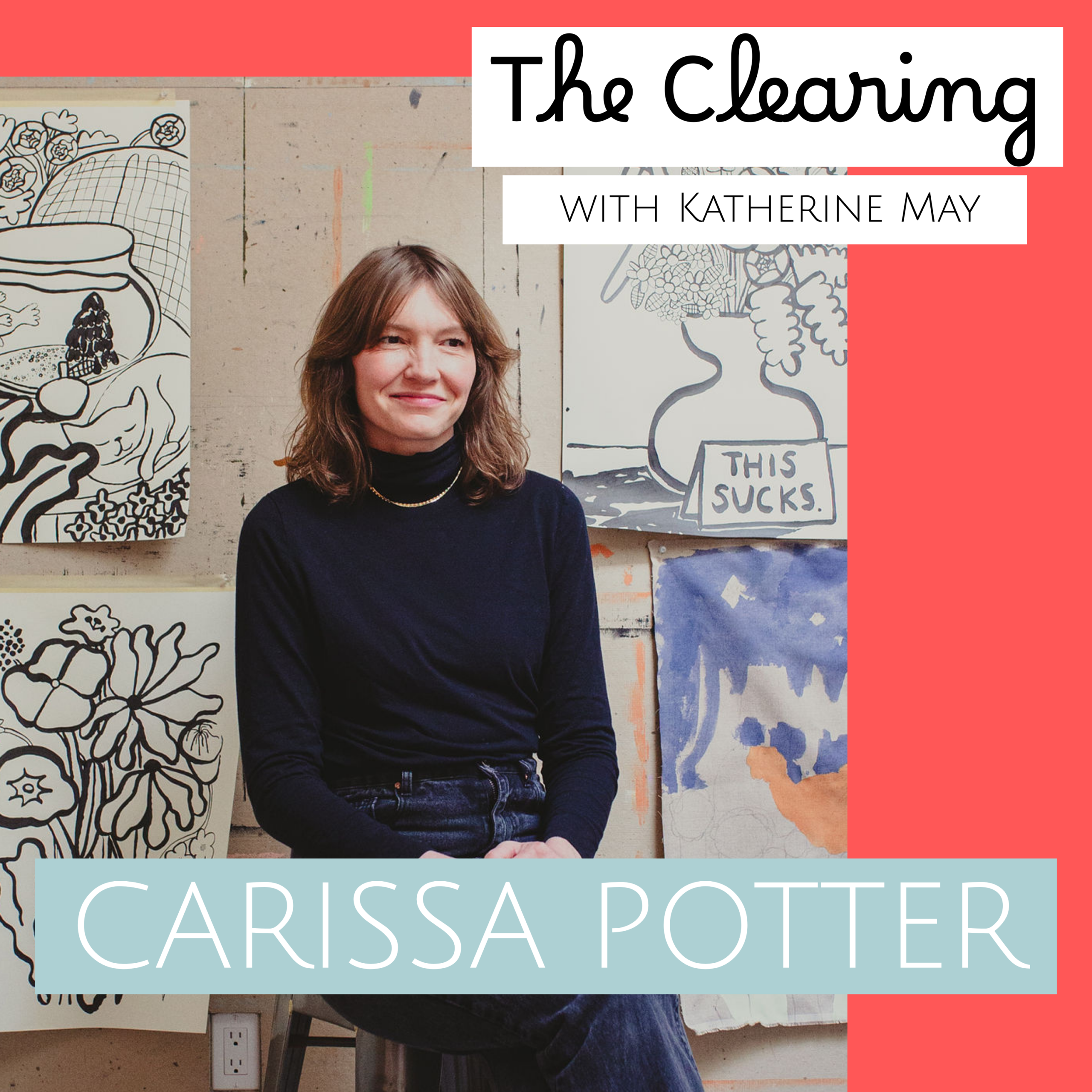
California-based illustrator, author and Instagram phenomenon Carissa Potter chats to Katherine about the complexities of taking rest during challenging times.
In a masterclass of self-reflection, Carissa questions whether the political left have failed to cultivate tolerance and understanding, if we should brand people as evil and how to ‘show up’ when you are the caregiver of a child with complex medical needs.
It is no surprise that someone who thinks so deeply about the world has also developed a fully formed fantasy of where she would go to get away from it all; just her and her ‘platonic love at first sight’ creating art together and dipping in the waters at Indian Springs Calistoga. Bliss.
Tell us about your own vision of a dream retreat:
As mentioned at the end of the episode, if you have your own ideas about where you would go to rest and restore you can tell us about them here
We may select your retreat for our bonus content next season!
Transcript
Please note this is an automated transcript and as a result it may contain errors
Katherine May: [00:00:00] Hello. Welcome to the final of series, our first series. It’s, uh, it’s come a long way, baby. I’m really proud of what we created. We’ve got a great SV this week. You catch me. However, in the middle of one of my favorite activities, which embarrassingly is stripping down the coffee machine. I’m cleaning it on a menu level.
Nobody else does it. I didn’t even drink that much coffee, but it does have lots of little parts that all need taken apart and descaling and. Generally to be looked after so that the whole thing works well. [00:01:00] And I find routine housework incredibly boring. I do love doing silly fiddly little jobs that everybody else hates.
That’s I’m up to today. I am. I’ll never be a world beating housewife. Let’s put it that way. If you wanna catch me cleaning, pick you once a year running around the cooker with a cocktail stick, getting the little greasy bits out of the corners and ignoring the world general mess that takes another house all the time.
Oh, this is the kind of thing I feel like I could tell to Carissa Potter, our guest today, she is a kind of archeologist of emotion. It always feels to me like she wants to prize everything apart and understand it and kind of put it under a microscope. If you don’t know her work, [00:02:00] she’s an artist, a writer, a podcaster.
She is a mega star on Instagram where her fantastic little illustrations and captions really capture the emotions that we feel and probably always thought were only ours. And to see them kind of broadcast in such an elegant way is, is always the delightful of really firming. You may also know her sub staff, which is about keeping secrets where she expands on these ideas.
Or she’s also a creative entrepreneur and she has a, um, an online called people. I love where she creates. All kinds of really desirable things that always make my wallet twitch a bit. She’s the author of multiple books and workbooks and card decks. Um, honestly, I feel a bit inadequate. Say, let’s move on.
Um, this world [00:03:00] Spring of a person, um, agreed to share her dream retreat with me, and it was such a pleasurable conversation. We rambled and roamed as I love to do. And one of the things that really struck me when recorded this a few weeks ago, um, was that even as the ICE raids in America were rising in the news and affecting Carissa’s hometown and the place where her family lived, she was already thinking one step ahead, I think about how.
We can begin to heal this situation and how we can come to terms with what’s gone on and, and reintegrate as a community. I definitely feel like she was way ahead of me there. Um, and that’s why it’s such an important conversation to keep [00:04:00] having to keep talking about how we can understand the motivations behind this turn in the world that feels so dark, but there’s also joy and fun are rest here to fear not.
Um, we talk about her delicious vision for a retreat in a desert landscape that will be familiar to many people listening, if not personally, then on the tv. Um, and. Once again, I’m struck by how varied our ideas of rest are, but also how similar the rings threads that run between us. And I think it’s probably fair to say that Carissa is the kind of person who doesn’t ever quite switch off, um, which is certainly me too, but also has had to think about how to therefore make rest a [00:05:00] habit so that she can keep moving and I.
I’m really glad to have seen that externalized a lot in this first season. It’s something that, um, I think lots of us need to learn to do because that sort of sense of absolute rest isn’t possible for us. So it was really great to talk about that here anyway, and I wanna give it all away. Much more interesting to listen to Carissa.
So I will hand you over to our interview, but do stay on the line when we are back because I need to tell you about some really exciting new developments for this podcast in its next season. See you in a bit. Carissa, welcome to The Clearing. It’s so lovely to have you here.
Carissa Potter: Oh my gosh, it’s a dream to be here.
I’m such a fan of yours.
Katherine May: We are mutual fans. And also I think we were just, we began to chat before we press record, and there was a risk that we were just gonna talk for two hours and then think, oh, we better record a podcast. So we’ve di we’ve dived in, which I think is the right thing to do at this stage.
So welcome to [00:06:00] The Clearing. We are wherever you want us to be, but I’m really curious to know what role rest pays in your life, because you do so many different things. I assume that you are, you are massively busy and always on, but maybe I’m wrong about that.
Carissa Potter: Well, I think, okay, so last night I, I had an opening, an art opening and in conversation it came up that I go to bed at 8:00 PM and I get up at 6:00 AM and the person I was talking to was like.
You go to bed at 8:00 PM and this was a friend of mine who I like, I really appreciate and trust, and I felt like, wait a second, I’m not doing enough that I, like, I you need me to stay. Like it’s profoundly uncool that I go to bed when my kid goes to bed. Um, but I just don’t function without it. Um, and I do think like society expects, expects us really to be on and to have like multiple events that [00:07:00] carry us through all the time through the day.
And I think too. Be able to do that. I have to get like 10 hours of sleep exhausting. And I’m so privileged exhaust that I’m able to do that exhaust.
Katherine May: Yeah. I mean, I, I still, I mean, obviously yeah, it’s a huge privilege, you know, like growing up in a household where my mom used to come home from work and then do work in the evening as well, and at the weekends, I’m really lucky to switch off at the end of the day.
And I, and I get that, but I, I also think we have this slight attitude that the evening is for cool people. And if, ’cause I’m a very early go to bed person as well. Um, maybe not eight, but sometimes eight, but mostly nine. Um, and there’s a kind of, there’s a kind of sense that it’s deeply uncool not to be sitting up late, you know, I was about to say watching tv, but that’s not the cool bit.
Like I should be out at a bar or something. I dunno, what am I supposed to do? Yeah, yeah, yeah. But yeah. Yeah.
Carissa Potter: There’s a no being at a bar with friends, talking, connecting, or like [00:08:00] even, I don’t know. I think that like any time there’s always, you’re holding this, like, I can’t remember what, what period of time where like rest became uncool.
But I feel like, like I think about when I think about people, like I think about this like person sitting by the beach lounging and that was the ideal life. And then what, when was it like in the eighties that like, it became the like hyper busy person or Katherine, do you know
Katherine May: what I’m talking about?
This I of No, I do, I rest being on Yeah. More and more and more. And the mobile phone came in and then you were supposed to like be connected to other people. I mean, I, I remember going on holiday with a friend maybe in the early two thousands and her mom called halfway through our holiday and I was so horrified.
I was like, what? You, you let people contact you while you’re on holiday And of course that’s kind of normal now. I mean that’s, you we’re in contact with everybody all the time and it’s tiring actually.
Carissa Potter: Oh my [00:09:00] gosh.
Katherine May: It’s really
Carissa Potter: hard. I mean, that I was thinking about, I don’t know if it’s like a, the cognitive load of having to switch context constantly is just like massively
Katherine May: massive.
Carissa Potter: Yeah. Over, I don’t know, just like this huge weight of like, do, do, do switch and then every time somebody calls you, I don’t know if it’s something you all are doing in the uk, but here at Margaret’s school, Margaret’s my child, she’s six years old. They’re recommending that people get landlines.
Katherine May: Oh, to I, I’ve read about this.
That lots of people are, so they’re actually recommending it at the school though. Wow.
Carissa Potter: We haven’t done it yet, but I, I, like, I have the best of intentions,
Katherine May: but the problem is I don’t want anyone to call me like, I love text communication. ’cause I don’t actually want to talk to people.
Carissa Potter: That’s fascinating. I don’t have a solution for you yet.
Katherine May: Yeah, no, I’m not going back to landline. [00:10:00]
Carissa Potter: Well, I think about it, like for me, I mean, I do enjoy text messages and I do like, as a person, I don’t, I’m assuming you, do you have phone anxiety of like Yes. Picking up and having whatever, what is the person on the other line gonna say and what are they best bringing on you?
Yes. Given second. And are you gonna respond gracefully? I don’t know. Yeah. Uh, but. I think for me, the urgency of having to respond to text messages 24 7 is just, it’s just a lot.
Katherine May: Yeah. I mean, I, I try to ignore them quite a lot actually now. Um, and I, you know, I don’t take my phone to bed with me. Well, I actually do, but I use it to play the sound of the sea and I don’t look at it.
Um, I, it’s so hard to unpick honestly. I’m trying to do more things in person as well. I’m just trying to, you know, go to a shop instead of order things online and be a person in the real world again. And it’s, [00:11:00] it’s hard. It’s hard to, it’s tiring.
Carissa Potter: Yeah.
Katherine May: Tell me as well, so do you, do you ever take yourself away on your own?
I mean, having a 6-year-old makes that really complicated, I should think. Like, do you ever book yourself into a nice place at to work or to rest or. Are you always with your family? Like what, how do you look after yourself?
Carissa Potter: Well, I think this is, uh, uh, something that we’re definitely trying to navigate in my family over in, in, I think December, my partner took his first like solo vacation.
Oh. And this, I think he really needed it to be, to be fair. I’ve, and I don’t wanna make him out to be like, oh, he’s just taking all these vacations and leaving me. No, he not. Uh, he needed [00:12:00] a vacation.
Katherine May: Yeah.
Carissa Potter: Um, where he just like went into the woods of California and, uh, sat and ate steak, I think. But for me, I think that I get a lot of vaca, like I am.
I go to New York twice a year for, for work. And I feel like that in a way is like a vacation. Yeah. Even though I’m working the whole time. Um, but after he did this sort of solo vacation, this planned weekend away, that he just would do nothing. I mean, he did it, he read and but wasn’t accountable to anybody else.
Katherine May: Yeah.
Carissa Potter: It sounds really nice.
Katherine May: Does sound really good. Yeah.
Carissa Potter: And I was thinking about with the prompts, like what would I do if I could relax? Where would I, where would I go? And I have a very specific place that I would love to go.
Katherine May: Excellent.
Carissa Potter: But it wouldn’t necessarily, it has, it’s like a combination of [00:13:00] two things.
Um, have you ever been to, there’s this place called Indian Springs in Calistoga, California.
Katherine May: I’ve, I’ve heard of it. I have never been. Describe it for
Carissa Potter: us. Uh. Well, the next time you’re here, which may be in three years, uh,
Katherine May: maybe it was,
Carissa Potter: who knows? Uh, I just, I really love, um, like the bathing culture of, of laying and warm water and then getting into cool water and then warm water and the sun and the hills.
Katherine May: So, so is it a hot spring? Is that what it is? It’s like a natural hot spring.
Carissa Potter: Yeah. Um, and so it’s like, it’s like being in a hot tub that’s like an Olympic sized pool and you just sort of lay on floaties and Wow. Um, wow. Let let the children yell around you.
Katherine May: Lovely. If
Carissa Potter: that’s what
Katherine May: they like. That, um, what’s the landscape?
Is it a, is it a landscape that particularly appeals to you as well? Like what’s, what [00:14:00] kind of landscape are we talking?
Carissa Potter: I mean, I think. But if everyone wanted just to close their eyes right now, and imagine it’s like a northern California landscape, which is, I don’t know if people assume that everywhere is sort of desert landscape in California.
Mm. But we’re much more, it’s, it’s very green and, but still dry. So you have like the merging as kind of a North Pacific pine landscape with lots of cacti and succulents and it’s, it, it’s just these rolling hills on one side of, of evergreens and then on the other side you have nothing.
Katherine May: Wow. I can’t, I can’t quite picture like a dry forest.
I, I have no experience of that. It’s so, it must smell amazing.
Carissa Potter: It does, unless. Yeah, it [00:15:00] does. Most of the time. We have really amazing air here. Um, and it makes me really, I, I really, I think for most of my life took it for granted that we had clean air and beautiful, like, we’re able to go outside and take a deep breath and feel sort of like rejuvenated and not sort of bogged down and, and dirty and heavy, if that makes sense.
Yeah. But it’s weird ’cause when I moved, I’ve lived in this area for almost 20 years and it wasn’t until maybe like 2018, 2019 where we started having, um, wildfire season in northern California. Yeah. So it’s like a very new thing to have to worry about, about the air.
Katherine May: Is there a little nostalgia there for the time before that maybe as well.
I mean, it, it seems horrific, this, these uncontrollable fires coming your way and it’s such a sign of the huge change that’s happening. It really, [00:16:00] it, it’s, it’s weird to be living through this moment, I think is what I’m like grasping for really.
Carissa Potter: Absolutely. I think for me, nostalgia, I started having this weird, I don’t know if you’ve had this, because I know we’re about the same age.
Katherine May: Yeah.
Carissa Potter: But I remember looking. Like seeing older people in my life when I was younger and having them reminisce on the like good old times. Yeah. I remember thinking there was never a good old time. You are just delusional. I was thinking the other day while I was doing dishes, like, oh, it actually before buyers and all of the sort of turmoil that’s like directly affecting us in different ways at this moment does feel kind of like a good old time.
But I know that there i, it’s a dangerous slippery slope too. Um, reminisce. But I do [00:17:00] love indulging in nostalgia from time to time.
Katherine May: Yeah. I think we’re allowed a bit of nostalgia. I have huge nostalgia for the time when it used to snow. It didn’t snow every year, but it, it snowed a bit every year. You know, like some years we got big snow and some years we got a smattering, but.
We’ve not had it for, I don’t know, I dunno how many years since it snowed here now.
Carissa Potter: Really?
Katherine May: Yeah. It’s changed. It’s changed in the last decade and I, wow. Yeah. I feel hugely sad about that. I think it’s such a loss, such a, it’s a cultural loss, you know, that we are already experiencing.
Carissa Potter: Katherine, my father said.
So, um, my father lives with us part-time and he, um, lives in Minneapolis. They’re part-time, and he was, he was thinking the other day, would I rather have a freshly fallen snow or flowers that bloom full year and his jury was out. And I was wondering if you felt the beauty. Yeah. Like, I feel like it’s in a [00:18:00] really underrated beauty, the snow.
Mm.
Katherine May: Freshly fallen snow is just the best. I love, I love it. I love it so much. I, it’s. Clean. Like the whole, it’s like the whole world has been cleaned, you know? And mm-hmm. It’s transformative. It’s bright and shiny. It’s the, it sounds great underfoot. You get that lovely crunching. It’s playful. I just, I love it.
I love it.
Carissa Potter: So has the rain replaced the snow? Is it just more of like a rainy winter?
Katherine May: Um, no. I mean, yes, I think we are sometimes getting more rain, but I think often we’re just getting kind of weirdly warm days that are not anything in particular. There’s an uncannyness to it. It doesn’t feel right. A according to like [00:19:00] the system of weather that my body learned growing up.
So, yeah.
Carissa Potter: How do you react to this information of, like, for me, it’s, it’s a, I feel like. Do I go down the road of like, impending doom, I need to buy canned goods, or do I go down the road of like, oh, I should be feeling so grateful for this moment because who knows how much longer we’ll have together. It’s not that I wanna focus on the positive or make myself be positive.
I think I’ve just in this moment of like, it’s a Yeah, you’re, you feel like you’re standing on the edge of this cliff that of, of the shit show of the world right now.
Katherine May: I think, um, I’ve, I’ve noticed a shift in optimism this year actually as we’ve moved into 2026.
Carissa Potter: Oh wait, tell me more.
Katherine May: I’ve just, I, I mean, I, you know, watching, watching the world as it [00:20:00] is, I mean, I, I feel like I, I feel really bad saying this as an English person to an American person.
’cause I think your country is going through such terrifying changes in a way that we, we haven’t yet, but we, you know, we have stuff happening that is really, really scary. Um, I have noticed though, that everybody felt very bleak about it last year. And I’ve noticed people kind of beginning to like imagine a way through now, which is extraordinary.
Like, aren’t humans amazing the way that we are? Like, okay, it took me a little while to gather myself back up together. But actually I’m gonna do something about this and I, yeah. Yeah.
Carissa Potter: Katherine, I love hearing that. I love the idea. When I imagine you and I don’t, I don’t know if this. This feels right, but when I imagine, well, A, you’re ahead of us and so whatever you’re going through Yeah.
Potentially is a [00:21:00] wave that will hit us and wave
Katherine May: Maybe, maybe, maybe.
Carissa Potter: But also I’m gonna, I’m gonna argue that both of our superpowers, and I don’t know how you feel about this, are understanding a sort of collective consciousness that’s rolling through us and then coming out we’re like sort of translating this collective, well,
Katherine May: little radar dishes that are picking up the signals.
Yeah. I think that, I think that’s right.
Carissa Potter: And I think that you saying that or feeling that optimism wave is just, I don’t know. It’s incredible and I think it’s really important that you share it. Um, and. I oscillate between that and existential doom every 20 minutes.
Katherine May: I, I definitely have that too. That’s that.
But, but I do like, it’s [00:22:00] not optimistic. Like, oh, everything’s sorted, everything’s just gonna fall into place. I think what makes me feel optimistic is that, um, I can sense people organizing to fight. I feel like I grew up with people asking the question, how would I have behaved at the beginning of the second World War?
Or, you know, how would I have behaved when, you know, Nazi Germany came to, came into being like, what would I have done? And all of those questions we are having, we are seeing what we do now. And I think it’s really, really interesting for me to like see people organizing and finding their courage and stating what they believe and working.
Whose side they’re on. Like that’s the bit that gives me a load of hope because I, I think last year the different vibe was, there were a lot of people going, oh, it’ll probably be okay though. Don’t worry about it. [00:23:00] Uh, the minute people start going, this is, this has got serious, is when I, when my little heart lifts a little bit, because it is, it’s serious, you know, it’s serious.
Carissa Potter: I think last, I mean this is a interesting thing to discuss, like what, what you would’ve done or speculate on what you would’ve done before the Holocaust. And it does feel oddly parallel at, at this moment, and I wonder if we might disagree.
Katherine May: Interesting.
Carissa Potter: I feel like we are, at least as an American, I’ve been so trained.
To individualize my actions.
Katherine May: Mm-hmm.
Carissa Potter: As like my responsibility. And it’s my responsibility to fix these. And I actually think that there’s such a bigger pull from society and [00:24:00] the influence of the people I’m surrounded by, that their decisions are affecting mine so much more than
Katherine May: Right.
Carissa Potter: I like my brain is willing, or whatever bias I have is willing to, let me admit.
’cause I wanna believe I have agency and I have choice, but actually I’m just doing the things that I watch my neighbors do. I’m not trying to say this to like absolve anyone from guilt for being complicit.
Katherine May: Mm-hmm.
Carissa Potter: But I also think that at the, on the flip side of the coin, we’re all, I want to believe doing the best we can with the information we have at the time.
Katherine May: Yeah. Yeah. I think that’s true.
Carissa Potter: I remember seeing something yesterday about how online that we, we don’t have an excuse of busyness anymore, like in Right. The United States. We have to act now.
Katherine May: Yeah.
Carissa Potter: And
Katherine May: yeah,
Carissa Potter: I saw it and I felt, I felt this like deep lump in my stomach. I can’t [00:25:00] physically go out and protest because A, I’m too busy.
Katherine May: Right.
Carissa Potter: But b um, I have, I’m a caregiver for someone who has complex medical needs.
Katherine May: Yeah.
Carissa Potter: And what I can do right now is show up with the ways that. In the, that I can, yeah. And that means not leaving my house. And all of this is to say, I don’t know what the right thing to do is. And I don’t know what I would do.
Katherine May: I don’t think anyone does, honestly. And I actually, I, I think what’s emerging is that it is hugely complex, much more complex than maybe we thought. You know, those very simple ideas about being heroic dissipate at the moment because actually, like the action isn’t always that obvious anyway. And I also, you know, I have a big neurodivergent [00:26:00] audience and.
For a lot of the people who, uh, and myself included, like going on a protest March isn’t the right way for us to pro some of us to protest. It’s, it ca we cannot only see activism or action as something that happens like loudly in public, on the streets, in complex sensory environments, in inaccessible environments for people with different kinds of disabilities.
Like that’s, I’ve got a massive problem with that and I’ve also got a big problem in insisting that people put themselves in danger. Who are, who have, who like will attract more danger than others. You know? And as you say, like there are loads of different complex situations. You have a responsibility towards your daughter to take good care of her and.
Like, no one should diminish that [00:27:00] role, your caregiving role. It’s vital. It’s a vital part of what we do as a, as a bigger collective. Right.
Carissa Potter: I do think more of a, like, I didn’t realize how, I think growing up as like a able bodied person, I didn’t realize how many people were out there caring for other people.
And I really took for granted the like ability that my body could carry me. I could leave the house and then come back when in a indeterminate amount of time. Like I was talking, I, I’m curious. I was talking with my therapist yesterday about something I was scared to post online. Um. And I’m wondering what you’ll think about it.
I was talking to my mother who’s in Minneapolis and who’s like, it’s way worse than everybody thinks right now I have to leave Minneapolis.
Katherine May: Is that what, is that how your mother feels? She feels like it’s time for her to leave.
Carissa Potter: Oh yeah, she’s leaving tomorrow. [00:28:00]
Katherine May: Wow. Wow.
Carissa Potter: Um, she had this sort of primal rage against ice.
Katherine May: Mm-hmm.
Carissa Potter: And like
Katherine May: as so many of us feel like
Carissa Potter: profanity and hatred and I feel like, and it’s easy for me to say ’cause I’m like not in a direct line of conflict with them and I haven’t had anyone directly. Indirectly, yes. But um, yeah. I don’t know. I feel like that rage only f fuels more rage and
Katherine May: mm-hmm.
Carissa Potter: I don’t know.
I said something to her about like, how do you offer these people compassion? Because they’re just doing what they’ve been told and they’re understanding that of reality is just different than ours because I don’t, I don’t want to believe that they, I, I believe that [00:29:00] they think that they’re protecting their country Right.
And doing what is right and yeah. We just have a disagreement on fundamentally what that is. Mm-hmm. How does that land with you, Katherine, when I say that, because I feel like I’m afraid to say that out loud. Yeah.
Katherine May: Well, I, I suspect you’re probably right, but, and I think, I think all of the great problems of our age are founded on this, right.
That actually. You know, the other side, the other side. And there, there do seem to be like two clear sides and the other side seems mystifying to each each side like we are. And yet I do, I think you are right. I, I don’t think people are acting in a way that they consider to be evil. In fact, I think they’re acting in a way that they consider to be good.
And we have this sort of fundamental [00:30:00] disagreement on what good is on, on what, what is for the best. Um, I think there’s also like a, a fundamental disagreement on the role of violence and, and force and what that means. You know, there are the, the kind of term might is right, seems to be alive again. You know, like if, if we are the stronger side, then we are, right?
Um. That goes very far against my own philosophy. Um, I, I just, I just don’t know how we make that bridge in a way that doesn’t lead to bloodshed. It already is leading to bloodshed. Like, how do we make a bridge between one side and the other that is, oh, I don’t know. It’s so, yeah. [00:31:00] Yeah, it’s awful.
Carissa Potter: No, it really is awful.
We, on the, on the way to school, every Monday we drive past, there are these protesters in California who protest on this bridge that we drive over. Um, and it’s always the no Kings, um, protestors and protesting ice. And Margaret and I always yell and honk our horn, what have you, and then. Without bail. She always asks, why does Donald Trump want to be king?
And how did he get elected? And at first I was like, because she’s very, like, we live in a very like left bubble where in which she doesn’t get Yeah. The viewpoints of any different viewpoints. I mean, maybe she does, maybe that’s not getting our community enough credit.
Katherine May: She’s, she’s only six.
Carissa Potter: That’s true. Um, but I described to her that like a [00:32:00] lot of people believe that what Donald Trump stands for is a more efficient way to run a society.
Katherine May: Mm-hmm.
Carissa Potter: And we don’t agree with that. And, but I, I don’t know why in my head Donald Trump is clearly wrong. Yeah, that’s
Katherine May: the problem
Carissa Potter: is that it seems unbelievable amounts of damage. But, and, and somehow, even though I don’t say it directly to Margaret, she somehow has like mirrored my opinions without me trying necessarily to like, persuade her.
I, my goal is to have her be a critical thinker
Katherine May: on that bigger question of like, how I see people on the other side. I, I, I do think it’s a practice to see them as fellow humans. I think it’s so important, [00:33:00] and I think so much of our discourse is about dehumanizing people who don’t think as we do, and pushing them further along the spectrum of evil.
Like, they’re not just, they don’t just disagree with me, but they are evil, they are bad, they are, you know, they’re bad people. We have to find a way past that. We have to find a way past that we cannot, it’s so hard. And yet we cannot endure this, this kind of belief that there’s only one right way of living and thinking.
We’ve got to find a way to be tolerant, but also to be more than tolerant, you know, to form community again with people with whom we’ve profoundly disagree. And I, that is possible. Can you stay calm and discuss and, and, and, you know, really delve into [00:34:00] profound differences.
Carissa Potter: I’m not saying that I’m an expert at it, um, but I do have to make an effort to remain calm and to actively try to see the humanity.
Um, I also though. Katherine don’t have a lot of people who have different viewpoints in my, like inner circle. Yeah,
Katherine May: yeah. Yeah.
Carissa Potter: And I think that that is a, it’s a, it’s a problem, um, that I should be actively seeking out being around people who have different viewpoints on things so that, that we can actually understand each other.
But the crazy thing on the left is that we haven’t done that. Like, we’re like, oh, you don’t agree with me? I don’t have to be your friend.
Katherine May: You’re dead to me. Yeah.
Carissa Potter: And I feel like that in a lot of ways is, is a, is a huge problem. I think [00:35:00] in also the labeling that the left has done in like, you are evil, you are bad.
Mm-hmm. Um, to people who don’t agree with us, I think has also been a real problem. Not to say that it’s not like. It’s like your, what we’re trying to say is your actions we don’t agree with.
Katherine May: Yeah.
Carissa Potter: But when I have a differing viewpoint, it makes me feel crappy when people are like, oh, you’re just evil.
Katherine May: Yeah.
It’s a bit like when we’re bringing up children that we label the action and not the person. I think that’s what you, you know, that you say that that is a wrong thing to do or that is a, you know, that’s an unkind thing to do instead of, you are wrong, you are unkind. Like that’s the, we need to get back to those distinctions.
It’s really, really hard to talk about rest and retreats within this context, and that’s why I’m so interested to do it because it’s, it’s uncomfortable, isn’t it? Because actually [00:36:00] these issues are so profound and they’re not gonna be solved quickly, and we all need to find a way to honor our own need to kind of build our strength in between bouts of coping.
All of this, whether it’s wildfires or political wildfires, like, you know, that’s there, but also to respected on other people’s need to rest as well. I, I think that’s another part of the discourse that I see happening, which is like, I am more committed to this than you. Like you, you know, you don’t get to take a day off this and talk about cats on social media instead, like, you must be on this all the time.
And I, I think that’s another pressure cooker that is very well-meaning, but actually quite harmful. Like, how do you, how do you feel about taking a break or resting within this context at the moment? Does it [00:37:00] feel important or does it feel impossible?
Carissa Potter: Both.
Katherine May: Yeah.
Carissa Potter: I think, I think for me, I. This year and maybe towards the end of last year talking about like, sort of shifts in, in how we think about our persona.
I, I’ve really stopped feeling the pressure to be online and I, I think it’s, I think it’s been this like sort of habit for the last few years of negative conditioning, of going online, feeling shitty, and then going online again, feeling shitty, expecting to feel different. Um, and I think that for me it’s finally, I’m, I’m starting to learn after 15 years of like this online takes
Katherine May: a while sometimes, doesn’t it?
Carissa Potter: Yeah. It’s, but the, the thing that you’re doing actually makes you feel really crappy.
Katherine May: Yeah.
Carissa Potter: Um, but [00:38:00] no, I, I think like I don’t have a prescription for how everyone can. Create balance and wellbeing in their lives. For me, so far, I’ve been trying to make sure I move my body every day. I started using, I do this like jumping or I jump on the trampoline because as like a, oh, okay.
Exercise and a nervous system reset,
Katherine May: right?
Carissa Potter: Every morning. And I’m able to do this not because I am like a committed person or have more willpower than other people. I am able to do it because my daughter has to do a breathing treatment, a timed breathing treatment, ah, um, every day in the mornings. And because of that, that facilitates, um, my ability to carve out this time, right, to be able to take care of myself.
And funny, when I think about like. I’m doing this 21 day gratitude practice at the moment, um, [00:39:00] to try to again, rewire my brain, not by force, because I want to, ’cause I actually feel a shift in my energy state when I practice gratitude. Uh, but one of the things is like, oh, you have to find, one of the prompts was like, oh, you have to find gratitude in a shit situation.
Right? And this is one of those weird reframe, like, I really struggle with
Katherine May: those. Yeah.
Carissa Potter: Uh, yeah. Um, but I think like I wouldn’t have been able to read as much. I also have a podcast, uh, where I reached out and interviewed too. Yeah, that’s right. Uh, and I wouldn’t have been able to have the time to, at, at that time in her age, I had to physically have one hand on the like, medical equipment.
And so I had a free hand. On the other side so that I could read. Um, yeah. But now I don’t have to. She holds it herself, so I have hands free 20 minutes. Um, but no, I think that that rest too for me also looks like movement, [00:40:00] um, right. To make sure that I like, sort of clean out. I think about it as like brushing my, like nervous system.
Brushing teeth.
Katherine May: Yeah. Yeah.
Carissa Potter: Or something. Shaking it out every day.
Katherine May: It’s so interesting to talk to someone who is so intimately involved in the care of another person, you know? And, and these are, these are life and death matters that you are dealing with as a mother of, uh, you know, of a child with those needs.
And the, i i the idea of like escaping that is on one hand probably very beguiling because it’s a lot, it’s a lot all the time, but also. Horrifying, you know, horrifying to, to ev to do anything that might risk, you know, the, the, the quality of care that, you know, that you are giving. It’s, it’s such a, it’s such a difficult place to be.
Carissa Potter: I love that in the last few years, sort of a focus in mental health has been on holding so many [00:41:00] truths simultaneously. Yeah. And when I, when I frame it like, oh, there’s, because of the complexity of care, only my partner and I really understand, not even like the different doctors or care team members that, that Margaret has, only the two of us know how to keep her alive.
Katherine May: Yeah.
Carissa Potter: And we, and
Katherine May: and you are the two people that you really trust to, to hold that, that’s the, that’s where that trust extends to, I imagine. Yeah.
Carissa Potter: Yeah. Uh, and, and yet at the same time. Are so unbelievably lucky to live in this time where, I don’t know if you’ve been affected by cystic fibrosis. Um, apparently in the UK you have a high CF population.
Katherine May: Oh, really? Oh, that’s really interesting. I I have not, no.
Carissa Potter: The highest is in Ireland.
Katherine May: Oh, and is that genetic?
Carissa Potter: Yeah, it’s a genetic, uh, mutation, uh, that they thought [00:42:00] originally that was of Irish descent. But it turns out, I think, from my understanding, that it’s like a, a global thing. It was just the testing. It was the testing, the gene sequencing and testing was available at in particular locations and not other locations.
So it is like a global, so it
Katherine May: was, it was being better identified in certain places.
Carissa Potter: Yeah.
Katherine May: Right.
Carissa Potter: Yeah, exactly. The, but no, I think rest and I think another like buzzword in my head. Um, is Grace offering, offering yourself like an out, um, when, when your body’s telling you you need it, uh, I think is a, a really important sort of permission slip for
Katherine May: to do that.
Carissa Potter: Yeah. Yeah. Makes sense. And paying attention to what your body needs so you can know what the prescription is. I think that’s a really hard thing to do. Um, or at least for me, it’s like a moving target [00:43:00] of finding that particular thing, figuring out that feels life giving and inspiring.
Katherine May: So it, in your dream retreat, you are at a, a hot spring.
Um, do you go alone or, or would you bring your family with you?
Carissa Potter: So there’s an added layer to this that, okay. I forgot to mention actually several layers because this is a dream fantasy and Yeah. I’m allowing myself to do that.
Katherine May: Yeah.
Carissa Potter: Um, one of my favorite. Things to do is I am so unbelievably lucky that I get to make art, um, a lot.
Yeah. And I still really love making art. So on this dream retreat, I would be able to have a project or like Yeah. Inspired to do something during that
Katherine May: period. Absolutely, absolutely.
Carissa Potter: And so there would be periods of rest [00:44:00] and rejuvenation, um, and togetherness I think of this time where, so I have this friend who I don’t know, have you ever had like a platonic love at first sight experience?
Katherine May: Yeah, sure. Yeah, yeah, yeah.
Carissa Potter: I am in love with this woman. Her name is Nia, and she. Lives in Copenhagen, not in Oakland. And, but we’ve made it happen before. Margaret was born several times where we were able to be in a remote location together just making art and Oh
Katherine May: yeah.
Carissa Potter: Making art and going swimming and then like drinking coffee during the times that we’re not doing the two previous things, which culminated in some sort of exhibition or project, each one of them.
Right. Um, and I think that is my sort of ideal rest. I would also have [00:45:00] Margaret and Josh, um, for the evenings. Uh Okay. But then during the day I would again.
Katherine May: And so how does that differ from your every day? Like, that sounds a little bit like your everyday work anyway. Except for with Mia,
Carissa Potter: I don’t have access.
There’s like a shocking luck pools.
Katherine May: Okay. It’s the swimming, it’s the swimming is the, the key thing here.
Carissa Potter: Your
Katherine May: life. But with added swimming.
Carissa Potter: Yeah. Uh, yes. My life with added swimming, but also like the idea, the, I think an important thing. ’cause I’ve been thinking a lot about this new year, like how do you, um, in the new year create your ideal schedule?
Yeah. And my ideal schedule would be able to be focusing on one project at a time.
Katherine May: I see. Okay.
Carissa Potter: So that’s the difference. I think with regards to when you go, when I would do these things, these time [00:46:00] periods of like artists and residencies, there would be like one project and one clear focus area. Right. But right now there are all these different things, like right now pulling in different directions, like logistically for running a business and running a household that just feel very like.
Urgent, but they really distract from the sort of,
Katherine May: that’s so
Carissa Potter: primal thing of getting to make art.
Katherine May: Isn’t that interesting about creative people that quite often we don’t want to escape anything about our creative life. We just want simplicity around it. Just, just no barriers to what is actually our everyday work, you know?
Yeah. We still wanna do that work even when we are resting, but the rest comes in it being less complex all the time. Fewer pulls on our attention. Yeah.
Carissa Potter: Yeah. Or like fires to put out every, every day.
Katherine May: Yeah. I’m
Carissa Potter: [00:47:00] overdramatizing like maybe if I did have the amount of time I actually wanted to make the things that I really like enjoy doing, maybe that would.
I would find some reason to be unsatisfied. Somebody told me once that I, I was the type of person who always had to have something that to complain about or that I was unsatisfied with. And at the time I was very insulted and, but now it’s like, I don’t know. Is that a good thing that you’re always sort of pushing?
Its’ also like it’s
Katherine May: a gr grit in the oyster. Yeah.
Carissa Potter: Yeah. Oh no. That, that’s really well puts really.
Katherine May: I can’t, um, I can’t work when it’s easy for me to work. I can’t do it. If you give me like open space, nobody bothering me. The most luxurious desk, the fastest inter actually like whatever it is, I can’t do a thing.
I can only work in weird little cracks between the pavement. It’s the only, the only way I know how to do it.
Carissa Potter: How [00:48:00] did you find that out?
Katherine May: By having too much time to write and not getting any done. Just can’t, just can’t work that way. It doesn’t, it’s not how I’ve learned to do it. And I, I also kind of find it uninteresting.
Like I really, I find creative con constraint really useful and a really interesting concept as well.
Carissa Potter: Do you actively restrain yourself? Um, or put, put I guess, guard rails maybe? Um,
Katherine May: yeah.
Carissa Potter: For you to be able to practice?
Katherine May: I guess so. I mean, I, I guess I li I just limit my time quite a lot is the thing. I don’t, I know better than to just give myself wide open space.
Yeah. If I’m trying to work,
Carissa Potter: uh, I think this is actually really great advice for me.
Katherine May: I’m just, I’m hearing about your, your retreat and I’m thinking I don’t, the CO could cope with it. I wouldn’t produce any work I’d produce. [00:49:00]
Carissa Potter: Katherine, I’m working on my first like essay collection. And the reason I’m doing this gratitude practice is because the book is on, it’s like a tentatively titled something like A Skeptic’s Guide to Gratitude or a Hater’s Guide to Gratitude.
Or like someone, a general person like me who’s like opposed to being told what to do. Um, and yet you feel like I had this experience where I had to turn to gratitude ’cause I had no other coping skills.
Katherine May: Right.
Carissa Potter: Uh, and my first like deadline was October and I like turned in nothing and then my second deadline is March.
And so I really appreciate this. Like, okay, so if I’m cat and I think like how do I set this up for success by Yeah. Limiting how much time I have. Um, but also forcing my, carving out the time, like enough time to be able to do it. It’s such a thing. Enough
Katherine May: time, but not too much. I, for me anyway. [00:50:00] And, and obviously the pressure, a deadline helps, but,
Carissa Potter: well, obviously not enough though, because I didn’t get a ton.
Katherine May: Sometimes things just aren’t cooked yet, though I do, I do actually. I don’t really believe in hurrying writing. I have to say, like, some people can do it, but I can’t. I can’t, I, I, I have to get a long way through the thought process and I’m often, um, I’m often just not there yet when I’m supposed to be.
Carissa Potter: I think my holdup is, I really don’t feel qualified to write on this topic.
Katherine May: So your head’s getting a little in the way. Yeah. Okay. So, but that’s, but you’re doing an experiential thing which will qualify you to do it. You’ve tried regular gratitude practice. That’s the, that’s enough for you to comment on now, right?
Carissa Potter: Yeah. Um, but does that make an entire book? [00:51:00] I dunno
Katherine May: it. Well, let’s find out.
I’m looking forward to reading it. I’m now getting worried because you are at this beautiful spring. You’re floating in the water, you’re getting a mud bath, you may be getting a massage. Um, I’m worried that this will be an anxious experience for you as you then think, oh, I’m gonna write a book. Like what’s the, um, what’s the kind of.
What’s the stuff that you are gonna do that you maybe bring with you or that you like, listen to or watch that’s gonna soothe those? Because I do, I do think part of the retreat experience is often anxiety. It often really rises up and we often get in our heads about what, about how we are resting and whether we’re resting enough and whether we’re doing it right and are we comfortable?
And you know what, what do you bring into this that’s gonna soothe you? What’s, what do you turn to in moments like this? That’s [00:52:00] comforting.
Carissa Potter: I think I’m gonna listen to the New Robin album.
Katherine May: Lovely.
Carissa Potter: I If you’re a Robin fan,
Katherine May: I know nothing actually. No. So you’ll have to talk to me about it. What? What sort of music are we talking?
Carissa Potter: She’s like dance music, club music, but she’s like our age. She’s a
Katherine May: Okay
Carissa Potter: Swedish pop star. Wait, you. You’ve never heard of Robin Katherine?
Katherine May: I’ve heard the name, but I am absolutely unaware of their music. Sorry.
Carissa Potter: Okay. So do you remember like when
Katherine May: you were I’m deeply uncool, Carissa?
Carissa Potter: No, no, no, no, no. We all have different reference points.
Do you remember the song? Um, dancing on my Own. Dancing. Oh my. Oh, what about show? Show me. I think
Katherine May: I might have heard, I haven’t heard that.
Carissa Potter: Anyway, she has a new album out. Um, and
Katherine May: let’s move on from How Uncool I’m
Carissa Potter: No, no, no, no, no. Uh, you don’t know. I, uh, we’re, we’re profoundly both uncool in different [00:53:00] ways.
Um, and then I had a, last summer I had a Curtis Sitin Field summer, where I only read Curtis Sitin Field. That sounds nice. I dunno if you’re familiar with her writing.
Katherine May: Yeah. Yeah.
Carissa Potter: Uh, and I think I just, I think there’s a couple books I still haven’t read and another collection of short stories, and I think I would continue, you’re a Curtis, complete this, the fantasy, uh, land of her writing.
It’s just, yeah, no, I love it. Um,
Katherine May: amazing. I
Carissa Potter: don’t know who else. So
Katherine May: do you like, like do you enjoy like loud music? Is that something that, that, were you, are you like cranking it right up or are you listening to it in headphones? Are you dancing? Are you singing along? All of the above.
Carissa Potter: Yeah.
Katherine May: Yeah.
Carissa Potter: Uh, in the car really loud.
Uh, at the hotel at, no, no, no. I really, I feel like, um, music is just such a powerful tool and I’m, I’m preaching to the [00:54:00] choir of like mood alteration. Yeah, yeah, yeah. And I feel like there’s something really, even though Robin’s music is really bittersweet, um. It, it’s a lot about like, there’s like the tonality of like having upbeat dancing music with like really sad lyrics is just like my jam.
Uh, and
Katherine May: great, great.
Carissa Potter: I
Katherine May: think so the bittersweet is really important. So all good retreats must come to an end, I’m afraid. And you’ve maybe written something, who knows. You’ve definitely floated in some warm water. You’ve listened to, like you’ve riled yourself up with this amazing music. How do you know when it’s time to return?
Like what’s the signal for you when you’re, you are done and you’re ready to go back to real life? Or do you, do you ever feel that?
Carissa Potter: I think I wouldn’t know and maybe I would know in my body, but I think it’s because it was, there was a [00:55:00] planned start and a planned and
Katherine May: yeah, those boundaries are really helpful.
Carissa Potter: I actually just like really can’t imagine. Having a space where I could like, check in and think like, oh, what do I wanna do right now? And what does my body feel like? Oh
Katherine May: yeah.
Carissa Potter: I feel like going back to bed. Oh, I’ll just go back to bed. I, I don’t know that
Katherine May: that’s a loop. Loop too far. Yeah. Yeah.
Carissa Potter: Oh yeah. No.
Um, so I think it would be over when it was scheduled to be over and then would come back.
Katherine May: You wanna pay the
Carissa Potter: schedule.
Katherine May: One thing,
Carissa Potter: one thing that I feel like is, is something really amazing that I’ve learned from my father. I hadn’t learned it. I’m attempting to learn it. His, I think life skill is being happy or being content wherever he is, with whatever he has.
Katherine May: Mm-hmm.
Carissa Potter: Um, and I don’t know if it was something he learned or he was naturally disposed to feel that way or, um,
Katherine May: yeah.
Carissa Potter: Exist that way.
Katherine May: Whether, whether it’s a skill that you can [00:56:00] pick up. Mm.
Carissa Potter: Yeah. I don’t know. Um, but I think it’s a really, I think it might be a good thing for me to learn how to do.
Katherine May: Mm. I often ask people at the end of this podcast, you know, what is the thing that they’d like to bring home?
But it, it sounds to me like that might be, it. It kind of, rather than only being content when you are taking a break to, to be able to find that contentment.
Carissa Potter: Yeah. Um, not to circle back to gratitude
Katherine May: Ratitude,
Carissa Potter: I’m attempting to do that, uh, within my focus is gratitude at the moment, as cheesy as it sounds.
Katherine, thank you so much for having me and for chatting.
Katherine May: Oh, thank you. It’s been lovely and I love a kind of slightly rambly conversation. I think it’s, I think that’s what we need. Like we need these really human conversations that go off in lots of different directions right now. Think’s what we,
Carissa Potter: well, I really, it would be my hope that people felt like they could relate and that they, that the things that [00:57:00] we said, they felt like they were with us and a part of us because they really are.
And we really are them, I think in a lot of ways.
Katherine May: Thank you so much.
Hey, welcome back. Hope you really enjoyed that. I’m still here with my giant bucket of citra acid, which living in a hard water area as I do, I use all the time to dis scale all of my possessions and behave. The coffeemaker is getting a special citric acid treatment. I hope it’s grateful. It’s like a spargo, but for my coffee machine.
Oh, I feel, uh, a little sad that we’re at the end of our first season, but who better than Carissa? Honestly, that was a delight and I [00:58:00] really hope that you’ve enjoyed the whole season, including this episode. I found it incredibly pleasurable to record, honestly, and it’s really made me think very differently about rest retreats, the desire to escape, work, play, all of those things.
Uh, yeah, I have found more meaning in it than I even expected. And as you know, this is my wheelhouse. I love it. So we are taking a bit of a break. Um, I think one of the things I definitely want to make sure I do with this podcast is to record in a restful way and in a way that doesn’t. Feel endlessly intent, people working on it.
We all have other things to do. Um, and so the whole team will be taking a little break too. But we will be back in May with a new season and some [00:59:00] extra bonus US episodes for our paid subscribers, people who already get ad free episodes if they subscribe via substack, um, to my newsletter. So you get the whole package.
We’ll also be offering the opportunity to just subscribe on Patreon for the bonus episodes and the ad free episodes if you’d prefer not to get the newsletter. So it’ll be a little cheaper, just podcast focused. Uh, the link will be in the bio, so you could do that right now if you want to. That kind of thing really, really helps us to make the work that we do to support the podcast, to support us.
Um. Uh, we rely on ad revenue to pay our way, but of course it’s incredibly limited. You know, the amount of money you get from ad revenue is not probably what a lot of people would imagine. Um, and so taking out a subscription if you love the podcast would be really helpful. But we are gonna be offering [01:00:00] some extra episodes from now on as well.
Some bonus episodes, uh, in which I’m gonna be talking to you more rambling, probably less descaling though Sam, unless you tell me that you love that content, in which case, you know, I can. The scale for England, I love it. Um, the most satisfying thing I can think of to do, uh, other than writing of course, I’m so sorry, my editorial team.
Um, I will also be recording these extra episodes where I’m gonna talk about some mini breaks, if you like some ideas for tiny retreat. S uh, within your day, or I’m gonna be sharing all the different mini breaks that I undertake, but I also am gonna be handing it over to you because one of the things that I know from social media and from Substack and from friends who have stopped me in the street to tell me this, is that everyone is enjoying imagining their dream retreats as well.
And so every week we are gonna share. A dream retreat from a listener. Now just to [01:01:00] run over some of the retreats that have been shared already in this season. To give you some inspiration, we have had a whole variety from a luxury Swiss chalet to a bit of Hollywood glamor and decadence. Uh, we’ve had a lighthouse in the Arctic Circle.
We’ve had a Palm Springs desert retreat with lovely mountain views. We’ve had a woodland tree house filled with braley hedge style mice. We have had house moving castle. We’ve had loads and loads of sea views, but lots of different seas in different countries and different things that those seas represent.
We have had just being still. There are so many different ways to do this, and so we would love to know what you dream of doing, however you dream of doing it for your dream retreat. So if you check the link in our bio, you will be able to [01:02:00] click through to a form to fill in and share how you would like to best undertake this retreat of yours, this idea that would give you that rest you crave.
Please be creative and we will share the ones that fascinate us the most, that we enjoy the most, or that hit home the most. Keep it short, keep it simple. Don’t make it too elaborate, but I’m really, really looking forward to reading your ideas and your responses, um, and particularly to understand how you conceptualize the very idea of rest.
I think that’s the, that’s the take home for me, that we all think that that word means something completely different. Okay, so you’ve got some homework. Um, can’t wait to read them, and I, in the meantime, I’m gonna have a little rest, but don’t you worry, we are already beginning to record the next series and we’ve got some fantastic guests.
So thank you so much for listening so far. [01:03:00] Feel free to listen through again, to share it with your friends. Please do like, subscribe, leave a comment, leave it some stars if you can. But most of all, have a nice break and I will see you back in May with some fantastic new ideas for taking a break from it all.
Until then, take lots of care. I’ll see you soon. Bye.
Carissa’s Links
- Carissa’s website
- Carissa’s Instagram
- Carissa’s online shop People I’ve Loved
Carissa’s Substack
About Carissa
Carissa Potter makes art, writes books (like Breathe Through It & It’s Okay to Feel Things Deeply), and runs the gift line People I’ve Loved while hosting Bad at Keeping Secrets, a newsletter about other humans doing fascinating things. She lives in Oakland with her partner and daughter, and is practicing the messy art of loving people exactly as they are.