The Clearing with Katherine May
Anna Brones’ Scandinavian saltwater idyll
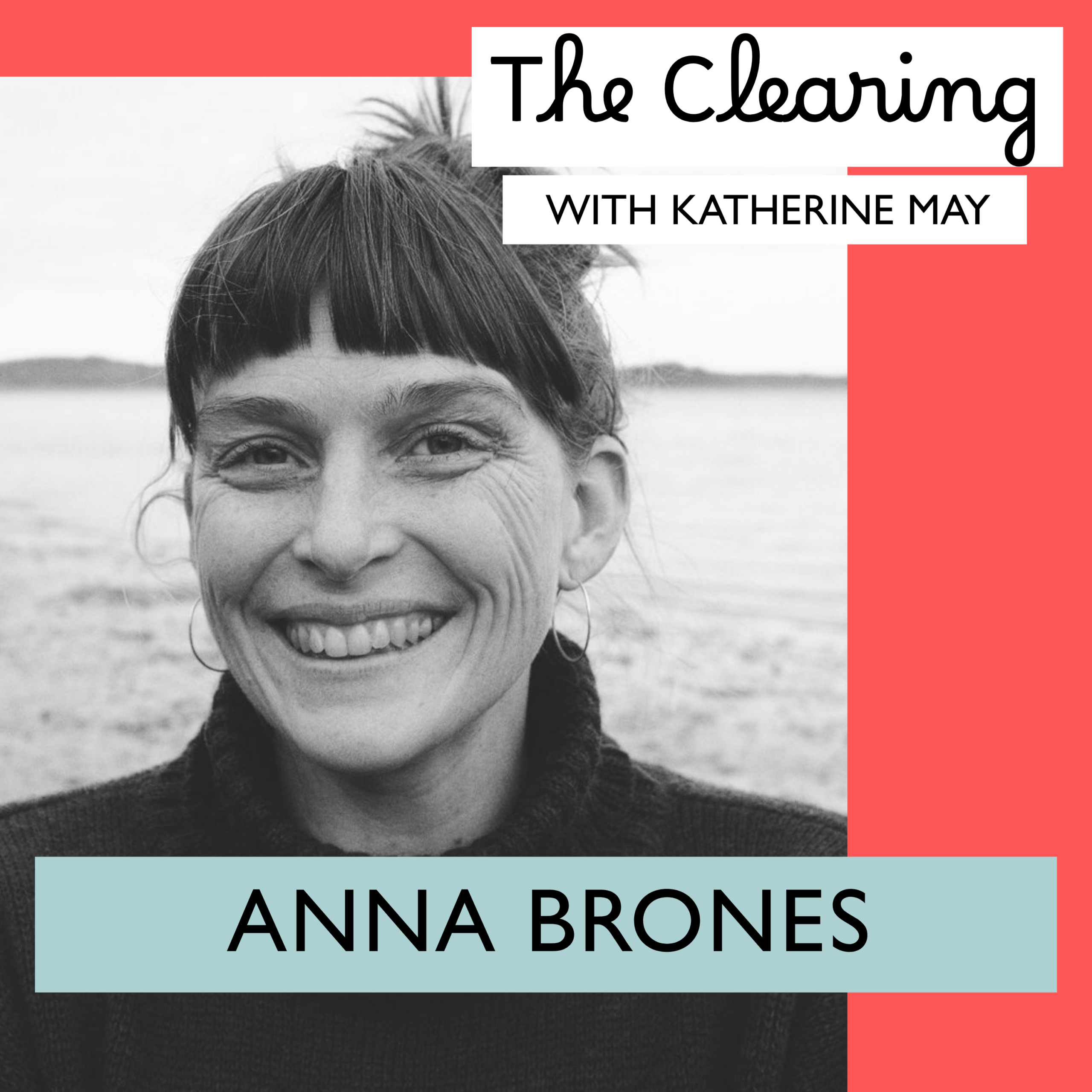
Not too warm, not too cool, the kind of evening where you’re still in shorts but have pulled on a sweater, is where we find ourselves this week with the wonderful writer and papercut artist Anna Brones.
It’s the Pacific North-West but imbued with Anna’s Swedish heritage as she brings comfort and nostalgia – cold water swimming, her grandmother’s woollen blanket – to a cosy spot on a blustery shore.
Together, Katherine and Anna explore ideas of home, desire for the place you are not, ‘the curse of the creatives’ and share fascinating insights into both of their creative processes.
Transcript
Please note this is an automated transcript and as a result it may contain errors
Katherine May: [00:00:00] Hello. It’s Katherine here, back in South West London on one of my meanders to a hospital.
Today I’m in somewhere a little more post-industrial, I’d say. There are some scars of old buildings on the ground
Katherine May: [00:00:00] Hello. It’s Katherine here, and I’m not gonna be moaning about how hot it is this week because it has rained and rained and rained over the last two d- Just outside in the garden in a rare break between rain showers, trying to rescue the dress I put on the washing line three days ago, which has just got rained on repeatedly ever since.
I think it still might start again, but it’s lovely out here today. It’s cooler, and the garden looks really grateful, frankly. There’s that lovely smell of, uh, roses after the rain. I’ve got this brilliant climbing rose that is, uh, full of little tiny pinkish [00:01:00] white flowers, and the smell of it right now, that fresh rose water smell, is just absolutely magnificent.
When it rains after so much hot dry weather, it’s like the whole of nature sighs in relief. And that’s a little bit how I’m feeling, quite honestly, ’cause it has been hot. I think I just heard some thunder though, so this, this might not go that well. Anyway, how are you? I am good. I’m at home, looking after my mom at home for a while, while she still waits for surgery, and that’s another little exhalation, I think, in my family right now.
We get to spend time together that’s not in an institution. My mom’s getting to eat nice food, which is bringing her appetite back a bit, and just in general takes the [00:02:00] pressure off. We can just live almost normal lives. I wouldn’t say it feels particularly normal to us to be looking after my mom in my bed while she’s staying here.
Oh my goodness, my, um, my parasol is going crazy in the wind, but that’s okay. It’s all okay. I will take that down in a minute. Um, but yeah, we’re home, which is good. I might pause and sort that out. Well, okay, that was dramatic. Uh, that’s the first time I’ve had to pause an intro to rescue a garden parasol that was about to fly off into the upper atmosphere.
Um, that was very nearly a documentary entitled The Day Katherine May Died. Uh, how exciting. Anyway, let’s move on. Um, I’m here to introduce this week’s podcast guest, who is the great friend of mine, [00:03:00] Anna Brones. Sorry, I did that wrong. Who is the great friend of mine, Arne Brones. I am happy for that mistake to be let in because as Arne well knows, in everyday life I do call her Anna because- I just feel like saying Anna sounds like I’m putting on an American accent.
And just before we started recording this podcast, Anna said to me, “Are you gonna remember to call me Anna?” And I was like, “Oh, God, yeah. Sorry.” She was like, “No, no, it’s absolutely fine, but I think you should do the right name just for this.” And so I’m doing it, and I will try and do it in the future. But it has made me really aware of how, um, that, you know, of that weird feeling that we think we are speaking the same language, but there are these little kind of li- like little bits of unclear territory between American [00:04:00] English and English English.
And whereas to me, I’ve always thought, oh, Anna is just the American pronunciation of A-N-N-A, and I will just pronounce it the English way so I’m not sounding pretentious Other people would think they’re two different names. And when Anna and I discussed it, we both kind of decided that we weren’t really sure what the actual answer was.
Um, anyway, that’s that’s neither here nor there. But I’m here to introduce Anna Brones, who is a magnificent presence in the world. She is a visual artist, and in fact, recently she created a, um, a beautiful paper cut for the sister to my newsletter, which is called The Retreat, which is, um, a just… I mean, it’s not a newsletter at all.
It’s just a place where I offer a monthly online digital retreat for a couple of hours every month, just for [00:05:00] people who want to gather together in a space and do some rest and reflection together. Nothing particularly woo woo, nothing particularly heightened, just people coming together to rest their brains a little while and, and as I always say, calm the nervous system just for some short, short time.
Um, anyway, Anna did our free giveaway print that we give to annual subscribers to that recently, which makes her part of this universe, um, which is as complex and important as the Marvel Universe. I’m sure you’ll all agree. Um, but also she’s a writer. She writes Creative Fuel, the newsletter, which is honestly one of the most consistently thoughtful and intelligent newsletters out there, in my opinion.
Um, I don’t know actually [00:06:00] how she does it, because she’s always coming up with such interesting and in-depth posts. And of multiple books, um, including I think possibly her most famous book is about fika. Anna is half Swedish, and so, uh, she’s writing about the Swedish practice, the kind of cultural habit of breaking for coffee and cake, um, and how sort of vital that is to the way Swedish people think about the world.
And I know that she’s been working really, really hard on a book about cold water, which is coming next year, which I for one cannot wait to read. We’ve had lots of discussions about it being fellow fans of cold water, but also be- both being people who are critical of some of the ways that, you know, the practice of cold wa- water swimming gets talked about.
Um She’s got loads of interesting things to say about that. Anyway, I’m unwrapping some bindweed from my euphorbia bush, [00:07:00] which has, uh, which is actually at the moment covered in lovely little beads of rain. But I do find that rain emboldens the old bindweed, doesn’t it? So you have to, have to take special care to get rid of it after a rainstorm.
Um, look, I’m just gonna go on and on. I’m gonna leave you to listen to the episode with Ana, and I will be back afterwards, having narrowly skirted my own demise with the marauding parasol. I’ll see you in a bit
Anna, welcome to The Clearing. I’ve been carefully coached by you to say Anna, which English people are very uncomfortable with.
Anna Brones: Oh, that’s fine. Well, one, thank you for having me. It’s nice to, um- It’s lovely to have you … it’s, it’s nice to chat always. Um, yeah, well, in Swedish it’s Anna, which- Yeah … and then if you don’t say Anna here, then people just say Anna with a hard A.
And I just don’t like that, so you know,
Katherine May: it’s [00:08:00] whatever. We are British and colonial enough that we just reduce everything to Anna, like we’ve decided that. Mm-hmm. Like everyone’s- Yeah … gonna be Anna. That’s fine. They don’t get to choose. Sorry. But,
Anna Brones: but your version sounds nicer, so y- whatever works.
Katherine May: Well, no, we will get this right.
Um, it’s lovely to have you here. It’s so nice to be here. I, um, I mean, I get the sense that you’re the kind of person that really knows how to get away from it all when you need to.
Anna Brones: Yeah, you know, okay, so I’ve, you, I’ve thought a lot about this conversation, which I, I tried not to ’cause I don’t, you don’t wanna prep too much, but- Mm
um, you know, it’s, it’s 7:00 here, my time. Um- Mm. So I, this morning I thought, “You know, I’m gonna get up, I’m gonna get up. I’m gonna put the alarm on at 5:00.” Wow. Unfortunately, just so I had some enough time before. Yeah. So I wasn’t scrambling last night ‘Cause you’ve gotta like come to a bit before you- Yeah, yeah, yeah
yeah, yeah. Um, and sun rises at around, um, I think 5:30 right now. So when I woke up at 5:00- Yeah … I had, you know, I always have to sleep with the window [00:09:00] open and it’s like I woke up a little bit before 5:00 just ’cause the birds were chirping, and this is just my sort of like late May, early June is just really one of my favorite times of year.
Mm. Because it’s that, it’s the before time. Yeah. Like it’s the before- It’s nothing … summertime and everything is green. Anyway. Yeah. So I got up at 5:00 and I thought, “I’m just gonna, I’m gonna go out to the garden.” So I made tea and I went out to the garden, and I have this chair that, um, is this Adirondack chair that I once found floating in the water when I was on a paddleboard-
and I like took it home on my paddleboard. Anyway, I’ve, I shoved it in the one area in the garden where it fits, and I just like to sit there sometimes. But I thought, “I’m just gonna go sit there ’cause that’s better than me doing whatever I need to do right now.” Yeah, it’s nice. And so I went out and I sat there and I drank tea, and I could like already hear, like the bees were already humming, and I was like, “Oh, great, good, we’re pollinating.
That’s, that’s possible.” And then, and then I like, and then I pulled some stuff, and then I was like, “Oh, but I wanted to plant that [00:10:00] thing.” So all of a sudden it was 6:00 and I had just like sat in the garden and done garden work. And I thought, you know, that to me is a kind of retreat and I think- Mm … I do love to get away and I love to just drop everything, but I also, I think having like led retreats and been away and I do just try to think about how we get some of that in the every day because-
Katherine May: Yeah
Anna Brones: if you’re just waiting-
For the week or month, whatever But, and waiting till you’re exhausted Down the line is never gonna happen. Yeah.
Katherine May: Yeah. Yeah, I think that’s right. Yeah. I was having just this conversation with Alice Vincent the other day, who came on the pod, and she was– We were talking about how gardening is, like, one of those little moments in your life that can take a couple of minutes or can expand into a whole day.
You know, it’s like there’s always layers that you can go through to do that little extra thing and that little extra thing- Yeah … and your attention can really sink into it. Yeah.
Anna Brones: Well, and I think as a, as a creative person and as a person whose creativity is attached to their [00:11:00] career and their money
Katherine May: Mm-hmm.
Anna Brones: Yeah. Yeah, it’s like this- Importantly … it’s this place where it feels super creative ’cause you’re thinking– Like last night, my husband and I, we went and bought a cattle panel. I have no idea what that’s called in the UK, but it’s this- What? To keep cows out. It’s like– it’s to keep cows out, but it’s like this metal grid, right?
And they’ve become quite popular for making- Yeah. We call it a cattle grid … trellises. Yeah, cattle grid. Yeah. So we went and bought one. Borrowed my dad’s truck ’cause it’s huge, and like, and I brought it home. And then we, like, put these stakes in, and then we, like, put this trellis arch that goes over this chair that I talked about, that I’m gonna now put, like, some squash and some beans so that- Oh, lovely
in an ideal world, if everything- You know, if the world does what I want it to do- … if the, if the bees keep pollinating, I don’t know, that there’s gonna be this sort of green going up and over the chair. Ah. So ideally in the summer it will be, the sun will be out, but then I’ll have this little shaded corner of the garden.
But I was, but I- that’s what I love about the garden, is that it feels creative ’cause you are sort of [00:12:00] thinking about where things go, and you’re thinking about color- Yeah … and you’re thinking about placement. But then it’s like physical and tactile, so you can- Mm … go out there and if you’re angry, well, you just like dig really hard for a bit, or just like get the shovel- Oh
and, you know, just get after it. It’s great for anger. Yeah. And then you’re totally removed from the final product. ‘Cause the final product is like six, you know, four to six months from now, and you have no control over it anyway. Yeah. So- You’ve got no control.
Katherine May: Yeah. Things grow that you didn’t plant.
Anna Brones: Not four to six months, maybe two, but-
Katherine May: And, yeah.
Yeah. And I think- Well, some it depends what you’ve planted, doesn’t it? Yeah. Because I’ve got a, um, a climber that I planted three years ago, and it still isn’t doing anything yet, and apparently that’s completely normal for that particular plant, so-
Anna Brones: Yeah. Just wait … you’re
Katherine May: just like, “Okay, well I’ll- Okay … uh, just bide my time then.”
Yeah. But I- Wish I’d kind of realized that. Yeah. I mean,
Anna Brones: yeah, but I think it’s, there’s so few things that we have, uh, in our lives that are like that. Yeah, yeah. I think especially living a life of immediacy, which I think is this [00:13:00] current moment, everything is immediate- Mm. Mm … right? Every crisis is immediate ’cause it’s on your phone, every, you know.
A- and I think that to have something where you just get to be in the process and the, the end product is- Yeah … always at a future time, and you’re never really done, but you’re not, you don’t expect to be done in a way that you might with your own creative work. Like, I- No. Yeah, I, I don’t know. I feel like also, since I’m now in my 40s, it’s like either gardening or birding are the options.
Or both. Or both. Or both. And I do love looking at the birds, so, you know. Well, that’s the thing,
Katherine May: a n- a nice garden invites birds, so you get to do both. That’s right. That’s right. Yeah. Yeah, I think I’d rather garden really. And I, the other thing that I always think about is, I mean, obviously you are half Swedish, right?
Mm. Is it half S- yeah, it’s half Swedish. Yeah, my mom’s from Sweden. So your mom’s from Sweden. And so you have that real connection with that place as well, and you visit there a lot- Mm. Mm … which must be a [00:14:00] delicious contrast to America presumably. I mean, it’s a very different kind of a place.
Anna Brones: Yeah, absolutely.
Um, so I grew up here where I live now, which is in, um, like the Pacific Northwest. So I live- Mm … like an hour and a half from Seattle. Um, and I sort of just- Live in the forest by the saltwater
Katherine May: Of course you do. That’s exactly what everyone thinks you do.
Anna Brones: That’s right. That’s right. It’s
Katherine May: like, “Where does Ana live?”
That’s right. That’s right. I know.
Anna Brones: Um, and I think there are, there are quite a few similarities landscape-wise. I mean, it is different- Mm-hmm … but I think that sort of… It’s funny ’cause when my, um, when my, when my parents moved back here, my dad had studied in Sweden, and that’s how my parents met. Right. And he’s from LA, and my mom has this joke about how, you know, she’d gone to LA a couple of times and just thought, you know, flying in, like, “It’s just all concrete.”
Uh- … certainly there’s more things in LA, and I’m sorry to anyone listening who lives in LA. But anyway, when they moved here- When they moved back to the US in, like, the, um, [00:15:00] late ’70s, my mom said, like, “I’m not, I’m not moving to LA. Like, I have to have more than that.” I said, “I don’t want that.” And so my, my dad had, um, his, his, hi- My, like, great-grandparents had, um, had homesteaded here, um- Right
like many, a long time ago. Wow. And so my dad had spent his summers here with his grandparents, um- Mm … just, yeah, coming up here and working and- Mm. And so he’d spent a lot of time up here, and he said to my mom, “Well, okay, it’s sort of similar.” And there are quite a few, you know- The Seattle area has a lot of, um, big Scandinavian heritage from a big immigrant, uh, population that came here- Right
late 1800s and turn of the century. And so I think there, there are kind of a lot of similarities. I think Sweden is, um- I mean, politically, obviously very different. Uh Yeah. Culturally, culturally a lot of differences. But- But- Yeah …
Katherine May: you know, there are some shifts happening- Oh, absolutely … everywhere now, aren’t there?
Yeah, yeah. That, that [00:16:00] would be quite recognizable in America right now. I mean, I- Yeah … yeah, unfortunately- Yeah … Europe has not- Yeah … escaped the- No, absolutely not … the rise of the- No … far right.
Anna Brones: I think culturally, what I think is s- can sometimes feel a lot here is just the intensity or the ext- like, you know, g- Yeah
the US is such a culture of extremes, and I think that that, that just gets really exhausting. Mm. Um, and so there is kind of an in-your-face, uh, a lot of the time. Yeah. Which also, I live in the country, so I- Yeah … and I just go look at- Feel quite distant … trees in my garden. So, you know, I, I’m not I’m not met with that as much in my everyday life- Yeah
as somebody else would be. But yeah, and I think, um Yeah. I mean, I, I love going to Sweden. I love, I spend, um, in the summers I have a friend who, uh… Well, actually, funnily enough, because you had Laura on the podcast, um- Yes, Laura Pashby … so she did a, a residency at my friend Hannah’s, um, property in northern Norway called Singla.
And, um, I [00:17:00] have been going there every summer for the last five years. And so Hannah’s a good friend, and, um, my husband Luke and I got to do, like, the first round of residency that they did there as kind of- Oh, wow … let’s see if this works. Um, and so I’ve been leading a retreat there with her every summer.
So what’s quite nice about that is that that means I get a little Scandinavian stint, uh- Yeah. That’s nice … in, in August every year. And I, I think that feels… Yeah, I think anyone who, uh, anyone who has a background rooted in, in another place, I mean, whether that’s because you grew up there or whether that’s because you spend a lot of time there- Mm
you know, I think this idea of home can be- Yeah … complicated at times. Definitely. And your, your heart feels drawn to different places. Um, and you know, you don’t even have to be from somewhere else. You could have traveled. I mean, lots of people feel this. And I think it- Mm. Yeah, to be rooted in a place, [00:18:00] which I certainly work at here, I think you can still have tethers elsewhere, and that doesn’t mean that- Yeah
you’re not rooted in the place that you are. But yeah, so certainly I think going, um, if, if I, if it’s been a, a few years and I haven’t been to Scandinavia, I can feel it for sure. Mm. Um, but yeah.
Katherine May: Yeah. There’s always those, those kind of… I, I mean, my, you know, my husband’s half Swiss, and he always kind of, wherever he is, he’s always yearning for the other place just slightly.
Yeah. You know, there’s always something- Yeah … that the other country does that little bit better, you know, that tastes a bit different or that- Yeah … you know, works better. Yeah. Um, yeah. It’s, it’s a kind of, on one hand it’s lovely to live between two cultures, and on the other it can be quite hard sometimes, I think.
Mm. Yeah. Yeah. You, you’ve, you’ve always got that nostalgia for a place that you’re not.
Anna Brones: Yeah. And I think, you know, I think we also live in a culture of- Looking elsewhere?
Katherine May: Oh, sure.
Anna Brones: Yeah. Uh, you know- Nothing’s quite
Katherine May: good [00:19:00] enough anymore. Nothing’s quite good enough.
Anna Brones: Yeah. Yeah. And sort of put your focus on the horizon beyond.
I don’t know. Just even- … in terms of how we think about adventure and travel, and everything is sort of, like- Mm … out there focused. Um, which is also a very, you know, you mentioned, uh- Yeah … colonialism earlier. But it is this, like, very, that is also- Yeah … stems from that, that, like, must seek things elsewhere.
Go out and conquer. Uh- Yeah … and, and I think that that, we’re, like, surrounded by that, too. Um- Mm … even in ways we may not think about. I just think, you know, I, I have a, I have a subscription to a magazine that does quite a bit of travel stuff, and it’s like every time I just think, “Gosh, it’s just, like, pages and pages and pages of all the places you can stay and all the things you can do.”
Yeah. And you just think, wow. And I, and I think when I think about the topic of retreat, I think it’s really easy To feel, and I know this myself, it’s really nice- Mm … to go somewhere else and just g-get to, like- Oh, yeah. … [00:20:00] disconnect every single tether, responsibility, expectation that you have in your own place.
Mm-hmm. It is really nice to go elsewhere. And also, um, if we in our daily lives are missing the here and now and what’s around us, I mean, that… It’s just not good for our mental state, I don’t think. Mm. Because that, that means that we’re always projecting down the line and to a different place instead of being in the current moment, and I think that’s just…
It’s not what our modern society is, like, wired to do. Um, you know, we’re just, yeah.
Katherine May: There’s everywhere’s always better than here, yeah. That’s right. Well, with that in mind, I’m really curious to know what retreat you’re gonna dream up. So I’m gonna welcome- Yeah … you into my clearing in the forest. Um, tell me
Anna Brones: where we find ourselves.
Yeah. Well, I, I said before I thought quite a bit about this, and then I thought, “You’re overthinking it.” And then- … I, I mean, I think my place is imaginary and [00:21:00] real. Mm. Only in the sense that I have places similar to my imaginary version that I want to go to. But mine is definitely at the edge of saltwater.
Katherine May: Mm.
Anna Brones: It’s a rocky beach. We’re not… I’m, I am not a turquoise water, warm beach person.
Katherine May: Northern Europe gal, you say. I’m… Yeah, it’s like,
Anna Brones: I mean, I’m… Friend Roisin and I joke about being proponents of the North Sea diet instead of the Med- Oh, yeah … Mediterranean diet, so, you know. Yeah. And I think you and I- You like a sea, as you and I quite often say
you and I share that. You like a sea, that’s right. Uh, so it’s a little blustery. I mean, the sun does come out. Uh- Mm. Mm … but yeah, there is that sort of combination of, like, warm and cool. Um, yeah, it’s some kind of a building structure, cabiney thing, uh, that has… It doesn’t have to be right front and center on the water, but if it’s not, it’s nice to have a view of the water.
Katherine May: Um- I [00:22:00] think it should be on the shore. I think it should be on the shore. Okay, great. It’s on the shore. I let yourself have it. It’s on the shore. It’s fine. Yeah.
Anna Brones: Let… Thank you. Thank you. We’re
Katherine May: not, we’re not shopping for real estate here, where you’re like, “Well, I’ll compromise.” That’s right. “And I’ll be at the top of a cliff.”
But, you know.
Anna Brones: And I’m not like, “Oh, but sea levels are rising, and so in 10 years’ time, like, maybe-” Yeah. Don’t worry about those at the moment. Yeah, okay. We’re not worried about that. Just for 10 minutes, let’s not worry. For the time being. Thank you. Uh, yeah, okay. So it’s right on the shore, which means I can just- Just
walk right out, go in the water. Um, there’s a sauna somewhere as well. Of course there’s a sauna. Of course there is. Yeah. Um, and I think there’s a, there’s a little garden out back. ‘Cause I, I do like… I was thinking about this idea of retreat, and I- I kind of caught myself ’cause I thought, oh gosh, as a creative person, my mind almost immediately went to, like, more residency.
Like, I was like Oh, that’s interesting. Yeah. What art supplies am I bringing? What am I working on? And then I was like, whoa. That’s- But that’s okay. That’s a… But it’s, it’s so interesting that I think when, when I leave, I often think of that as, like, a nice creative reset time. Mm. Hmm. [00:23:00] Um, so I was just kind of thinking about that, which was curious.
But yeah, there’s a garden. Can…
Katherine May: Okay. I’m really curious to know, like, how comfortable you are to be not working. Does that sit easily with you? Yeah. Can you ever stop either writing or… I mean, of course you make your beautiful paper cuts. Yeah. Um, you do… Actually, there’s loads of different ways that you create.
Anna Brones: Yeah.
Katherine May: Are you comfortable to not be doing that ever?
Anna Brones: Yeah, I, I mean, I have worked at it. But I think it’s interesting ’cause… So, um, my husband Luke is from Australia, so, uh, yet another place that we have this two- Yeah … cultures- Connection to … two places. That one’s very far away. But anyway- Yeah … we just, we went to New Zealand last month, um, on a family trip with his sister and nephew.
And, um, I dragged my, my studio sketchbook, which is not like a l- nice mini travel sketchbook. It’s like a, it’s a big square sketch… It just takes up, you know, a bit of space in the backpack. Yeah,
Katherine May: yeah.
Anna Brones: I dragged that and all my art [00:24:00] supplies, and I was there for two weeks. Beautiful place. Like, beautiful, all beautiful things.
I didn’t do any visual work. Mm. Like, I didn’t pull that sketchbook out. I didn’t open those art supplies. I think all I did in my notebook was I wrote down, like, three anecdotes of things that I overheard people saying, and I wrote a list of birds- … that I’d seen. And that was it. That’s all. And- That’s great
and I thought- So you
Katherine May: can actually
Anna Brones: really switch off from it.
Katherine May: That’s-
Anna Brones: Yeah, but I think that- That’s quite remarkable. Yeah, but I think that has to do… Like, to me, that says I really needed a break from it. Yeah, yeah. Because- Even though I sort of am thinking like, “Oh, it’d be nice to sit here and draw and write a little thing,” it’s almost like, oh, we’ve been doing too much creative output, and so I just, I gotta reset.
Mm. And so I think that, that just to me is a clear sign. I- instead of getting d- Yeah … it’d be easy to get down on myself and say, “Well, you didn’t do the [00:25:00] things.” Um- You do have to have a break, yeah … but to me that is an indicator that I needed to- Yeah … stop for a
Katherine May: bit. Well, let some new ideas in. I mean, I’m- That’s right
notorious in my family for lasting, like, two days on holiday, and then I end up pitching a book to someone or, like, doing something major. Yeah, yeah, mm-hmm, mm-hmm, mm-hmm. There was a series of holidays where for, like, a period of two or three years, every time we went on holiday, I ended up having to have, like, a major publishing conversation, like with a new editor or something- Yeah
like that- Yeah … from the holiday cottage. Yeah. Um, that definitely happened with Wintering. I pitched Electricity of Every Living Thing standing on Dartmouth Harbor, like, pacing up and down- Yeah, perfect … trying to get a phone signal. Yep. L- like, I can’t, I can’t … I find it really hard to let go.
Anna Brones: Yeah.
Katherine May: And I’ve, I’ve stopped doing that now, which is probably for the best, but I do tend to fill my notebooks while I’m on away.
Yeah, I, I s- I can’t turn … In fact, the tap comes on at [00:26:00] that point, ’cause normally- Yeah … I’ve been rushing around, and I get some space, and I’m like, “Oh, wait. Here’s the ideas.” Yeah, yeah, yeah.
Anna Brones: Yeah, yeah, yeah. Yeah. And I definitely have that at times too. I just, it’s just interesting to see kind of when that … Or, or I guess just be conscious of when that, be mindful of when that happens and when it doesn’t.
Mm. And I think- Yeah … I spent a lot of my, um, like, 20s and 30s Like, often, like, I, I wrote for this specialty coffee website for a long time. Ooh. And so what happened was that any time we traveled somewhere, I was like, “Maybe I can pitch an article about this coffee place.” And Luke was just like, “You need to stop.”
You know, like- Yeah … we can’t. And ’cause I did a lot of, a little bit more, like, outdoor-type stuff, and so I was always kind of thinking about, “Oh, can I pitch this trip as a thing?” I think that is- And I think that gets quite exhausting … the curse of the modern creative,
Katherine May: isn’t it? Yeah. Yeah. What can I … You know, how can I use this time?
Yeah. I mean, basically monetize this time, let’s face it. That’s right. But that’s, that’s often because we’re not [00:27:00] making the best- Yeah … living in the world, and so we’re kind of like, “Right, well-
Anna Brones: Yeah … if
Katherine May: I’m to have a holiday, I can make it affordable by writing about it.” Sure. Absolutely. Or, and then, and then maybe I’ll get my accommodation for free- Yeah
or perhaps someone will sp- Yeah, yeah … you know, like there’s that- Yeah … Lego bricking
of trips that- That’s right … happens, I think. And then, and
Anna Brones: then, yeah, and then it’s just not actual holiday- Yeah … when you turn it into work. Yeah. I mean, even if that work is fun, and I think you and I have talked about this numerous times, it’s- Yeah … just because you get a kick out of it once in a while, I’m not saying all creative work is fun.
Certainly not. There’s also a slog. But, you know- Oh, funny … I think if, if you feel that spark, that’s lovely, and that’s, like, why we do it. Mm. But just because that spark is involved does not mean that, that, that you don’t deserve- Yeah … to also have a break from that. Um, and all- Yeah … and be able to, like, feel that spark maybe about something else or about a different idea that you don’t have to, that you don’t have to turn into a project just quite- Mm
yet, too. Mm. ‘Cause I think there’s so much [00:28:00] pressure. Um, I feel that. It’s like that, that kind of thing of you get a little scarcity mindset about your ideas sometimes, or at least I do. Yeah. Where you sort of think like- Yeah … “Ooh, this is a good idea. I got, oh, I got have it now. I gotta run with it. I gotta, I gotta-” Yeah
“because I’ll never have another idea again,” which i- is just silly.
Katherine May: Well, yeah, but the … I think it’s, there’s also the fe- it’s also, like, will I have another idea that anyone will be interested in? Yes. I think that’s the terror. Yeah, yeah. I mean, I’ve definitely been through big dry patches that haven’t felt creatively like dry patches to me, but- Yeah
but nobody has liked what I’m cooking up. Yeah, yeah. And that’s horrible. Like, you’re- Yeah … y- you’re like, “Well, what, what’s going wrong?” You know? Yeah, absolutely.
Anna Brones: I know. Absolutely. No, it’s hard. Yeah. And I, and I think, you know, this is- I, these are like particularities to having this as a profession. Mm-hmm.
Because, because- Mm … to your point, you’re still having the ideas. Yeah. You know, you’re not, you’re not creatively, you’re not creatively dry or [00:29:00] creatively sort of tanked or blocked or whatever.
Katherine May: Yeah.
Anna Brones: There’s still stuff happening, it’s just that you don’t know where to… That idea doesn’t have a, a place- Yeah, that’s right
quite yet. And then that idea actually might have a place, but, you know.
Katherine May: Yeah. In, but it might be in five years’ time, you know? That’s right. Like, sometimes you’re just out of sync with the world. That’s right. But anyway, this is a long way around talking about what you’re gonna do while you’re there. Sorry.
Because are you gonna do creative writing? Yeah. It feels like we’re saying what, are you gonna do creative writing? Yeah, I am. I am. Yeah.
Anna Brones: I am, ’cause it’s nice to do. Yeah, I am. Um, I mean, mostly I’m gonna get up, I’m gonna make my coffee. I’m gonna not- Mm. I’m gonna have turned my, um… There’s no Wi-Fi at this place, just so we’re clear.
That’s a good thing. And I’m going to have turned my phone onto airplane mode. Mm. Um, if I need to get in touch with someone, I can turn it back on, it’s fine. But, uh- Yeah … yeah. That’s fine. But, but I’m just existing. So there’s [00:30:00] coffee, just a nice morning. Yeah, I am working on stuff. I mean, I-
I like the idea of being in a place and seeing what arises. To, to your point of- Mm … it’s also really lovely to go into a space when you have a project to work on. Because then you sort of- Oh,
Katherine May: yeah …
Anna Brones: and, and that’s where I think maybe a residency can sometimes, when it comes at the right moment, you just think, “Okay, great.
I have this week. I don’t have to do anything else, and all I have to do is this project.” But it’s also nice to have this open space to just- Mm … think what’s gonna pop up. Now that, for me, in my like real life, not on my imaginary shore, um, that’s actually really hard for the first couple of days because of everything we just talked about.
Yeah. Because it’s really hard for me to exist in that in-between space of, “Oh, I have an assortment of ideas, but I’m not quite sure, but also I’m tired. I need to sleep. Oh, I just want to read this book.” Mm. And then two days into it, it’s like, “I haven’t done anything productive.” Ah. And- Productivity
Katherine May: pressure
Anna Brones: [00:31:00] yeah. And like to unravel that. So I think for me, the … when I have done residencies, I try to give myself a bit of grace for those first couple of days. ‘Cause it’s like- Mm … it’s like the transition period between, um, regular working life and, you know- Yeah … this like- Yeah. You- … retreat time.
Katherine May: Do you know what? I have
I don’t really do residencies, and that’s partly because I never actually get anything done on them. There’s something about them that I find overwhelming. Like all of that- Uh-huh … space and time is too- Uh-huh … luxurious for me. Yeah. And I write much more when I’m under loads of time pressure, and I’m at home, and I’m, you know, trying to cook everyone’s dinner and- Yeah
you know, or, or do the- Yeah … school run. Or like fitting writing in between stuff. Yeah. I actually write more. Yeah. I … Residencies just don’t work for me. It’s weird.
Anna Brones: Well, it’s funny. So I’ve been on a couple of residencies, and for all of them I never came out with a specific [00:32:00] thing or a… But I just, like, lots of seeds were planted that then I see showing up later.
Yeah. So for me- Yeah … those times are definitely more spacious, walk around thinking. Like- Mm … I also don’t do copious amounts of writing or- But there’s just, like, space to exist, and then I just know that something will happen there that will come out, like, a year later- Yeah … maybe. It will sort it all out.
Katherine May: Yeah. And are you swimming while you’re
Anna Brones: here? Yes, of course. Right. Of course. Thought you might be.
Katherine May: Yeah. I thought I might. How, how cold is the sea? Mm.
Anna Brones: Uh, I think it’s cold enough to be able to be in for, you know, 15, 20 minutes. Mm. But- Mm. But, but still… Or, or sorry. Like, warm enough to be in for that long.
Yeah. But cold enough that when you step out, you feel just really revived.
Katherine May: Well, I, I mean, I’ve seen pictures of you breaking the ice to get in to [00:33:00] swim. I … Yeah. I mean, that- Which I’ve never done … yeah. I’d love to try it, but I’ve never done
Anna Brones: it. Well, it’s kind of- So- … a wild experience. Yeah, I don’t have that- Yeah
um, I don’t have that where I live. Yeah. Because I’m in salt water, and it’s… Yeah, just never, I’ve-
Katherine May: Salt water never gets that cold, does it? Yeah. It’s got a much- And I’ve, I’ve heard- … lower freezing point. Yeah.
Anna Brones: Where, where I live, on the bay that I used to live on, our, our old landlords talked about one time, you know- Right
in, like, the late ’80s or early ’90s when the bay had frozen over, but I’ve never seen that. Wow. Yeah. So I don’t have ice here. But because I’ve been working on this book about cold water, I’ve gotten to go some places, uh, where there’s ice and then get into the water and the ice. And it’s really, um… it’s a very different experience.
Very- What’s it like?
Katherine May: Can you describe it? I’m- Yeah … I’m mega curious.
Anna Brones: Well, so I think one thing that I hadn’t really thought about was that… So I go in the water year-round here. And, um, I live in an area where the water’s pretty much always cold year-round. Yeah. [00:34:00] Um, but you know, in the winter it’s probably down to Oh, I don’t know, like six, seven, eight degrees.
I’m not, I’m not really sure Okay. Yeah. Um, so like- This is, yeah … yeah. It’s, it, it, it rarely gets lower than like, you know, like three or four is probably, like that’s never getting down there. But, um- Yeah … and then in the summer it’s like 12. I don’t know, it’s just like it’s not that warm. But I think what I hadn’t thought about when I went to places where I got into, like through the ice and into the water- Mm
is that it’s like sitting in a hot tub, but it’s cold. Like you’re not moving. And so where I go here- Yeah, ’cause the, the hole in the ice- … like you can go swim around … is so
Katherine May: small. Yeah. Yeah. And I, I actually don’t- Yeah, yeah, yeah. So you can’t warm yourself through. Yeah.
Anna Brones: Yeah. And I don’t like sitting still.
Um, like some people are like that, but I like to just… And I’m just doing breaststroke, but I like to just go around a bit and sort of feel- Yeah … like I can move, and you can’t do that. Well, yeah. Well, unless somebody has broken up an [00:35:00] enormous- Amount of ice … amount of ice. But,
Katherine May: you know, I’m not uh- An Olympic swimming pool size- That’s right
like patch of ice. That’s right. Yeah. Okay. So you’re just- Yeah … you’re just immer- immersing. Yeah, you’re just like sitting there. Yeah. Okay. Okay. Just doing it. And so you get cold much quicker presumably.
Anna Brones: Yeah, and I think it’s, it’s just a… And then also to have ice, then you have to have a colder temperature, so there’s also like- Mm
a contrast, you know, just, just how cold the air temperature to how the water is- Yeah … also feels very different for getting out. But I think my favorite thing about being near and around ice is like the sound that it makes.
Katherine May: Which is,
Anna Brones: like, very cool. And I think, yeah, it’s interesting because, I mean, you and I have talked about this before ’cause we both like northerly- Mm-hmm
locales. Yeah, yeah. Um, and we both live in damp, rainy places. Like, like our cold- Perfectly happily. That’s right, perfectly happily. Yeah. But our cold is not… You know, like in the Pacific Northwest and in the UK, like- Yeah … it’s not a [00:36:00] pristine, glorious- No … white- It’s not dry cold … snow and- Yeah … it’s not that.
It’s very different. Yeah, yeah, that’s right. And so I think I get a real kick out of going to those places because it feels- Mm … like, that feels really exotic to me. But also- Yeah … but also known. Like, I can, you know- Yeah … I can deal with that temperature and, and, you know, there’s something that feels… And it certainly snows here, so I’m not, um- Mm
I, I’m not a foreigner to, to, to snow. But, um, yeah, there is just something quite- It’s a different- … different about that type of cold. Well, it… I,
Katherine May: I do think it is a little less challenging ’cause I think when I’m cold swimming in the winter here, like, our sea does get down to, like, one or two degrees. Yeah. So it’s, it’s properly cold and- Yeah
sometimes when, when we’re, like, minus a few degrees, the edges of the sea will freeze. Mm. So we’re, you know, we’re really, really chilly. Um, although that has… does not happen every year anymore.
Anna Brones: Yeah.
Katherine May: But when I get out, it’s often quite hard to get dried off because it’s, the [00:37:00] air is damp. Yeah. So then you have to, like, get warm and dry, and it’s actually quite hard to get warm and dry.
Yeah. Whereas I think if you’re in those dry cold environments- Yeah … those properly cold environments- Yeah … in many ways it’s slightly more straightforward because you’re not fighting against humidity- Yeah,
Anna Brones: yeah … in the air. Yeah. Yeah. Okay. And I mean, this is gonna sound strange, but I think it’s also from having grown up here.
Um- Mm … I, I don’t wanna say that I like that damp, raw cold in winter- … ’cause I’m certainly very over it by the time that we’re done. Yeah, by the time it’s done, yeah. But there’s something about that just, like, horrific damp cold that makes it really nice to go and be cozy. Yeah. Yeah, definitely. Like, you can have your wool blanket, and you can have your coffee or your tea and, you know- Mm
ideally there’s a fireplace. There’s also a fireplace in my imaginary- Of course there’s a fireplace … shore cabin. Yeah. Yeah. Because there’s something about that contrast that [00:38:00] I am obsessed with. Like, I- I remember I lived in, um … I taught English in Guadeloupe, um, after university. Of course you did. Yeah. Um, and so it’s a French overseas department, and so I was a French major.
And a lot of us would, the, like, the Ministry of Education did this program where they would place, um, native speakers of certain languages in schools so that, so that kids had native speakers. And so I went to Guadeloupe, and, um, which is in the Caribbean, and, uh, I very, very, very viscerally remember I would go and s- that we had, like, a little bedroom, and I would close the, the little sliding door.
It was a really small apartment. I’d close the sliding door, and I would blast the air conditioning- … just as high as it would go- To, like, freeze yourself down again … just so that I could sit there- Yeah … and, like, put on, you know, a jumper.
Katherine May: Yeah. ‘Cause that [00:39:00] felt- ‘Cause I just, I was like- Like home. Yeah … I just can’t be warm all the time.
I’m really similar to that. I mean, I do, I have great guilt about using air conditioning, but I spend all summer fantasizing about the day that I can get a, a cardigan back on- Yeah … and a pair of socks. That’s just all I want.
Anna Brones: Well, I call it shorts and sweater weather. Yeah. Okay. Yeah, I love that. Which is sort of ideal ’cause it’s, like- Yeah
warm enough to have part of your body exposed. But still cool with, like, a little breeze that, you know- Mm … you still wanna layer on. That’s my ideal. It’s like late summer
Katherine May: evenings as
Anna Brones: well- Yeah, exactly … when you stay outside,
Katherine May: and you just- That’s right … put a sweater on after a while. That’s right. That’s the best time.
And it just feels great. Mm-hmm. Oh, I love that. Mm-hmm. Is, uh, what time of year are you on your retreat, actually? Yeah. That’s a good point.
Anna Brones: It might be this time of year, just ’cause I was saying that- I just like this sort of- That lovely May kind of, um- Yeah. Yeah. But otherwise, I- … early summer … but I think otherwise autumn.
Mm-hmm. Just [00:40:00] because, um, which is funny because that’s actually a really hard time work-wise for me to get away, so maybe that is the ideal time.
Katherine May: Maybe that’s the dream ’cause you’re normally getting ready for Christmas. That’s
Anna Brones: right. That’s right. Um, yeah, I don’t know, changing colors in the leaves. Mm-hmm. I guess then we’re not in the garden so much, but hopefully whoever is in char- the caretaker of this place that I’m going to for a little bit has planted some root vegetables, so hopefully there’s still some things there.
Of course they have. Yeah. Yeah, yeah. Yeah, yeah. Of course they have. Um, yeah. Some kale. I, definitely not height of summer. Um- Yeah … ’cause height of summer, well, I guess it depends on why I’m there, but I find it really difficult to do really focused, like, again, if I’m thinking of this as, like, more of a residency type retreat- Mm-hmm
in the summer, I just don’t wanna be doing any work. Yeah. Okay. I mean, I just wanna be, like, flailing around, which is then an excellent time for going somewhere. But I think if, [00:41:00] if I’m, if I’m viewing this as a place to kind of restore but have some ideas, I don’t think that summer’s the right time for me.
Katherine May: That sounds really reasonable. Okay. So we have this gorgeous kind of shoreline retreat. We’re doing some swimming. We’re saunering. I always invite my guests to bring two things, and one is a sort of cherished object from home. Mm. Something that represents comfort or nostalgia or familiarity. What would you bring?
Anna Brones: Yeah. Um, so this is also why it’s really important what time of year I’m there because I’m bringing a handmade wool blanket. Yes. Um, so my my mom is a- My mom’s a weaver, and so our house is just full of hand-woven wool blankets. I mean, must be nice. Uh- Uh, and so I just, yeah, I, I want to be [00:42:00] able to sit outside with my coffee in the morning and just, like, have that wrapped around me ’cause-
Katherine May: Mm
I love
Anna Brones: being outside at that kind of edge where it’s not quite warm, but it’s not too cold to be outside. So- Oh, lovely … yeah, I have the wool blanket with me.
Katherine May: Absolutely gorgeous. And will it be one of your mom’s? I suppose you- Yes … have to say yes, don’t you? Or- Because she might hear this. That could be- Yeah, that’s right
really bad if you said no. She probably will listen.
Anna Brones: Um, uh, it will either be hers, or it will be, um, I, when my, um, Swedish grandmother passed away, there were a couple of things from her apartment that I requested. Uh, big family and so, and one of the things that I got was one of her wool blankets that I, was not hand-woven but just had been on her couch for years.
Lovely, yeah. And I just remembered it being there. Um, so it could be that one as well.
Katherine May: Lovely f- like, heirloom kind of blanket. Mm. Yeah. It, it’s so interesting that you grew up with a mother who’s a weaver, and, and she wrote books about it and things like [00:43:00] that- Mm … didn’t she? Yeah. Um, I mean, it’s obviously quite different to what you do, but you didn’t go straight into art really, did you?
You kind of- Mm-mm … you studied something different at university. I’m really curious about- Yeah … what it’s like to come into a creative practice- Yeah … having had a parent that’s, that’s had that as well.
Anna Brones: Yeah. I mean, I think looking at my life now, it’s sort of laughably hilarious to me that I would’ve thought that I would’ve done anything else.
You know, like, I’m like- We both did a similar degree, didn’t we? I think. That’s right. We did. We did. Yeah. We did. So I did a degree- Both did, like, yeah … in international relations. Yours was like- Yeah … political science. I was
Katherine May: political science- Yeah … and social sciences. Yeah. Yeah.
Anna Brones: Yeah. Yeah. Um, we actually talked about this in a cold water pool.
We did. Just so we’re clear. Yeah, we
Katherine May: did. We were swimming in- … um, Penzance- Penzance … Lido.
Anna Brones: Yeah, we were. Oh, it was so nice. Oh, gosh. I just wish we had those kind of Lidos here. Anyway, we won’t get sidetracked- Ah, that was a great swim … on that conversation. That was a really
Katherine May: good swim. All-time fave. It was a really good swim.
‘Cause there was- [00:44:00] Yeah … a sauna as well.
Anna Brones: Um, that’s right. All the things we want. Um- I, where were we? Oh, yeah. Yeah. I studied international relations and French, and I think I always thought that I would do- I don’t know. Yeah, something where I was traveling around doing- Like working for the- … big things. I don’t know, working at like an NGO or-
EU or
Katherine May: the United, yeah, Nations
Anna Brones: or something. Yeah. Yeah, yeah. Um, and then I actually had applied to go to grad school and do, like, an international journalism degree. Mm. Um, which is maybe a little bit more in line. Uh, and then- You were g- you were getting towards the creative. Yeah, yeah, yeah. And then, I don’t know, I just, I just started
I was, like, working at a magazine and then, I don’t know, I just … One thing led to another, and here we are. I should put- I don’t know … you should put that on your CV. Like, one thing led to another- I know … what can I tell you? Yeah. I mean, like, the only real job I’ve ever had [00:45:00] Well, I was a camp counselor growing up, but that doesn’t count.
But the- my only, like, my realest adult job was working at an startup adventure travel magazine. Ah. And our office was in, like, a warehouse space in Portland that had a ping pong table in it. And then-
Katherine May: Listen, I’ve watched Portlandia .
Anna Brones: Yeah, you know what it was like. Like, that’s the, my realest job I’ve ever had.
So- Wow … I don’t know .
Katherine May: Yeah.
Anna Brones: Clearly I was just- And that was just a
Katherine May: bit too real for you. You’re like, “No.” That’s right. I was
Anna Brones: like, “Too much.” Uh, yeah, and then after that, I’d, I, I worked for the, I, I worked for a, a, like, a online publication for a while. Um, and then just started working for myself. So I’ve been working for myself for a really long time.
Mm. Which makes it absolutely impossible to go get a job- Yeah … at a company. Come back after working for yourself. I don’t know. What, what would I do? It’s horrifying. What would I do? How would I handle it? I don’t know. Yeah. I know. But-
Katherine May: Unthinkable. Let’s not think about it … unthinkable. That’s right.
Unthinkable. That’s right. And, um, what [00:46:00] about a cultural artifact, something that you might bring with you for inspiration- Yeah … or to kind of tickle your brain a bit, or just a beautiful thing to spend some time with?
Anna Brones: Yeah. Okay. So I did think about this, and I thought when I go on retreat, I think the nice thing is to leave everything behind.
Katherine May: Mm. And
Anna Brones: the, the one, the one supply I tend to always wanna have with me is my brush pen, which is, like, a black, uh, it’s like a black Pentel pen, and it just, I don’t know, it just works magic. So I definitely wanna have that object with me, but that’s more of a supply. But yeah- Yeah … I was thinking about, ’cause you’d asked kind of, like, is there a book or a piece of art?
Katherine May: Yeah. And
Anna Brones: I think when I want … I mean, you can see behind me, like, this is, this is my studio. And this is also my brain. Like, I think sometimes-
Katherine May: It’s like a, it’s like a collage of images behind you almost- I know … isn’t it? It’s like- Like, a sort of collection of- There’s a lot going on there …
Anna Brones: yeah. It’s nice. Uh.
Yeah, I, I, I think my, [00:47:00] my brain just feels so full of a lot of things. Mm. And I think sometimes the idea of retreat that’s really lovely to me is to just remove myself from that for a bit and see- Yeah … what happens. And I think, like, when I, like, when I’ve spent time at my friend Hannah’s place in Norway, I think what’s so nice is to just go on a beach walk and Get a couple rocks that then I stack together, and then, you know, there’s like- Hmm
a feather. And so by the end of the week, there’s kind of a little collection of things. Um- Yeah. Okay … and that is something I, I do at home, and then the house is full of objects. Yeah.
Katherine May: But like- Do you know what? There’s a, there’s a common thread among so many of my guests that they collect pebbles. That seems to be a thing that- Yeah
writers do particularly. Like, we bring home little, little things, little treasures. I love it. And then we wonder how we got so many of them.
Anna Brones: I know, I know, I know. And I remember, I think it was your conversation with, um, w- with Martha Beck, and you were talking about just stones being [00:48:00] alive too. Yeah. Like, yeah.
Having personalities. Yeah. Absolutely. Um- Yeah … but yeah, so I think what I like about a retreat space, because it’s not yours, so it doesn’t have- Mm … doesn’t have all your, I don’t know, the unopened stack of mail, whatever. Oh. It’s just sort of a … It’s like a clean … It’s like a, not a … It’s not a blank slate because there are things there.
Mm-hmm. Whatever is in, whatever is in that space, like whatever tea kettle is there and whatever couch is there or s- Yeah … chair, whatever. But then that it’s just removed of all of, like, all of your daily bits and pieces. All of those things are not there. So then that’s the canvas for, like, the beautiful little- Yeah
collection of stones or, you know, like the piece of lichen that you found on the ground that now just is- Mm. Mm … placed in a nice way on the kitchen table. And I think that, you know, there’s so many things and objects that I love, but I think I can get in my daily [00:49:00] life. It can feel easy- That’s really nice
to be weighed down by them and not inspired by them. And so I think to just- Yeah … be in a place where you get to just feel fully inspired- Mm … that, that feels nice to me. So I guess I’m just collecting and gathering. It makes loads of sense
Katherine May: to me. I mean, I, I think The problem with things that inspire you is that they also influence you.
Mm. And sometimes you need to escape- Mm-hmm … and have that blank slate and like- Yeah … not have anything coming in so that you can hear your own thoughts. Yeah. I mean, and I know that every book I read influences me a little bit. Oh, absolutely. You know, it takes me in a direction or it kind of, it like, I end up not mimicking that voice, but taking in a little.
You take in a little of everything- Yeah … you read and, and see actually. Yeah. And I, I really think that there’s a lovely, you know, alternative to taking culture, which is like the culture fast, nothing.
Anna Brones: Yeah. And I think that’s a really nice thing about [00:50:00] being in a place where you do kind of remove yourself from, you know, the internet and you…
I think to actually be in a place where you’re just engaging with what is there.
Katherine May: Yeah.
Anna Brones: So it’s like if there’s a bookcase and there happened to be books there, but all of a sudden you’re reading like tide charts from 1976. Like, you know- Yeah … probably a thing you would not have gone to otherwise. It’s just interesting to see what emerges when you’re not influenced.
Mm. You know, I think like creativity is sort of a collaboration with like the people and places around us. This idea that we have- Yeah … unique, novel like you know, I don’t know, genre breaking ideas all the time is just- Yeah. That just springs from us … is false. And we just- Yeah. No. Yeah. It’s like everything, it’s just layers, right?
We’re just building off of something that somebody else did, and then we had an idea, and we added to it and, you know. Um, [00:51:00] but I think to be in a place where you’re just not, for a little chunk of time, whether that’s three days or a week or a m- you know, a month, wow, amazing. Yeah. But even just like a short chunk of time to just see what emerges when we’re not dealing with that flood of input, even though you still have input- Mm
because you’re having input- Mm-hmm … from whatever’s in that space. Yeah. Um, but I was thinking about this-
Katherine May: To actually not have that for a while. Yeah.
Anna Brones: Yeah. But I was thinking about this this morning after my like, you know, 5:00 AM jaunt in the garden. I was like, “Oh, no, now I gotta eat breakf-,” you know. And then I was like, “I gotta eat breakfast, and I gotta,”
you know, “I gotta get to the studio to be there on time.” And so then I was eating breakfast, and I, you know, I just grabbed my phone without thinking, and I’ve put my phone on grayscale so that it is a mess- Oh, yes … to look at. But now I’ve gone a little bit- So it’s less appealing. It’s less appealing. Yeah.
Yeah, you definitely, there’s little less dopamine kick. But- I still look at it, and I just pulled it up, and I just sort of unknowingly open my email, and all of a sudden I have Heather Cox [00:52:00] Richardson’s email open. And I just had this moment where I was like, you know, and sh- she writes this, like, daily political newsletter, um, that covers US politics and history, and I just thought, “What are you doing?”
So I immediately, I just like, I, I just, I just … I didn’t throw the phone away ’cause I didn’t wanna break it, but I did put it, put it away. Yeah. And I thought, “What are you doing?” And I, and I think that that is that the tendency to feel like we need to be informed- Yeah … as opposed to- That it really matters,
Katherine May: that
Anna Brones: like something- That it really matters
bad’s gonna happen
Katherine May: if you are not to the minute- That’s right … informed. Yeah. Yeah.
Anna Brones: As opposed to, I think as a creative person, you have to move through the world wanting to be informed by what you see, hear, and feel. Mm-hmm. Mm-hmm. And, and I think that that is, it’s really hard to do in, in a world- Yeah … where we’re just constantly
You know, there’s, like, texts from friends and, you know, there’s all these, like, lovely things too, but I think when I think of [00:53:00] retreat, I think of just times when I am really actively protective- Mm … of that first chunk of time in the day as just a time to not let other things in. And, and I can be- Yeah
protective of that space in my daily life. It’s just harder.
Katherine May: Yeah. Yeah, yeah. That makes loads of sense. I love that. Okay. So this is the, this is the rough bit because how do you know when it’s time to leave your retreat? Mm. Like, what’s the, what’s the moment that it flips- Uh-huh … over into something that isn’t helpful anymore or desirable?
Anna Brones: Yeah. I, I just remember this expression. It’s so terrible, so it’s … I don’t know. It’s probably very outdated, and we’re not supposed to be using it, but I just remember friends younger, uh, talking about things, you’d like kill it before it dies. And essentially, like, you know, get yourself away from the activity or out of the project before it becomes- Yeah
drudgery. Yeah. And it’s like the same with [00:54:00] travel I think too. It’s nice to leave a place wanting a little bit more than- Yeah … feeling- Yeah … like you are just, the tank is full. Um- Yeah. Like, don’t be the last one at a party.
Katherine May: No. It’s the
Anna Brones: same kind of thing- That’s right … thought, isn’t it? Yeah. Just you know?
Yeah. Yeah. And so I think that, um- Yeah, maybe it’s like you leave, or it, I, I think also, I don’t know who this is equated to, but lots of writers do it. The idea that, like, you f- you stop w- I don’t know. I do- I don’t do this. But- … writers who kind of stop writing while they’re in a bit of a flow, like in a day- Oh, I do that.
I stop mid-sentence.
Katherine May: Yeah. Yeah.
Anna Brones: So you pick up the next day, right? And I, and I think- It makes it so
Katherine May: much easier to pick up the next day. That’s right. Yeah, yeah. Um, and
Anna Brones: then I think that that is sort of in that similar vein. And so I think for knowing when to leave, I think y- I would start, I start to get a sense that I just am a little bit at max capacity.
Mm-hmm, mm-hmm. Like, I [00:55:00] just kind of start to feel that I’m not taking things in as much anymore. Yeah. Or it is time, um, it- when I start to feel the inklings of like, “Oh, I wanna sit down and crank out a project.” Yeah. Like, that’s also probably a time. ‘Cause that means, like, the tank has been filled back up again.
But yeah- Yeah … I think leaving before, before you really, really want to leave, because then you- Mm-hmm … you’re giving yourself the gift of, like, wanting to return to that place, you know, whether that place is imaginary or real. I love that. And is there one
Katherine May: thing you’d like to bring back with you from your retreat?
Anna Brones: A stone.
Katherine May: Of course Of course. We can’t resist them. Obviously. We can’t leave them alone.
Anna Brones: No. I mean, yeah, th- this is a joke in our household ’cause I am bad- … about, uh, I’m bad about removing everything from my bags after a trip. And so- Mm … it’s pretty common that my husband will go to grab, you know, like a duffle bag, uh, uh, you [00:56:00] know, or suitcase or whatever that I have had, you know, a few months previously, and there’s, like, always a rock somewhere in there.
Of
Katherine May: course.
Anna Brones: Just always. Just hanging around. They’re our
Katherine May: friends. We live lonely creative lives, and we need companionship, and therefore the rocks- That’s right … must
Anna Brones: follow us home. The rocks, yeah. And I think, and I- you’ve talked about this, just, like, if you need to have a moment of grounding, like, just to put- Mm
a stone, a pebble, a rock in your hand. And I think there is- Yeah … something about… Gosh, I’m looking out over my very messy desk right now. Because I’m working on this book, and it’s due in, like, a month and a half, and- Ah … there’s just paper everywhere. But there actually is, there are several. Yep. One, two, three.
There’s a few. Uh, but I, it’s just nice to, like, ha- It’s like a tether to the real world, I think. Yeah, yeah. And I think particularly if you spend time in your head, [00:57:00] which is often creative work, does, you know, I, I think creativity is thinking. We live in our head. We live in our heads. Yeah. We don’t
Katherine May: mean to, but
Anna Brones: we do.
That’s right. And it’s just nice to have this, like, reminder of, like, what’s real and, like, what’s here- Mm-hmm … on this earth. And so I think, yeah, I always, I always, like, come up, use the expression, like, putting a place in your pocket. Like, you can’t put a place in your pocket- Yeah … ’cause it’s too big, but you can put a rock in your pocket, and that’s nice.
A little distillation- That’s right … of place.
Katherine May: Lovely. Yeah. That’s beautiful. Anna Brones, thank you so much. It’s been a joy. Thank you so much, Katherine. What a, what a treat.
We’re back. Welcome I am now inspecting my poor elderflower bush, which has really suffered from the rain. All of its beautiful little tiny white flowers have [00:58:00] been knocked asunder. Some of them are falling off and some have fallen off. But it does mean the ground beneath it is covered in a little spangling of almost like stars.
It’s really pretty. But I’ll be sad when those flowers are gone because they’ve been so beautiful this year. Of course, that will lead to elderberries instead, and that’s the cycle. And when it comes towards autumn, I always make elderberry fermented honey, uh, which is such a lovely, lovely thing when you’ve got a sore throat in some hot water or just swallowed in a tablespoon.
So good things will come from it. But at the moment, I’m feeling a little sad because I’ve just been really enjoying those lovely bursts of pale white flowers, creamy white flowers. Oh, there we go. Oh, I really enjoyed that conversation. I, I think it was really interesting to talk [00:59:00] about the way that creativity works, you know, and how creativity and rest have been taken into a sort of one way of seeing how we work, which is the idea that we as artists kind of go on retreat and that we’re productive on retreat, and that’s when we create our work.
And I, I found it really interesting to unpick that because I’m not very productive on retreat, but I still find it important for my creativity. I’d be really interested to know, uh, those of you who have got creative practices, I know loads of creative people listen to this, how you see that kind of experience and that, you know, habit of going away and whether that’s important to you or whether you don’t see it as actually integral to creativity at all.
Please do let us
know. And in the meantime, while we’re having a chat, [01:00:00] I think it’s a good time to take a little break for a couple of weeks for this podcast now. We do this regularly as part of our patterning of how this works, just because we are a podcast about rest, and we really want to have integrity in the way that we make this.
And so if we’re getting exhausted and stressed making this, then it’s no good at all really, is it? So we’ve decided right from the get-go that me and producer Alice would take regular breaks, and we’re just coming up to one now mid-season. So I do hope you will have a little break too, and that you will enjoy perhaps re-listening to old episodes, or that if you are one of our [01:01:00] subscribers, you might spend the time productively sharing your dream retreat with us.
Anyway, take good care of yourselves. Take as many rests as you need, and do listen out for the mini break that I am recording as a supplement to this week’s show, with maybe a surprising suggestion for a way to take a little rest in your week. All right. I’m gonna see you really soon. Take lots of care.
Bye.
Links from the episode
Anna’s book Fika: The Art of the Swedish Coffee Break
Anna’s Instagram
Anna’s website https://www.annabrones.com/
Anna’s newsletter Creative Fuel
About Anna
Anna Brones is a writer, artist, and educator based in the Pacific Northwest. She works as a papercut artist, hand cutting illustrations from single pieces of paper, and is the author of several books including Fika: The Art of the Swedish Coffee Break. She also produces Creative Fuel, a newsletter devoted to exploring the intersection of creativity and our everyday lives, and leads art and creativity workshops. She is currently working on her next book Cold: Lessons of Place, Presence, and Practice (Random House, 2027).
9 responses