The Clearing with Katherine May
Sarah Wilson’s nomadic, desert dream
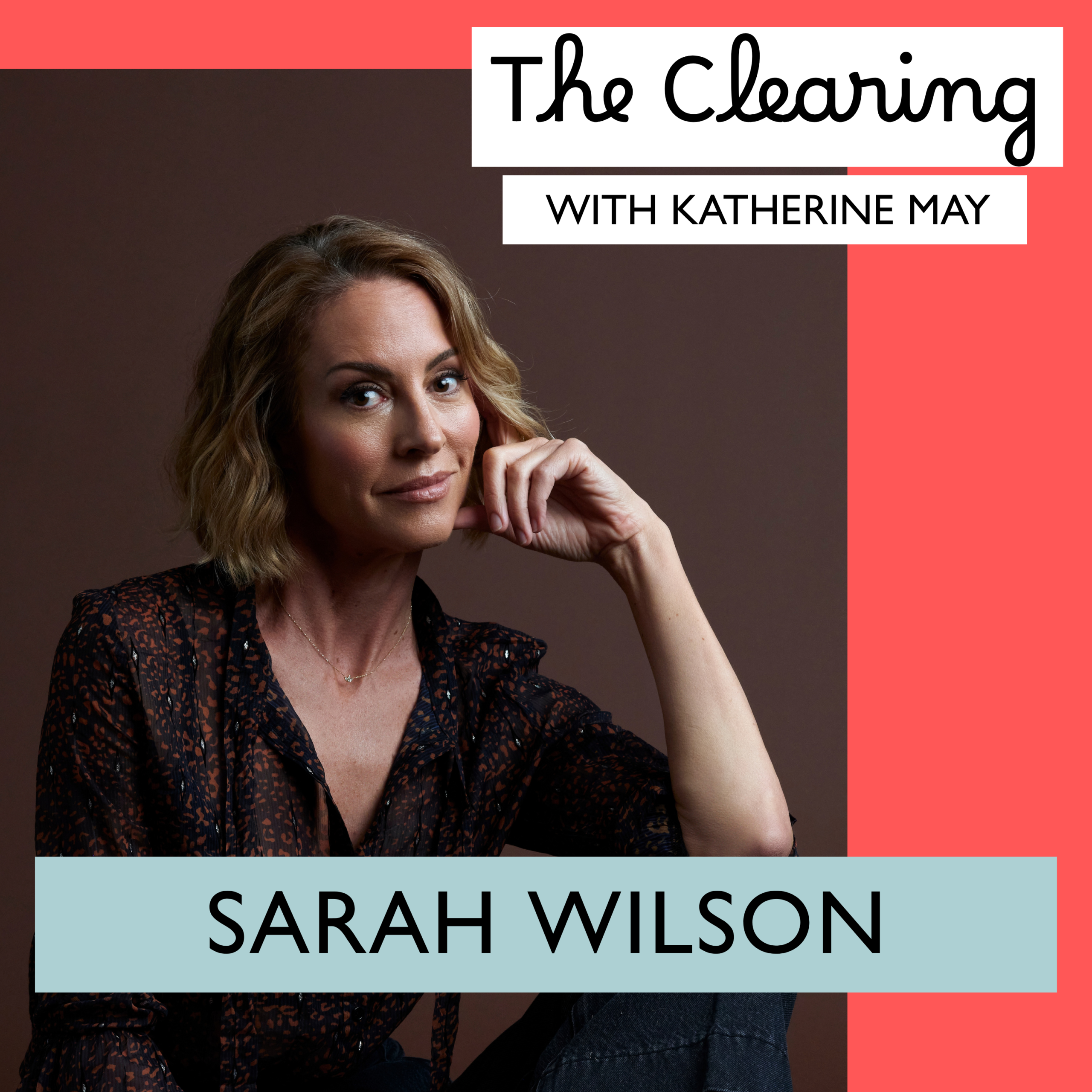
A friend of Sarah Wilson’s once told her she was always ‘looking for trouble’. It is clear from this episode that the best-selling Australian author, podcaster and TV presenter is hard-wired for restlessness. A self-confessed ‘edge-seeker’, constantly pushing boundaries in a flirtation with life, she proves a fascinating guest to discuss ideas of rest with Katherine.
Transcript
Katherine May: [00:00:00] Hello, Katherine here. How are you all? You may notice that I am not taking you on a walk this week. There isn’t the lovely ambient noise around me because I have a little bit of the COVIDS, unfortunately. I’m staying in so that I don’t spread my germs, which is really tedious. But I do feel all right, I have to say.
I’m not feeling too bad. Um, I think I’ve got away lightly with it all, and I’m just taking it a little bit easy and trying not to make it any worse for anyone else. Um, so please don’t worry for me. But it is the season, isn’t it? It’s started already. Everyone has colds and coughs and sniffles, and all sorts of things like that, and it’s a massive nuisance.
And I hope that this podcast intro finds you very well indeed and not chugging [00:01:00] the Lemsip. And if you are, then you have my fullest sympathy, because one of the worst things about adulthood is that you have to carry on despite it all. But this one’s fine, because I really I don’t have a very hard job here.
Um, I’m introducing you to the conversation I had with the writer and podcaster, Sarah Wilson. Um, you may know her from her podcast, Wild, um, from her Substack, which is called This Is Precious. Um, or maybe you’ve already read or perhaps you need to know about her latest book, which is called I Eat The Stars: How To Live Fully and Beautifully in a Collapsing World, uh, which came out a little earlier this year.
And we’ll be touching a little bit on those ideas in the interview. Um, but before I hand you over to Sarah, I just wanted to update you on the stuff that’s happening in the subscriber edition of this, um, of this podcast, because I do a [00:02:00] weekly, like, little extra episode about half an hour long, um, in which I share one of my ideas for what I call a mini break, which is like a little thing that you can, um, do in your life or something really that I enjoy doing that I use to take a bit of a break from the world.
Um, and I’ve covered such things recently as the online game GeoGuessr, um, and by contrast, the Rocky Horror Picture Show that kind of maybe shows you the scope of the things that I talk about in my mini breaks. Um, but for last week’s episode, which has been really popular, um, I took a bit of a diversion, and I offered an audio diary of, um, a course that I took the week before last, um, which was somewhat bizarrely a stand-up comedy course.
Um, I explain why in depth in the audio diary, but I think the, the too long, don’t read summary [00:03:00] is that I just really wanted to polish up my skills for when I’m on stage. Like as a writer, I spend a lot of time on stage And it really bothers me that I might not be that good at being there and I, I might not always be the most comfortable presence there.
And I feel like as writers, you know, we sort of owe it to our audiences to offer them something that is maybe entertaining is the wrong word, but at least worth being there for anyway. So I wanted to polish up my skills, and I’m hoping I will use them more in the future. I doubt very much that I’ll become a stand-up comedian, although I have to say I did really enjoy it, and it had some surprising benefits for my writing practice too.
So anyway, if that is of interest to you, do consider subscribing. Um, you can do it either by becoming [00:04:00] a paid member of my newsletter, in which case you get loads of other stuff as well. Um, or you can, uh, just join through Apple if you’re on Apple, uh, or through Patreon just for just podcast-only subscriptions if you only want the Lite version, which is really fine.
Um, and if you just wanna continue listening for free, then no shade is being cast whatsoever. It is really fine to be a casual listener, and in fact, you are so welcome, and we love having you here. Anyway, links to that and links to all of Sarah Wilson’s various locations across the internet and in the publishing world are in the show notes.
But first of all, I will hand you over to my past self who was in conversation with Sarah, and I hope you enjoy it. See you in a bit Hi, Sarah. Lovely to see you.
Sarah Wilson: It is really lovely to be, I guess, on a podcast together again. It’s been a couple of years- I know. It’s been a while … since we last spoke. Yeah.
Katherine May: We first recorded mid-pand- proper [00:05:00] mid-pandemic, I think.
Sarah Wilson: Wasn’t it? Yep, it was. Yeah. It was a little- Oof … kind of, um, gap in proceedings, um- Yes. Yeah.
Katherine May: You’d managed to get through the borders and into London.
Sarah Wilson: Yeah. This … It- it’s funny, isn’t it, how so much was punctuated by those openings of borders and then shutting of borders. Yeah. Um, yeah. So many people remember time through that lens.
I don’t, to be honest, because my life didn’t change that much, bizarrely. No. Okay. But, um, just ’cause I lived on my own anyway. I worked from home. Yeah. I was fostering a bunch of children. That did change things a fair bit, but, um, yeah. It was, um-
Katherine May: Yeah, it was just
Sarah Wilson: business as usual for you … not the same. Yeah, I didn’t have the same experience.
Yeah, exactly.
Katherine May: Well, we are a podcast that is all about talking about rest really, the kind of rest we dream of taking and the rest we actually end up taking, which, you know, there’s, there’s often quite the divergence between those things. But I just wonder how we find you [00:06:00] today. Are you in need of a break or-
do you pace your life better than the rest of us?
Sarah Wilson: I would say I am a peak example of what not to do. Um, so today, I think you … Just off-air I mentioned that I’ve ridden … I’m in London, um, you know, for a bunch of talks and related to my book, and I today have ridden … I th- I’ve done three LimeBike rides across the City of London, um, sort of, you know, frantically trying to sort of get to one, from one thing to the next in a headwind, a hot headwind-
um, while trying to do- Like riding into a
Katherine May: blow-dryer
Sarah Wilson: Totally. Totally. Yeah. With, by the way, uh, ’cause I arrived with my hair in little clips to the side to kind of fashion my fringe, uh, in preparation for this conversation with you. Um, so, yes, you find me in quite a frantic place. Mm-hmm. I’ve also just finished a massive project.
I have been down a deep, deep, uh, rabbit hole for- Oof … four years really-
Katherine May: Yeah …
Sarah Wilson: uh, working on a [00:07:00] massive book project, and I’ve completed a big book tour in Australia. Um, I just got back from Australia. My mother, like yours, um, has been very, very unwell. We almost- Yeah … lost her several times. Um, and so I’ve just been back in Paris where I’m based, and it’s been a heatwave where, again, I haven’t been able to live in my apartment.
I’ve been taking off into a forest with my tent every second night just to be able to- Just to cool down … survive. Yeah. Wow. So I’ve been on the road with a backpack on my back- Riding wildly into headwinds Mm And, um, you know, I sort of arrived here in my book publisher’s boardroom to be able to speak to you in a bit of a frenzy.
So, no. I am- No. Very … you find me in a, in a place of, of desperately needing rest. Um- Mm. Having said that, tomorrow I am taking a sort of six-week sabbatical. Oh, great. So you’ve, you’ve… Yeah. So you, you asked the question- I’ve got just under the
Katherine May: fence.
Sarah Wilson: Yeah. You’ve asked the [00:08:00] question at a very sort of, almost sort of a threshold moment.
Katherine May: Yeah.
Sarah Wilson: Mm.
Katherine May: Are you the kind of person who, uh, makes space for rest? Like, uh, in your mind, I mean, do you kind of prize it or do you think about it at all much? I mean, you always seem like you’re busy and that you’re traveling and thinking and speaking to people. Does it come into the equation when you’re planning your calendar, or do you have to sometimes just shut everything down?
Sarah Wilson: It’s a really good question. I am somebody who doesn’t find relaxing things restful. Oh. So staying still is not restful for me. Being in movement is far more- Yeah … restful. So it looks like I’m being frenetic all the time, but quite often I’m going for a hike up a mountain- Yeah … at a very fast pace, but that is my rest.
Um- Mm. Definitely. You know? Yeah. I, I don’t know if we’ve talked about this, but I was diagnosed with autism, like so many of, of us in this space, [00:09:00] um, I think four and a half years ago. And I’ve realized, yeah, I mean, I’ve known all my life that I have to w- I work very intense levels- Mm … but I am only able to do that by being able to on a regular basis, that is at least once or twice a day I need to go and lie in a dark room.
Right. Um, and sometimes that’ll just be a public toilet. I’ll just go and sit in a bathroom, and I just take a deep breath and have a conversation with myself. Yeah. Um, where possible, you know, when I used to work in television, I used to go and find cupboards to lie in with my feet up the wall- Yeah … and just close the doors behind me.
Um, this is sort of before we had an awareness to, of what autism was- Yeah … of course. You know? I was just intense and, and in, and problematic, and anxious, and diagnosed- … with bipolar and OCD, and all of those things are possibly, you know, have elements of truth. But, um, so I’ve found, I find interstitial, um, restful moments, and they- Mm
generally just, yeah, small dark room [00:10:00] moments, but also rest in movement.
Katherine May: Do you find those effective? I mean, they, they seem to me like a com- a compromise really, rather than the actual rest you might need to take. Do they actually work for you, or are they just something that you grasp at w- with the, in the absence of all else?
Sarah Wilson: A little of the latter, because I need them to survive. But- Mm … um, I think they also do work. Because like I said, normal rest where peop- you go and take a big holiday, you book a cabin in an idyllic place- … and off you go. That is too ambitious for me. It places too many expectations. Yeah. I then feel like I’m gonna have to be really good at resting- Mm-hmm
and invariably I’m not. So I feel that if I can just take rest as I’m going about my life where I can grab it, that is a far- Yeah … it’s a far better way of doing things. But then there’s other things that I do find restful in what I do. Um- I find one-on-one conversations really restful. Mm. You know? So I [00:11:00] will choose, you know, my friends are all used to it now, I will choose restaurants where I know the acoustics are right.
Yeah. Um, you know, um, it’s not on a busy road, um, and things like that. Mm. I’ll often catch up with friends by walking. You know- Yeah … I suggest we go for a walk. Um, and so, or lying in a park together, you know? Um, that’s something. Mm. Mm. So I, I sort of do all the things, but I’ve over the years managed to steer them to sort of more restful ways of doing things.
Katherine May: Yeah.
Sarah Wilson: Um, and I think that’s the best way of doing things, because when I put the expectation on me to go, “Right, now I am currently doing resting,” um, I actually find it very, very hard to do, you know?
Katherine May: But- That, that for me is a surefire way to start producing a load of work. If I’m trying to rest- Mm-hmm … as soon as that space- Mm-hmm
opens up, I’m suddenly incredibly productive, you know? Whereas if you tell me to be productive, I grind to a halt. I, I find-
Sarah Wilson: I know what you [00:12:00] mean …
Katherine May: I’m very resistant to planning, um, which I think is why the traditional holiday bothers me quite a lot as well, because you’re supposed to book it a year in advance and get excited for it, and I, I’m like, “Look, if I can go in two weeks time, I’m interested.
Any more than that- Yeah … I’m gonna drift off of this.” Like it, it- Yeah … it’s that immediate for me.
Sarah Wilson: Yeah. And, um, I think, look, I think the thing for me is if I can have chunks of time on a regular basis in nature-
Katherine May: Mm …
Sarah Wilson: I can continue and continue and continue. Like I can- Yeah … keep going and going. So look, I live in Paris, and I would say every weekend, if not every, maybe every second weekend, I get on a train and I just, you know, travel an hour or so, so outside of Paris, and there’s all these- Mm
forests. And I just- Yeah … go sort of hike s- hike jogging, um- … in these, in these forests for a couple of hours and just look at nature and smile at other people and have a cup of tea in a random little [00:13:00] village, you know? And then head on the tr- you know, get on a train and head back in a nice sort of reverie, you know, with the- Mm
the motion of the train. And that’s actually enough for me- Yeah … to feel reset, you know?
Katherine May: Mm. Lovely. Mm.
Sarah Wilson: Well,
Katherine May: I wonder where you’re gonna take us today, ’cause I’m gonna invite you into my clearing in the forest. Yes. But it could open up to anywhere, and I am, I’m so curious to know, where are you gonna take us?
Where w- where would you ideally go to to escape from it all?
Sarah Wilson: Well, you know, it’s funny because right now I’m feeling like I need to be in a forest. I am craving- Mm-hmm … taking my little one-person tent into a cool forest. And I think that’s just because I’ve been in a, you know, a very hot city in Paris during a heatwave, you know?
Yeah. Yeah. Um, and it’s been unbearable, and the humanity and all the human-made things have just been too much. Oh, yeah. And I just need the cool, [00:14:00] um, dark kind of forest scape to feel, to feel recharged. And but it’s funny, I think we discussed these kinds of things, um, when you were on my podcast- … a couple of years ago.
Yeah, a long time ago. Many, well, many years ago n- now. And, um, you know, you’re a, a wintering person. Mm, mm. And I’m not a cozy, comfity- Yeah … kind of person. And so forests often feel, mostly feel claustrophobic to me. Right. So generally, my preferred sort of place that I want to escape to is the desert Um, and so for me, big, open, expansive places- Right
um, are the places where I feel most alive. You know? That’s so interesting. The dry heat.
Katherine May: Right.
Sarah Wilson: Um, I sort of love walking across crunchy dirt. Mm. And it f- it’s, it feels invigorating, and just the energy of old earth, particularly in the Australian desert. You can really [00:15:00] feel, the, the place feels so ancient.
I know that sounds- Right … ridiculous, but, um-
Katherine May: Yeah … it just feels- Everyone’s ancient, but some p- some places give you that sense of contact with the ancientness, don’t they?
Sarah Wilson: Yeah. Yeah, there’s that phrase, you know, sort of th- when the, th- it’s thin, you know? Mm. There’s a thinness where- Thin
Katherine May: places, yeah …
Sarah Wilson: yeah.
And, um- Yeah … and so in the desert, you know, I mean, there’s so many country and western songs, and there’s that, you know, that America song, In The Desert.
Katherine May: Horse With No Name.
Sarah Wilson: Um, yeah, I’m Riding In The Desert on a horse with no name, they can’t remember your name. And I think that’s what I like about it. A desert is a, a great equalizer.
Katherine May: Yeah.
Sarah Wilson: You know, all airs and graces disappear. If you meet somebody in a desert, you’re both sweaty. You both feel like you’re in a v- very original place together. Um-
Katherine May: Mm. In- instant kind of connection.
Sarah Wilson: Yeah. There’s, y- you, you have to connect on a very human level, ’cause generally- Yeah … things are quite stripped back, you know?
And, um, [00:16:00] I, I, I like desert people. You know, I’ve spent a lot of time in different deserts around the world, camping and sleeping under the stars. You know, the Bedouin in Jordan. Um, I’ve gone out to sort of the Sierra Nevada and, and, um, camped out for, for nights on end. Um, and just, just the clear sky. But I also just like the 180-degree, you know, um, vision that you have.
And you can just see and see and see and see. And, you know, I think it’s Oliver Burkeman coined the phrase cosmic insignificance. Mm. You know, if you, when you can find those moments and those places where you get a sense of just, you know, how important it is to feel unimportant, you know?
Katherine May: Um- Yeah, yeah, you feel really small in the world.
Mm. There’s also some really good research that suggests that being able to see a horizon drops your blood pressure, lowers your heart rate. Like, all of those kind of biological markers of stress knock back when we can see a horizon. [00:17:00] And, and it makes sense, doesn’t it? Like, we, if we can see all the way to that line, we know we’re safe.
You know, we know that w- e- that we don’t- Yes, true … have to be alert to danger, and we are- That’s it … often so alert to danger. Did you grow up near the desert, I wonder? Is that, is it a longstanding connection that you have?
Sarah Wilson: I didn’t grow up near the desert, but I did grow up during a drought. Okay. It was a very long, persistent drought.
Um, and I lived in the country, uh, in a sort of a– It was a bush property up in the mountains, and it was very rocky and arid. Um, so it was a dry heat, and it was- Right … a ferocious heat. So yes, my childhood was spent in dirt- Mm … and bushland, and up high, which is similar to being in a desert because you’ve got that horizon, you know- Yeah, yeah
effect going on. Um, I mean, I think those studies also show that being in a church and in high ceilings actually enables more- Mm … inspired thinking for a similar- Mm … for a similar reason. Um- We’re
Katherine May: so spatial as creatures.
Sarah Wilson: Mm-hmm. Yeah, [00:18:00] exactly. Yeah. It really matters to us. And, you know, all those studies about awe as well, you know?
Yeah, yeah. Um, where we s- feel small in, in, you know, proportion to everything else that’s going on. Mm. Um, and it creates that ex- that experience of awe. Um, so yeah, deserts, deserts are very much where I feel my most human. Mm. And, um, it’s also devoid of distractions.
Katherine May: Yeah.
Sarah Wilson: Right? Like it is- You’re
Katherine May: definitely on your own there, aren’t you?
Sarah Wilson: It’s barren. Yeah. Yeah. And when I’ve done big- Yeah … long hikes across the desert in Australia and other places in the world, um- You can’t sort of be sustained by, “Ooh, there’s a bird. Ooh, there’s a new kind of-” … bush,” you know? You have to actually really sink into the monotony and, and your own- Mm … internal rhythm.
Um-
Katherine May: It’s very meditative.
Sarah Wilson: Yeah, exactly. And I remember writing about this. I was hiking in Spain, in, um, in a very arid landscape, um, in the south of Spain many years [00:19:00] ago, and I got lost, and it was 40 degrees. Right. And I had, um, I had Viktor Frankl’s Man’s Search for Meaning in my bag. A cucumber and a liter and a half of water.
And at one point when I was lost, I just had to sort of lie down under a tree and to settle into the fact that I felt lost. Well, I was lost. Um, and it was before iPhones and, you know, being able to download maps and, and, you know, get your bearings. I had to use a compass and, um- Yeah … sort of, you know, m-m-a sense of mind- Girl Scout it, basically
Because Girl Scout it. Yeah. Exactly. Yeah. And stay calm. And so I just lay under the tree and ate my cucumber and read a bit of Man’s Search for Meaning. Um, and I remember just thinking about the, the deep place you’ve gotta go into to actually get you to a destination when you’re walking through a desert and through heat.
Mm. And yeah, I, I, it, I remember that particular hike really changed me. And, you know, in m- in [00:20:00] Viktor Frankl’s Man’s Search for Meaning, he discusses, uh, what qualities the men who survived, um, the hard labor camps- Mm … Auschwitz, what qualities they had. And it wasn’t the big macho guys who are fit and healthy physically.
Mm. It was the men who had something larger than themselves to live for.
Katherine May: To attach to, yeah.
Sarah Wilson: Yeah.
Katherine May: Yeah.
Sarah Wilson: Um, and yeah, I remember reflecting on that, and I think, yeah, I’ve been in places where I’ve hiked across deserts, where it’s been quite dangerous. I’ve been out of water. I have been lost. Mm. And I’ve had to really dig down into something deep in me, and I think it is a faith in, in arriving.
You know, i- and, and, and in not giving up and, um, and just digging, digging, dig- digging for something more within myself that can get me there, you know?
Katherine May: Um- Do you feel like the kind of sense of existential risk is important? It sounds like that’s an important part of this [00:21:00] process for you, that actually being taken to the edge of existence produces something for you that everyday life might not.
Sarah Wilson: Yeah, that’s interesting that you should say that. Um, in my last book, This One Wild and Precious Life, I actually quote a friend of mine who said to me, “Sarah, sometimes I think you’re just looking for trouble.” And, um, and it’s true. I think I’d, what I’d done is I’d gone to meet him to have a coffee, and I said, “Well, listen, I’m gonna go for this hike, and I’m gonna
There’s this cliff I’ve always been interested in jumping off. I’m gonna jump off that and swim to you.” And he said, “What, in your shoes?” And I’m like, “Yeah, yeah, I’ll just swim to you.” And this is in sharky water in, in Sydney. Anyway, um, that’s what prompted him to say that. But yeah, you’re right. I’ve actually written a little bit about, and, and it was in that book, about the edge.
You know, Pema Chödrön- Mm. Mm … once said, “The edge is where you’re meant to be.” You know- Yeah … there’s countless, um, thinkers, um, who’ve s- who’ve, have said that, and I feel most alive at the edge. I [00:22:00] am definitely an edge seeker. Part of it’s an adrenal thing, without a doubt. But part- Mm … of it is also, you know, excitement and, and let’s see if I can do it, and a sense of adventure.
But part of it is also, um- There’s, you know, a phrase that my meditation teacher who passed away two years ago now, it was when I was writing my latest book, um, he used to say to me, “Sarah, let’s see. Let us,” as in you, me, and the universe, “see what happens when you make this move.” Yeah. And I kind of love that flirtation with life.
If I go to here, and if I push this here- Genuine curiosity. Yeah. Yeah. Let’s see what game unfolds, you know? Mm. It’s both terrifying, but it’s also, I think, what drives me. You know? Yeah. Is that playfulness with the edge.
Katherine May: So I’m guessing you’re staying in a tent in this, uh, in this desert that we find ourselves in.
Is that right? Yes. You’ve, you’re an enthusiastic [00:23:00] camper, unlike me.
Sarah Wilson: For example.
Katherine May: Yeah, just to, just to throw an example out there,
Sarah Wilson: yeah. Mm, mm.
Katherine May: Yeah.
Sarah Wilson: Um, I am an enthusiastic… I’m not a fancy camper. It’s not like I go and do these epic trips, you know, where I have all the gear and I take… Like, I’m a chaotic camper.
Yeah. I camp just to get out into nature, right? Mm. I camp to have a place to stay for the night, because I can’t stand hotels. I struggle with noises and smells. Yeah. And so wherever I travel, I take my tent with me. I mean, here in London I’ve brought my camp mat and my own sheets, and if it’s winter I bring my sleeping bag.
Mm. And I don’t sleep in beds, I sleep on the floor. So at the moment I’m sleeping in the, in the kitchenette of this tiny studio in, in Notting Hill. Perfectly good bed there, but, um, it’s, you know, it’s near the window and I can get fresh air, and it’s been very stuffy. Yeah. And also, it’s just, it’s, you know, I’m on the ground.
It feels, [00:24:00] it feels m- like my comfortable place. Feels like the right place to
Katherine May: be.
Sarah Wilson: Yeah, so I take a tent when I go and stay with people, ’cause I invariably camp in their backyard- Mm … rather than sleep in their spare bedroom.
Katherine May: That sounds like a much better arrangement. I hate sleeping in people’s spare bedrooms.
Oh, I hate it. They’re always the worst beds.
Sarah Wilson: Oh, and it’s, I don’t worry about that. It’s the smell of the washing powder. Mm. This is the thing that drives me insane, is the chemicals in everybody’s washing powders. Um, yeah. Yeah. So yes, I would be in a tent. I’ve got a one-man tent I’ve had for 20 years. Okay.
Constantly repairing it. Um, you know, so the lining, the glue has to be redone every now and then. Right, right. But I love it so much. I’ve thought about getting a new one, and you know, I take it back to the camping stores and they go, “Really? I think you probably need a new tent.” I’m like, “No, I like this one.”
“This
Katherine May: is my tent.” Yeah, it smells of me. Describe it then. So is it, it’s like a little tiny one, is it? That just, that you can just
Sarah Wilson: fit in? You can’t even sit up in it. Yeah. You can’t even… But if, if- You know, I have to stretch at night ’cause I get sort of irritable legs. Mm. So I [00:25:00] can wrangle my leg around and do-
sort of a hamstring stretch, but, you know, it, it takes a, a few sort of maneuvers. Um, and I sleep at the other end, so the really narrow end where you normally put your feet ’cause it’s nice- Mm … and cozy. And, um, yeah, and so the opening is at the, at, is at my feet. Yeah. Um, and it’s sort of got a funny little angle on it so you don’t sort of go at, out at the end.
It’s sort of to the side with a little canopy to the side. It’s quite light. It’s certainly not a high-tech tent. Um- And whenever I see it when I come back from a hike, and there it is, oh my God, it’s the closest thing I have to home. Because as you know- Oh … Katherine, I’ve lived nomadically for- Yeah,
Katherine May: yeah
Sarah Wilson: close on 20 years now.
Katherine May: Yeah. And so that tent is the, is the thing that is continuous within all of that?
Sarah Wilson: It is. Yeah. It is. I’ve lived out of one backpack, and so it fits in my backpack. And yeah, yeah.
Katherine May: I, I can just see you kind of pupating [00:26:00] in it almost, you know? Like a-
Sarah Wilson: Yes. I’ve got so many funny stories of emerging from my tent in the weirdest places.
‘Cause sometimes I arrive late at night, right? Right. And I set up my tent. I went for this really awesome hike in the Blue Mountains in Australia once, and, um, and there was this weird guy who was sitting on his, um, sort of Jeep- And I’d seen him in the tent- in the town- Mm … where I’d stopped to have a cup of tea on the way up the mountain.
And then here he was at the beginning of the hike where I’d left my- Mm … hire car, and he was sitting in his Jeep in, in head-to-toe camo. And I thought- Oh, dear … “Oh, God.” Yeah. But I was so determined to go on this hike, I thought, “I’m not gonna let a man ruin it for me.” So I took a photo of him and his number plate, sent it to my dad and my gay husband, and, um, said, “If you don’t hear from me in two days, this is your man.”
So I went down- Wow … um, a waterfall and climbed down into this clearing. It was getting dark, and I was thinking, “Look, it’ll be– It’s summer. There’ll be families camping down there.” I got down there. Mm. There was no one. So I went off into the [00:27:00] bush to hide for the night. I just thought, “You know, I’ll, I’ll just get off the track.”
And so I set up my tent. I was happy as anything. I had my emergency beacon, my, my knife next to me, and, um, you know- Mm … had my book with my head torch. I was as happy as anything. S- Eight hours sleep, you know, that’s the only time I sleep, Katherine, is in my tent. Yeah, okay. I can sleep with bush noises all around me.
Katherine May: It just… Yeah.
Sarah Wilson: I wipe out. That’s your- Yep. Even though- Mm … you know, most people would be quite frightened that there’s a dude in- Yeah … camo gear coming down the hill.
Katherine May: That would kind of stop me from sleeping, I think, yeah.
Sarah Wilson: Mm. Um, and so I, I woke up in the morning to the sound of this crashing noise, and I came out of my tent.
Now, of course, the tent is quite small, so as I climb out, I’m dragging it with my, my hips. Um, and I kind of– I’m just wearing underpants and a singlet, and these two men emerge. Anyway, they were two, uh, priests. Teachers, but priests who go hiking as, on, as their form of church on a Sunday. And it was, like, 7:00 in the morning.[00:28:00]
Katherine May: I was gonna ask you what you’re gonna pack. Um, but it sounds like a knife is, is part of your, your kit here. Tell me about that.
Sarah Wilson: Y- yeah. It’s probably… Well, the thing is, w- I, it’s a hard one for me to answer because I don’t take– I don’t really attach myself to belongings, you know? Mm. I, I’ve, I’ve never have, and it’s not, it’s not sort of a m- for moral reasons or, uh, environmental reasons.
It’s just, it’s just not part of who I am. I love beautiful things. I love when other people love beautiful things. I love going to people’s homes and looking at all their beautiful things. I love going past stores and seeing beautiful things. Mm. I have no desire to own them. Um, and I’ve, I’ve really always been like that.
However, I do have this little, um, doll that my friends, when I left Australia to come and live in Paris, uh- Yeah … a little over three years ago, um, we went for a big hike, [00:29:00] again, in the Blue Mountains, funnily enough, and, um, stayed in a big house and had a beautiful dinner, and it was wonderful. It was all my closest friends.
And we’d gone to this dinky little craft market in the mountains, and, um, they bought these grevillea nut babies. It’s just, just like a little bush nut for a head. It looks like- Oh … it looks like a little person’s face with a pipe cleaner body and a little, you know, little breasts- … that Beverly, who’s 83, made, right?
So Beverly sells- Yeah … these ridiculous dolls. So they bought one for them and one for me, and, you know, they said, “Right. You’re gonna keep… We’re gonna keep one Beverly here, and you’re gonna have the other Beverly.” So Beverly comes with me everywhere. I actually do think, I actually do think I’ve got her with me.
Oh, I’ve got to meet Beverly. So this is Beverly. She’s a bit worse for wear these days, but there she is. So it’s just this, like, little grevillea nut, and- Oh, my goodness … this pipe cleaner body. Yeah. And she’s just- She’s like a cat … she goes in my bag.
Katherine May: She’s got, like, pointy- [00:30:00] Yeah … ears.
Sarah Wilson: Yeah, little ears. Yeah.
Oh. I mean, it’s really quite horrible. I can’t believe somebody actually makes this. But the care that’s gone into it, the lace work and everything. It’s
Katherine May: beautiful. She’s, uh, just for people that are listening rather than watching, she’s, um, wearing a lovely dress that the bodice is lace, and then the skirt is cross-stitch.
A lovely kind of cross-stitch-
Sarah Wilson: Yeah …
Katherine May: I’m gonna say geranium. I don’t know, a pink flower. Um- Yeah … and she’s, her head is a nut that has two little pointy- Pointy
Sarah Wilson: ears …
Katherine May: ears. Yeah. So she’s like a fox or a cat maybe, and then lovely little pipe cleaner- Yeah … arms and legs. I think she’s beautiful.
Sarah Wilson: Do you remember there was that sort of thing, I don’t know, a meme back in the day where somebody, people would take a gnome with them on holidays, and just this g- They’d do, send postcards of a gnome, you know, the, with Big Ben- Yeah
and the Eiffel
Katherine May: Tower. And it’s in Amélie. It’s in the film Amélie, isn’t it, that she- Ah,
Sarah Wilson: you’re right.
Katherine May: Yeah … sends a gnome off around the world. Uh, her f- her father’s gnome- Is it? … and he sends her, uh, postcards back.
Sarah Wilson: That’s right. You’re absolutely right. But it was also a thing where people did that, you know, oh, it was [00:31:00] a, it was a meme for a little bit.
Anyway, so I take photos of Beverly, you know, at, in various-
Katherine May: Yeah … places
Sarah Wilson: around
Katherine May: the world. Beverly is well-traveled.
Sarah Wilson: She’s very well-traveled.
Katherine May: I’m really curious to know what else you carry around with you in your nomadic existence. On a practical level. You’ve, you’re very pared back, aren’t you?
Sarah Wilson: Yeah. Um, I mean, some basic things that I have.
So my, oh, I, I have my cosmetic bag here. You can see it’s a qu- it’s an old Qantas, um, you know, bag. It’s, it’s, this is, it’s gone places. But I have jojoba oil, which I use for cleansing and, um, moisturizing. And, um, I, you know, that’s all I use. Um, I’ll use a bit of salt or sugar wherever I am as a scrub every now and then, or if I’m near an ocean, I use the ocean sand to scrub my face.
Mm. Or I’ll use dirt if I’m in the bush. Um, yeah, I tend to have to carry my own soap. I usually carry a little thing of washing liquid as well for washing my clothes. Yeah. Um, I generally have a hub. At the moment, I don’t have [00:32:00] anywhere in Paris. I’ve just sort of packed up. But I, I have, you know, a hub where, you know, I’ve got all of my herbs and spices and, um- Yeah
you know, a few bits and pieces. Um, at the moment they’re in a suitcase in a friend’s cave. And, you know- … I’ll get back out again in, at the end of summer. Um- What else do I take with me? Oh, a sleep liner, a silk sleep liner, which is also- Mm … just s- you know, my thing. And sometimes, um, when I’m traveling on a plane, I use my silk liner just to wrap it around me because it’s comforting.
Um- Mm-hmm. Something soft … this all sounds strange, very strange now that I flesh it out. Um-
Katherine May: Life is very strange though, isn’t it, when you start to describe it? Like, you know, you’re having to describe the intricacies of your life- initially, yeah … and it,
Sarah Wilson: it,
Katherine May: it would s- it would seem really weird to, you know, if I describe mine too, like-
Sarah Wilson: Yeah
Katherine May: we’re weird really.
Sarah Wilson: All of us are just, yeah, what is it? John Lennon said, “Whatever gets you through the night.” Yeah. And you reach a certain age where you realize, do what you’ve gotta do- Mm … to [00:33:00] live your best life. Yeah. And so these are the things, you know, I have to do. Um, uh, lavender oil is always with me, always.
Right. Because if I’m somewhere, it, I find it anno- a, a smell neutralizer. Um- Yep … so, you know, I often have to just sort of dab it on something and hold it up to my face if I’m around- Mm … perfumes. Um- And yeah, I, I’ve sort of generally got lots of silk, um, or rayon things that I can roll up.
Katherine May: Mm.
Sarah Wilson: I famously live with four to five pairs of underpants.
Yeah. Um, the Daily Mail had a field day with that when- Oh, they love- … I first wrote about it … talking
Katherine May: about women’s underwear.
Sarah Wilson: Oh, I know. And it surfaces- In
Katherine May: a disapproving tone as well. Yeah.
Sarah Wilson: Yeah. It’s, it surfaces every couple of years that, you know, “I wonder if Sarah Wilson’s still got five pairs of underpants.”
I’m like, “I do, but it’s not the same five pairs.” Um-
Katherine May: Some have been replaced.
Sarah Wilson: Yeah. Of great inconvenience now is that I now have to wear multifocal reading glasses. Oh, I know. So that [00:34:00] is added to my k- that’s been added to my kit. Um, a sun hat. Y- like if it’s a baseball cap. Mm. I generally have a baseball cap for about 10 years.
A brother just recently bought me my new one. Um, he sets time, so he and his little kids presented it to me when they came to visit me in Paris. Um, I famously had a pair of green shorts for 11 years, and I wore them everywhere. Not as a statement, they were just a particularly comfortable pair of shorts, and I was always hiking or running or whatever in them.
And I remember being in London, I was riding a bike, a city bike, and somebody yelled out, “Is that Sarah Wilson?” And I said, “Yeah.” And they said, “Green shorts.” Um, so-
Katherine May: You were spotted. They’re so famous, those shorts.
Sarah Wilson: They were. But to the point where a staff member when I used to run I Quit Sugar, um, did an intervention.
They came into my house, got the green shorts, because they were all full of holes and everything, and, um, they got them framed. Oh, they oh. They said, “You can’t wear them any longer.” They’re art. So that was the end of the green [00:35:00] shorts. But I u- generally have the same clothes. I’ll wear them over and over again until they literally disintegrate and wear out.
Yeah. And I feel quite sad when they do wear out. Me too. So it’ll be a hiking shirt as well. So my good shirt becomes my hiking shirt. I don’t like wearing sunscreen, so I just wear a big shirt with a collar and a hat, and I bring my, the hair out over my ears so it protects my ears.
Katherine May: Mm.
Sarah Wilson: And I generally find I don’t need sunscreen.
Katherine May: Lovely. So-
Sarah Wilson: You got the picture.
Katherine May: I’m de- I’ve got the picture. I really, I kind of- Yeah … I, I wondered if you might retreat into something different to your everyday life, but actually this is a sort of extension of your ability to live really lightly in the world, isn’t it? And so when you need a rest, you go to a different place, but you take your setup, and it just strikes me that it’s full of creature comforts in a really lovely way, and familiarity, that you can carry that around.
Sarah Wilson: Um-
Katherine May: Yeah … I wonder what you’ll do. Will you do anything differently during this time away? [00:36:00] Or again, is it really about continuing your life, but away from the pressures of, of every day? I’m, I’m guessing you’re gonna hike
Sarah Wilson: Yes. I mean, I’ve really worked out the thing that works for me. Yeah. You know, and- Yeah
particularly with the book that I’ve just written, you know, which is on complex systems collapse and- Mm … the everythingness that’s happening, and, you know, I, I basically- Yeah … outline a way to be in … It’s a spiritual and philosophical posture to take- Mm. Mm … in these very complex, overwhelming times, that don’t have a solution, you know?
Um, and yeah, I think, you know, a big part of, of what I do to be in that is to be in movement in nature. So not just to be in- Yeah … nature, but I feel that the big emotions that we’re feeling, the grief, the collective grief, um- Yeah … the shame, the overwhelm, the anger, all of these things I think need to be moved through us.
Yeah. So to answer your [00:37:00] question, um, yeah, uh, my aim is, I’m yet to sort of fine-tune it, but I know I’m gonna get a campervan. Um, and a campervan enables me to have my little, my little turtle kind of set up, you know? Yeah. Yeah. Um, and-
Katherine May: Your world. Your world can
Sarah Wilson: be driven around … my world. Yeah. Yeah. And, um, I can sort of just drive
I’m gonna go sort of probably in France to d- an area I haven’t been to before, and, um, yet to work that out. Um, and, and then use that, you know, to sort of go off and do some hikes, maybe one or two nights at a time, then come back to my- Mm … van, and drive off to another village. I love going into villages in the summer in France, and just sort of, you know, the, the locals, uh, in the evening are drinking an aperol and playing petanque, and it’s- Yeah
quiet, and there’s soft murmurings, and I love sh- you know, just turning up. You know, I park my van on the outskirts of town, walk into the village. I bring a notebook or a book that I’m reading. I sit down in the shade and have an aperol, and [00:38:00] invariably, I get talking to a local. Mm. You know, people are curious.
The French are so curious, you know? Yeah. Yeah. There’s that Latin element where when they look at you, it’s not in an up and down way. They look into your eyes, ’cause they’re trying to work out who you are, you know? Mm. Where do you come from? You look different. You know, what’s going on? Yeah. Yeah. And they’ll come up and ask me.
And I would say 5 out of 10 times, I get invited to dinner, you know?
Katherine May: Oh, lovely. Wow.
Sarah Wilson: Yeah. And do you
Katherine May: go?
Sarah Wilson: Yeah, always.
Katherine May: Yeah.
Sarah Wilson: Yeah. Yeah. Yeah, I always, um, I like to go where the invite is, you know? Mm. Um, and a while ago I had a sort of a, sort of a spiritual encounter. Um, it was actually a psychedelic experience with a shaman.
Mm. And the, the dropdown message that came down in atoms was, that floated around, and I had to sort of come up for air into consciousness to read it, and it just said, “Yes.” It just said, “Sarah, st- ” You know, it was like, “Step into yes.” Mm. When, when you get approached with something … [00:39:00] Generally, when people approach you, they’re wanting to connect.
They’re wanting to- Yeah … engage. There’s enlargement, you know? Yeah. Um, and you know, James Hollis, the wonderful psychotherapist, um, says, you know, as a way of determining which way you head in life, ask the question, “Does it diminish or enlarge life?”
Katherine May: Mm.
Sarah Wilson: You know? And I feel at this juncture in my life, as a 52-year-old woman, a midlife woman, in a very liminal, you know, moment in history- Mm-hmm.
Mm-hmm … um, we need to be stepping forward to where the invite is, and we need to be enlarging, you know?
Katherine May: Yeah.
Sarah Wilson: Expanding.
Katherine May: Saying yes to more invitations rather than closing down-
Sarah Wilson: Retreating …
Katherine May: into what we already know. Yeah.
Sarah Wilson: To … And, and retreating to silos. The way forward out of all of this is, um, to do the opposite of what neoliberalism has done to us, which is to atomize us.
To send us- Mm-hmm … off into, into individualism, where we actually feel we [00:40:00] can’t, you know?
Katherine May: And where everyone else is a threat, which actually- Correct … in general, isn’t true.
Sarah Wilson: Yeah. Exactly. Yeah. And look, we do … Other humans are hard. I would tend to be on the introverted end of the spectrum, for sure. You know- Mm
I live on my own. I work on my own. I would … I, I sort of recharge by being on my own in-
Katherine May: Yeah …
Sarah Wilson: dark, dark cupboards, or on bathroom floors- Literally … around the world. Like, literally locked in a cupboard.
Katherine May: Yeah,
Sarah Wilson: exactly. Yeah. Yeah. Um, but um, I think that we’ve almost pathologized, um, that. We’ve almost made it a badge of honor.
We’ve almost, we’ve over stigmatized our fear of other humans. Mm. And I think that’s actually a real concern. You know, socializing and being as, you know, part of a community is hard. Yeah. But that’s the point. It’s the edge. And-
Katherine May: It’s the work of being human.
Sarah Wilson: Correct. Yeah. And so I think there’s a whole generation and a half that have, uh, been encouraged, indulged in [00:41:00] avoiding, uh- Right
the hard work of, of being human. Um, and so I almost see it as a sticking two fingers up to the system by just- … going to the collective. Even though I find it uncomfortable-
Katherine May: Yeah …
Sarah Wilson: I will choo- … I will, I will opt to say yes when those opportunities arise. And they always create a story, you know, per that phrase, “Let us see.”
Let you, me, and the universe see what happens- Yeah … when I go there, you know?
Katherine May: Yeah. Yeah. Lovely. Okay, so I’m hoping you get invited to dinner during this, this time away, um, by someone- Thank you … really interesting as well. Like, by someone really, really fascinating.
Sarah Wilson: Yeah.
Katherine May: I-
Sarah Wilson: Everyone’s fascinating … always say- And look, I- it’s often
Katherine May: just
Sarah Wilson: very every- Everyone is fascinating.
That is true … you know what? It’s often everyday people because all the rich people, the, you know, fancy people of France are all off at their fancy holiday houses- Right … on the beach, right? Yeah. So in these small villages, it’s, you know, the everyday people that have gotta keep the village going that are, that
Katherine May: are there.
And [00:42:00] plus also the people who are not self-consciously fascinating. I find those really hard work, honestly. The people who know they’re interesting, um, and who- Yeah … are gonna be interesting to you, exhausting quite often. Um- Yes … whereas you can have an actual conversation with people who don’t know they’re fascinating and who are just people.
People are- Agree … interesting. I always ask my guests would they bring, like, a cultural item for an encounter during this break- Mm … during this kind of period of restoration. You don’t have to own it. It could be something, we could, like, get it on loan for you from, like, one of the great museums of the world if you like.
Um, or it could be something that everyone could get their hands on. But what would you- Mm … like to have a kind of up close encounter with in order to really deepen this restoration that you’re effecting?
Sarah Wilson: Yeah. So- One of my [00:43:00] favorite places in the world is an island called Icaria in Greece. So while I sort of mentioned the desert, Icaria has always been, I guess, my spiritual home.
Right. Um, Greece in general, to be honest.
Katherine May: Mm.
Sarah Wilson: And it’s a hard place for me. Every time I go to Greece, I- it’s, it’s a wrangle. You know? Yeah. I am confronted by, I’m confronted by my ego. I go through a form of ego death. You know? And I often am sleepless. I am going through some kind of weird thing, and the
But I get rewarded, because the Greeks will always step forward. I’ve had the most bizarre experiences, um, in different places in Greece. You know, philotimos is a, is a Greek concept. It’s the idea, it’s called the honor of giving to strangers. Right. And it’s very much part of their culture. Yeah. And it’s not this idea that you give to people in the hope that s- you’ll get payback down the track.
No. In fact, it’s the opposite. It’s hospitality,
Katherine May: essentially, isn’t it? Yeah.
Sarah Wilson: Yeah. Yeah. [00:44:00] And they’ve got this deep sense that I have, I have received hospitality before, and I’m now paying it forward. Yeah. And it’s just what you do. Um, so I’ve had some very spooky encounters, particularly in Icaria. Icaria is an island which is considered one of the Blue Zones.
Right. Some of you might have heard of the Blue Zones- Yeah … which is where people live the longest. And people there, it’s got the highest number of octogenarians in the world. Not octogenarians. What am I talking about? Centenarians. Um, and they party hard. They hike, just by virtue of having to get from one place to the other.
Mm. Um, and they rest. They have a, they adhere to a Sabbath, and so on. Um, and when I say party hard, they party, like, they’ve got these panegyri that start, um, at sort of 11:00, midnight, in these forests up in the mountains, and they will go until 5:00 in the morning. And you, you’ll be there- … y- y- you know, or even, even later.
And you’ll be there, um, at sort of 3:00 in the morning, there’s two-year-olds running around, and [00:45:00] there’s the parish priest. Yeah. You know? Having a, having a grand old time. And they’re free, so if you’re a tourist, you’re invited to come along. You know- Right … so if you’re sort of in Greece in August, quite often you’ll just quietly be invited.
“We’re having a panegyri.” And it’s often, you know, you’ve gotta walk up a goat track to get to the, the church which hosts it.
Katherine May: Mm.
Sarah Wilson: Um, but anyway, to get, to answer your question, um, something that came to mind, um, was the book Zorba the Greek. And it’s been a while- I have never
Katherine May: read it …
Sarah Wilson: Right. So in terms of saying yes to life- Yeah
and, you know, stepping into the unknown and the edge and the discomfort of, of, you know, being a human and- Yeah … having to be with other humans, um, Zorba the Greek is the Bible because it is the most pure sort of parable in all of this. Okay. Um, basically, there’s this kind of conservative academic, um, young guy who meets- Mm-hmm
Zorba, a really [00:46:00] crude, rough Greek, uh, at Piraeus, at the port outside of Athens. And they both get on a, on a boat to Crete, and somehow, I- it’s been a while since I’ve read it, but they end up having these adventures together. The, the sort of the academic… And I don’t think we ever know his name. He’s referred to as Boss, ’cause Zorba calls him Boss.
Right. Right. And, um, he sort of latches onto Zorba, and Zorba’s just having his best life doing not very much. Um, and this other guy is trying to intellectualize how it is that Zorba lives his life. How is it that he- Mm. Mm … has so much zest and enthusiasm for life? And the book is just a whole range of really simple lessons in letting go.
Katherine May: Right.
Sarah Wilson: And there’s this thing where towards the end, it’s really quite sad, the boss says to Zorba, “Listen, I think I’ve got it. I think I get it now. I’ve really let go.” And he’s like, “No, are you kidding? You’ve still- … got a thread. Now, your thread has got longer, but it’s still… You’re still so, [00:47:00] so attached.” Um, and you know, he said, “Unless you break it, your life will have the flavor of weak chamomile tea.”
Katherine May: Oh,
Sarah Wilson: the worst. And he said… Yes. I mean, I’m a fan of chamomile tea, and I don’t even mind it weak, but I get the point. Tepid. Anything tepid. And he said, “It’s not like rum,” because- What does it say? “Rum makes you see life inside out.” Right. And I love that idea of, he’s like, “You know what? To truly live, you’ve-” Mm.
got to be prepared to go to that edge and let everything be shaken up every now and then.” Amazing. And it’s frightening. I, I find the idea, you know, confronting. But every time I go to Greece, I get that lesson. And Zorba the Greek is, is one of the just most concise, um, I don’t know, guidebooks for that lesson, if that’s the, if
Katherine May: that’s the lesson- It has never occurred to-
you’re looking for. I had no idea what that book was about. You know? Like, you hear the… I, I don’t know why I’ve heard the title so many times even, but you hear the title [00:48:00] in culture all the time. Yeah. I had no idea it was so philosophical. I assumed it was- I think there’s a lot of restaurants … like some kind of,
Sarah Wilson: um,
Katherine May: I suppose- A lot of restaurants
Sarah Wilson: in London-
Katherine May: Yeah, yeah
are called Zorba the Greek. Are called Zorba. You know? Yeah.
Sarah Wilson: Yeah, and there’s a
Katherine May: film.
Sarah Wilson: Was there a film? There was a film, and there’s a famous actor in it. I can’t remember his name now, but he was some big-time actor. Yeah. Um, and he sang the Dance. I’m sure the listeners will be
Katherine May: screaming at their- I know
Sarah Wilson: their
Katherine May: phones at the moment as as we’re like, “
Sarah Wilson: What is it?” My pa- apologies from my menopausal brain. I c- Oh … I get the gists of things. I can’t. But the details, you know? I’d have to count on younger people to yell them down the phone.
Katherine May: That’s fine. That’s how we make connections. Mm. Yeah. Um, okay, so Zorba the Greek sounds like an incredible book.
Yeah. And I actually feel like I must read it now. I had, I had no idea that that was, um, that was what it was about. It sounds brilliant.
Sarah Wilson: It’s beautiful.
Katherine May: All right. So Sarah, it’s time for you to move on now from your time retreating, your time away.
Sarah Wilson: Mm-hmm.
Katherine May: You do this all the time. How do you decide when [00:49:00] it’s, when the moment’s come?
Sarah Wilson: When I’m rested enough. Um-
Katherine May: Yeah, when you’re done, when you’re gonna move to the next place.
Sarah Wilson: Yeah. Generally, I get an itchy, an itchy feeling, you know? Um, I am somebody who– I know that with autism people like to- familiarity. I don’t- Mm … with all things. I can’t walk to the post office the same way. I can’t- I find it really difficult going to the same cafe twice.
I’ll have a gr- you know, I’ve… You know, I find it very difficult to get– go to the same places twice.
Katherine May: Yeah.
Sarah Wilson: I, I like, I like going to the new. So, um, generally, I don’t need too much rest. Mm. Often before I enter into rest, you know, into a break, um, and I do take them from time to time, I think that I need a long time.
In fact, I don’t. Yeah. Generally, a week is plenty. You recharge quite quickly. Yeah, I recharge really- Yeah … quickly. Um, and so, and, and like I say, I think the [00:50:00] interstitial stuff, having a lifestyle that allows for, uh, you know, entering the forest on a regular basis- Mm … that kind of thing keeps me going most of the time.
And what I’ve worked out is that I don’t really like the separation of, of work and leisure. Yeah. You know, I want what I do to be something that is so important to me and is so… It, it puts me in such a, in a congruent place with the natural flow- Yeah … of life, that, you know, it mostly- Can be done with ease, you know?
Yeah. That’s my aim. That’s what I would prefer to-
Katherine May: It’s about integrating everything really, isn’t it? Correct. Yeah. It’s about living an integrated existence that doesn’t- And with- … require rest actually …
Sarah Wilson: and with the kind of thing that I do, um, you know, I’ve written a big book about how to live fully and beautifully in a collapsing world.
Yeah. Mm. And what I’m really saying is that we need to untether ourselves from the system, because the system is crumbling. [00:51:00] It can no longer hold, and the more that we tether ourselves to it, the more likely we’ll go down with it. And so the invitation that I offer is to actually let go of the system and start to, to live, well, really as we’ve always lived before neoliberalism made us, you know, atomized.
Yeah. Um, and so part of that message, you know, I sort of speak at various conferences with people who work in this space, and they’re like, “What should we be doing?” And I’m like, “We’ve gotta make this new way look sexier than the status quo.” Yeah. You know? And so to do that, we actually have to find a way to be activists, to be engaged nodes in the matrix of all of this, um, where we can sustain it, you know?
Yeah. So rather than constantly complaining, “Oh, I need a rest,” you know, particularly when I go back to Australia, I think Australia is in, just got the hustle culture, you know- Right … on s- on speed, you know? Yeah. Um, on full throttle. [00:52:00] Um, everyone I speak to goes, “Oh, gosh, I’m so exhausted. Oh, my goodness,” blah, blah, blah, and they’re
they’ve got all these projects renovating laundries. Like s- suddenly- … I went back to Australia and everyone’s renovating their bloody laundries. Wow. And they’re all working- … so hard to get their children into these private schools that- Yeah … you know, and, and, and keeping up with all the Joneses, and getting ahead.
It’s like getting ahead of who? Mm. You know, your friends’ children? Yeah. I mean, this makes no sense, but they’re all absolutely exhausted, and I propose putting that level of effort in- Into setting up a life which is sustainable and is working in attunement- Yeah … with what your soul tells you you should be doing, you know?
Yeah. So that’s what I prefer to put my work into, rather than- Mm … constantly living for a holiday or reprieve.
Katherine May: Yeah. It’s knitted into the fabric.
Sarah Wilson: Yeah, exactly. Yeah. You know? And so, um, to answer your question, [00:53:00] generally I get excited about something, and so, yes- … I emerge, you know- Yeah … with another idea. Um-
Katherine May: Yeah, yeah
Sarah Wilson: and, and, you know, that’s, you know, I remember I used to climb down from a tree as a kid, but come, you know, screaming- … into the house and go- Like a
Katherine May: prophet, like coming down the back
Sarah Wilson: of- From the mountain. “
Katherine May: I’ve seen something.”
Sarah Wilson: Well, the response was not that gracious. My mom would go, “Oh no, Sarah’s bored again.”
Uh, that was, that was just, you know, basically the, the answer. I’m like, “Oh, I’m gonna do this,” and, you know. I have a new enterprising idea, a, a new business that I was gonna start at the age of 12 or something like that. Um, so, so yeah. I’m still like
Katherine May: that now. I can’t…
Sarah Wilson: I’m very much like it. So, so yeah, I, um, yeah, I get excited.
Yeah. You know? And that’s really what I’m looking for. Uh, you know, I wanna, I want to be enthralled by life, you know? Yeah. I want to be excited. I don’t… Um, and so yeah, that’s generally what pulls me back. But this time I really do want it to be [00:54:00] different, because I’ve finished this massive project, a book that- Um, I feel will probably have a long tail.
Right. And, you know, I interviewed this wonderful Turkish dissident, um, and journalist who writes… has been writing about fascism for a long time. Her name’s Ece Temelkuran. Um- Is that
Katherine May: the
Sarah Wilson: lovely
Katherine May: Ece?
Sarah Wilson: Yeah. Has she been on your podcast?
Katherine May: She’s a previous guest on the podcast, yeah.
Sarah Wilson: There we go. Yeah. So your listeners- Yeah
would be familiar with her work. Yeah. But she’s just finished this beautiful book, Nation of Strangers, and I’m sure you’re familiar with it. Um, and I said, “Gosh, where do you go from there? What are you gonna do next?” And she said, “Sarah, I’m just going to be available for a while.” Mm. S- be available for people who want to flesh out and build on the knowledge that she’s brought to the world via this particular book, which I think is, you know, the book she’s most proud of.
Yeah. And that’s very much where I’ve landed. The Book of Vision is a really confronting book, but, um, that not everybody’s ready for. Um- Yeah … and so [00:55:00] I feel that my role is to, just to stay with this information-
Katherine May: Mm …
Sarah Wilson: while people catch up, and to be available, um, you know, for podcast conversations, for, uh, conferences, um, for wherever it might lead, you know?
Um- Yeah … so I suspect that rather than emerging with some new project, using some new social media platform that I’ve just discovered, you know, blah, blah, blah- … I think it’ll be more about just getting very anchored in my midlife femaleness, you know? My, my, my hag era, you know? Mm. And, and being that person that people can count on, draw on, r- you know, refer to, come to.
Um, I feel that that’s… And, and, and so w- what I’m doing on this sabbatical, which I think could actually last six months, is actually work out where I need to be in the world, how I’m gonna move in the world, [00:56:00] um, which people, which, which village I wanna orbit around, you know?
Katherine May: Mm.
Sarah Wilson: Mm. Um, and so big questions, but I think it’s a good time in my life to be asking those questions and, and, and finding the answers to them.
Katherine May: I love it. Sarah, thank you so much. It’s been amazing to talk to you.
Sarah Wilson: I’ve loved it. Thank you.
Katherine May: Hello, lovely people. Welcome back. Um, I hope you enjoyed that conversation. Um, I think that Sarah and I enjoy very different things. But that’s okay, isn’t it? That’s what makes the world go round. Um, she for sure has a different relationship to risk than I do.
Um, and also, uh, definitely a, a different relationship with the outdoors. But it’s always so interesting, isn’t it, to listen to different people’s ideas of what is restful and what they [00:57:00] find resets and restores them. I, you know, I shouldn’t be surprised that we all like different things. It’s perfectly obvious.
But there is something about really digging deep into someone else’s very different interests that, that gets me every time. Like, some of the things that people suggest to me on this podcast, I think, “Yeah, God, absolutely. That sounds awesome. I want to do that, too.” Other people’s I think, “Wow, that sounds terrible.
Don’t make me do it.” And maybe for me this was one of those. Uh, but yeah, I, I love that. I love that about the podcast, and I, I love getting into a deeper and deeper relationship with how people conceptualize rest, and also that sort of real [00:58:00] understanding that is growing in me of how hard we find it to do in the first place, you know?
I’ve always basically assumed that I uniquely am crap at taking it easy, and that just isn’t true, is it? It’s not true at all. In fact, it seems to me that most people in the world find it hard for different reasons, and that maybe there might be something in there about creativity being quite restless and quite relentless.
And I love that. I love that. It’s such an insight for me, and it’s made me feel less bad about making myself tired and more understanding of the kind of tired that is good and the kind of tired that is not so good, and what to therefore avoid, and, and thinking about how to work in order to nourish the right kind of tiredness, the good [00:59:00] kind of tiredness.
I don’t know if that makes any sense. Maybe, maybe it’s the germs talking. Maybe they’re taking me over and I should take a break. But for now, I just wanted to say take lots of care of yourself. Take a rest if you can, or do something that tires you out in a good way. Either or, your choice. Up to you.
You’re in charge here. And love you lots. See you soon. Bye.
Finding the pressures of a small cabin or ‘being good at rest’ too claustrophobic and restrictive, Sarah instead finds ultimate peace being out in the ancient, Australian desert. The dry heat, crunchy dirt underfoot and minimal distractions in a monotonous landscape are where she feels truly alive. It’s the great equaliser. A place to feel what Oliver Burkeman calls ‘cosmic insignificance’. It’s also just one of the many extraordinary and often surprising places she has perfected the ultimate tent-life; much to Katherine’s horror who practically shudders at just the word tent!
A truly original vision of rest from someone who has learnt to integrate work and leisure to such an extent that rest has been rendered meaningless.
Links from the episode
Sarah’s website
Sarah’s book I Eat the Stars
Sarah’s podcast Wild with Sarah Wilson
Sarah’s Substack
About Sarah
Sarah Wilson is a multi-New York Times bestselling author, journalist and social philosopher.
She edited Cosmopolitan magazine Australia at 29, founded the global I Quit Sugar movement, hosted the most-watched TV series in the nation’s history – Masterchef Australia – and wrote the international bestseller First, We Make the Beast Beautiful, which Mark Manson described as “the best book on living with anxiety that I’ve ever read.”
Her most recent book, This One Wild and Precious Life, won the US Gold Nautilus Prize and her recent TED talk is an Editor’s Pick on the global site.
Sarah leads dynamic, global conversations about modern philosophy, creativity, existential risk and climate change via her keynote speaking, Wild podcast, and her Substack and social communities of half a million followers.
Sarah is based between Paris and Sydney. She lives a minimalist life and is a compulsive hiker.