The Clearing with Katherine May
Oliver Burkeman’s art of the non-retreat
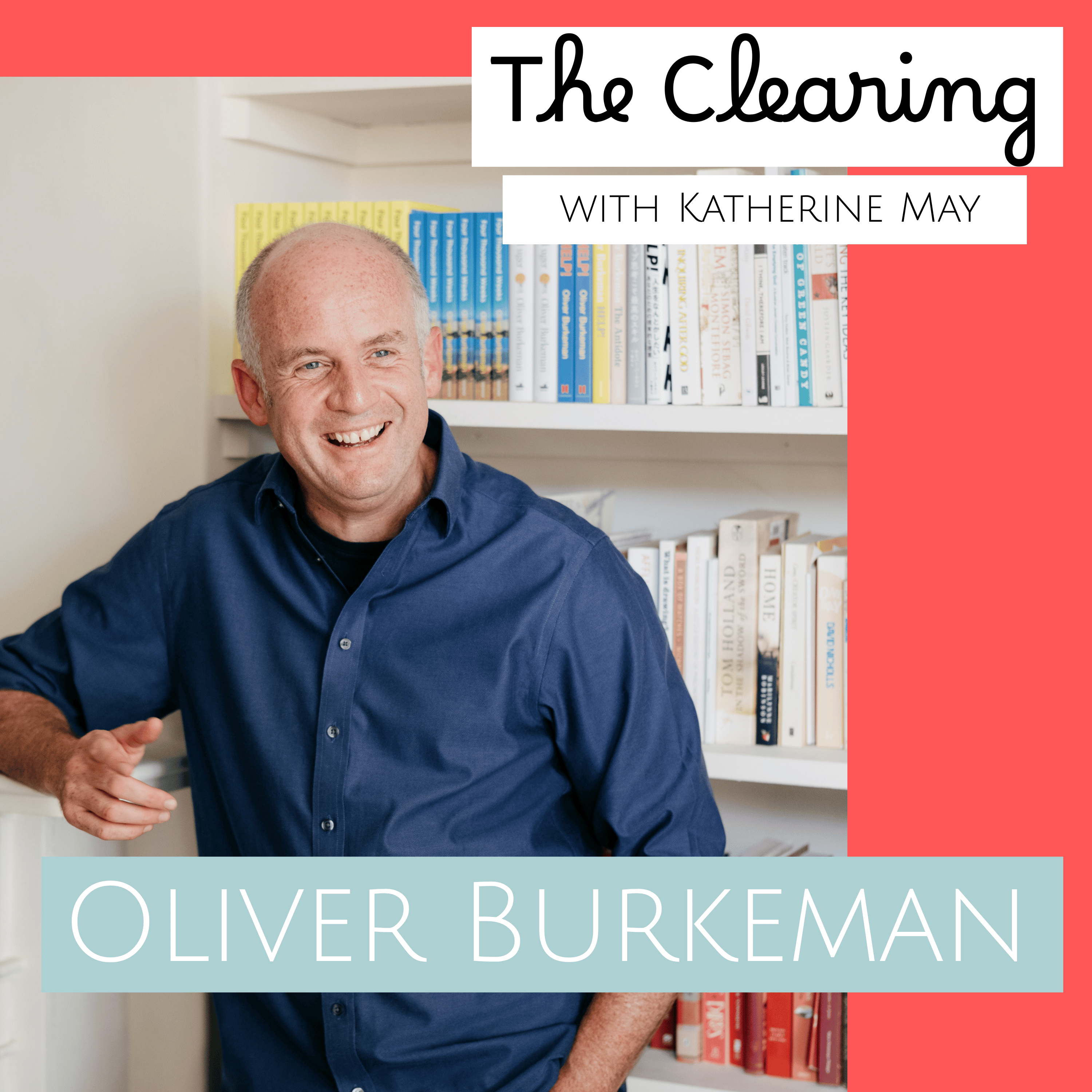
Kicking off the episode with an existential crisis, the inimitable Oliver Burkeman joins Katherine to explore his own, unique take on rest and retreat.
A familiar name to many in both the US and the UK, Oliver’s book Four Thousand Weeks has put him at the heart of the global conversation around building a meaningful life. As you might expect, Oliver turns the concept of the podcast on its head whilst taking Katherine on a wild ride through topics from whether we should use AI as a creative tool to favourite notebooks to whether TS Eliot was on the path to spiritual enlightenment.
A wonderful, brain-stretching conversation that reaches way beyond the confines of an imagined cabin in the woods to explore wider ideas around what it really means to get away from it all and if we should even try.
Transcript
Katherine May: [00:00:00] Hello, it’s Katherine here. I am in my kitchen making porridge.
I am a couple of weeks ago, watched a film called The Golden Spurtle. I dunno if you’ve seen it. It is a film about the world porridge making competition that happens in Scotland every year.
I’m struggling to get into the packet of porridge right now. Um, and it’s about the kind of level of obsession that people get into to make the most perfect bowl of porridge in the world for that year. It’s really [00:01:00] lovely. True porridge is only ever three ingredients, which is oats, salt, I was about to say sugar and that was wrong.
Oats, salt, and water. So there’s no milk in true Scottish porridge. Anything like that gets added at the end of the process once the porridge is already done, and so. All of the invention has to come from the choice of oats. So people use, uh, different kind of oats like jumbo oats, porridge, oats, and the sort of steel cut oats, which are um, a bit nuttier.
A bit chunkier. You weren’t expecting a masterclass in porridge this morning, were you? Um, and, and the technique. So ever since then, I’ve been obsessing [00:02:00] about my porridge ’cause it’s made me really want to eat it for a start. It was just such a lovely documentary and it made porridge look like the most delicious food known to man, which I mostly think it is.
Um, but also, um, it’s made me really think about whether I’m doing it right. I often do put milk in my porridge as I cook it. I’m afraid. Uh, which is, I know a terrible thing. Um, but I think it means that I don’t want to sweeten it afterwards, which I also think is a good thing. I don’t have a particularly sweet tooth anyway.
I’m making my porridge and putting my pinch of salt in and getting it on the stove. It’s really funny how these, you know, films, these things that we watch and read really affect us. We tend to [00:03:00] think that we’re independent thinking people, but just one hour watching a documentary has led to this endless obsession of like making porridge.
I think it’s partly because, as you can hear, I’ve been a bit under the weather and porridge seems like the answer to an awful lot of questions right now when you don’t have a lot of energy and it feels like a whole meal. Oh, and this is actually unintentionally a great intro to my guest this week.
Oliver Burkeman, who many of you will know from his books about, well, kind of a balance. He, he kind of looks at a balanced way of optimizing your life. I think, um, I really enjoy his work because he has always got this sort of [00:04:00] constraint in what he says. He’s really interested in how we can live well, and the sense of mortality is always present in his work.
You know, we only have a limited number of days on this earth. And therefore how do we live well within it? But the answers are rarely. We must go to extremes and do everything we can to live a fully optimized life. There’s forever a sense that he’s like, well, some of this is worth it, but actually you have to accept a little bit of bumpiness along the way.
I think that his subtitles really reflect that as well. I enjoy his subtitles more than his titles. There’s something very expansive about them. I hate [00:05:00] writing subtitles myself. Um, some of his subtitles include How to Become Slightly Happier, not Happy. Guys, we are English here. Slightly happier, um, and get a bit more done.
Not too much. It’s all very balanced and my favorite one. Of his subtitles, his happiness. For people who can’t stand positive thinking, I will leave those like a puzzle for you to work out which one matches which book. Um, but yeah, he’s the author of 4,000 Weeks, which I know loads of you will have read.
Um, the Antidote and most recently meditations for Mortals. He did come and talk on my book Club on Substack about that. Um, and that is a really great little kind of manageable book. I love a manageable book, um, which suggests regular reflection points to just really consider exactly how we approach this life.
We need more of Oliver in this world. [00:06:00] He wrote, and we talked about this during the interview for 14 years, a column called, um, this Column Will Change Your Life in The Guardian, which I always read and always found really enlightening. I can’t imagine doing. Something for 14 years. Honestly, I’m such a quitter.
Um, and he now has a brilliant newsletter called the Imper Perfectionist, which if you don’t subscribe to please Do, it comes roughly fortnightly and always just again, takes his really considered approach to optimization. You know, it’s like he takes all of the self-help writers that we kind of read and think, Ooh, that’s a bit much.
And synthesizes it into something that can actually be applied to real lives and to people who know that they’re not gonna be a superhuman, but actually would like to make sure they’re just taking the shortest path to what they [00:07:00] want to do. I was so thrilled to talk to Oliver. He has this, uh, very, I’m gonna say slightly Spartan attitude to resting, which I find really fascinating because I think it mimics a lot of my own.
Thoughts too. Um, but there’s also a lovely, lovely part of this interview, which is that he’s pretty happy where he is. He’s moved to a really lovely place which he’ll describe, and he’s found that actually life is how he dreamed of it being whenever he was fantasizing about a retreat before. I love it that it is Oliver Burman who has figured out where to live because if anyone was gonna do it, it was gonna be him.
He was gonna apply his very rational approach to it and very considered approach. But, um, I think it’s a gem and I really [00:08:00] loved the conversation and I hope you will, too. I will see you back afterwards when hopefully my porridge will be ready. Oliver, welcome to the Clearing. It’s a delight to have you here.
Um, how are you today?
Oliver Burkeman: Very well, thank you for inviting me.
Katherine May: So I’m gonna be asking you to share your kind of fantasy of retreat and I, I just thought that you would be a really appropriate person to ask this because you are the go-to guy for, not idealize living, but how to figure out how to do it the best you can, but in balance.
Mm-hmm. So I think you are gonna give us a very practical retreat. Is that true?
Oliver Burkeman: I think so. I have to say, considering the questions that you, that you mentioned you’d be asking sort of had the effect of throwing me into. Existential crisis, but hopefully it’ll be a useful and a [00:09:00] profitable existential crisis for us all.
Katherine May: I think it does that more than we attended, actually. Um, but it’s like an unintended side effect of this podcast that everyone’s like, oh wait, I’m not sure if I know how to do this. Um, but maybe that’s revealing in itself. Mm-hmm. Are you the sort of person that goes off on retreat, like when you’re trying to finish a book or when you need a break, or do you tend to soldier on?
Oliver Burkeman: The answer is that I definitely was that kind of person, and I think I am on some level, you know? Mm-hmm. Introverted, very happy with my own company, benefiting from not only being able to put in a few hours of writing, but also then go on a long walk to think about it, which day to day family life is sometimes not compatible with, um.
I think I am going through a phase, I dunno if you want to dive immediately into the treating you as my therapist, but the Yeah, do it. I think we’re going into a fa, I’m going into a phase where actually it’s [00:10:00] important for me in the work I’m doing at the moment, not like to, to find ways for it to exist in the, in the midst of everything else.
Mm. You know, I’ve actually sort of, I’ve actually found that some of my sort of try to block out the world. Um, impulses don’t help so much at the moment and you know, so you end up carving out some special weeks time and then finding it. So high pressure. Yeah. That it’s not even very helpful and all sort of things.
So I’m actually in a sort of a phase of, of non retreat, but that doesn’t mean I. I don’t mean to think I’ve outgrown it or anything. I think it’s just a seasonal thing in itself, maybe. No.
Katherine May: Well, I I sometimes think the more sort of desperate you are for a break, the more ineffective it is for any creative work.
I mean, I, I don’t think I’ve ever managed to write a word if I’ve gone on retreat, which doesn’t mean to say it’s not valuable, but
Oliver Burkeman: No, no,
Katherine May: it’s, it’s not how I write. I write in the weird cracks between life. That’s [00:11:00] the only way I can do it.
Oliver Burkeman: Yeah. Yeah. So I think there’s certainly on the specifically like creative work output front, I’m, that’s, I’m, I’m, I’m not sort of kidding myself anymore or currently that as long as I can get.
A certain number of days somewhere, then I’ll be Yeah, absolutely.
Katherine May: I mean, you wrote a column for what I, I looked on, you know, I looked on your Wikipedia page today. Mm-hmm. ’cause I managed to text you halfway through to say we did the same degree at the same time and got frightfully excited about it. Um, but, so yeah, you wrote a column at For the Guardian for 14 years I think.
So that must have taken some real discipline and rhythm.
Oliver Burkeman: Uh, absolutely shocking to her as it was that long. When I finished, um, doing it, um, among some very lovely notes I got was somebody who said she’d, uh, grown up reading it. And I was like, yeah, it was the first time I’d it ever occurred to me. I’d done anything long enough for somebody else to grow up with it.
That’s quite terrifying. That was, uh, that was quite terrifying. Um, it did take discipline, [00:12:00] but on the other hand, it’s, you know, I, it’s a deadline driven situation where it is just. Going to happen because it sort of has to because it has been. So it’s not necessarily very internal discipline, it’s more like, um, touchy emails from my editor.
Kind of, kind of, kind of discipline. So yeah, I always say like, I’m really glad for the experience of like, okay, it’s Monday lunchtime. You don’t have a good idea for the column this week. You have to use one of your bad ideas. Right? Yeah. Because it teaches you a lot about how you don’t really know what is a good idea or bad idea anyway, um, until you dive into it or certainly not what people are gonna respond to positively or or negatively.
Um, uh, and yeah, I wrote all but my most recent book, I wrote like all the while stopping to Yeah, do that for a part of the week as well. And I think that was probably good [00:13:00] even though I got very sort of stressed and annoyed by it at times.
Katherine May: Sometimes when you have more to do, writing comes out better. I think.
You just can’t think so hard about it. I, I find that if I start overthinking, I, I’m dead. I can’t do a thing. Uh, you know, I’m trying to make art then, and actually you just need to write words.
Oliver Burkeman: This is so true. And actually it’s something that I’m really, I mean, I think I’m making progress on this just in the last months, but it’s something I’ve had to sort of relearn since not doing that column Yeah.
Anymore. And I do do this email newsletter, which actually, you know, does take that kind of, some of that discipline. But
Katherine May: the imperfection, which we should name
Oliver Burkeman: correct, but it’s not, it’s not paid. And therefore, I, I have allowed myself to. Shift the schedule when I need to. It’s kind of, it’s kind of lethal in, in, in that re respect the sort of freedom.
Um, but I think I’m, I think I’m good. I’m getting to a good place now. Sort of [00:14:00] rebuilding that feeling of like, you’ve just got to do it. You’ve just got to do it. Even when there isn’t that sort of outside constraint. And a big part of that is like not trying to put the whole rest, the rest of my life on hold when there are deadlines present.
Yeah. It gives them too much power and causes them to feed into my, you know, psychodramas instead of just being one other item to deal with in the course of the day. Like, you know, the plumbers coming round and I’ve got to do that and could do the school run and, oh yeah, I’m gonna do a few hundred words on that thing.
It’s all much more approachable that size.
Katherine May: Whenever I see people writing books about writing, I always think, well, the only. Tip that I would actually have, I couldn’t fill a book with it. And it’s like, well just try and park your neurosis somewhere for like a few hours a day.
Oliver Burkeman: Yeah. Or kind of turn your subject matter into an exploration of your neurosis as well.
Which, uh, which is what I do. [00:15:00] Very definitely. I think we’ve both got some aspects to that. Yeah.
Katherine May: You can build a career from that. It’s fine. Okay. So welcome to the clearing, but it’s a clearing of your choosing. So you are gonna ex explore your ideal retreat for me here, but what landscape do we find ourselves in?
First of all, where would it be?
Oliver Burkeman: So I’ve got to just tell you about the existential crisis that this triggered briefly before. Uh, pinning this down, the problem is you see that I, we live now in the. Part of the world that I would’ve given as an answer to this four or five years ago. So we live in the North York Moores, um, in northern England, having moved from Brooklyn, New York, where we still have a lot of connections and links and family and friends.
And [00:16:00] so it’s kind of really interesting to sort of yeah. Grapple with this question because I’m right here in the kind of bleak, um, northern landscapes that I, that I sort of have always really valued. Um, and, uh, can talk about those a bit. But I figured, like I had to come up with what does it mean to get away from it all when you are in that sort of a, a landscape.
And obviously one of the big fascinating things about moving here has been living regular life in this context and, you know, yeah. Having a social life and engaging with community and doing all the things you need to do. When I might previously have come to a bed and breakfast or a holiday, let for a week or something, um, what difference does
Katherine May: that make?
I’m really curious, like, being in that dream, like actually living in that dream landscape. Do you, I mean, you, do you appreciate it the same,
Oliver Burkeman: I don’t stop [00:17:00] appreciating the landscape. It’s, it’s, it’s a, it’s a landscape that, um, you know, not everybody loves. So it’s not like sort of being in love with a very specific kind of image of parrot.
Like, I knew what, yeah, I knew what it was like here and I knew the, and it’s, and it’s pretty sort of, um, what am I trying to say? I, I think one of the answers to your question is just that it’s much more about other people than it would be if I was, uh, off for a. A few days or a week or more of the sort of thing that we’re talking that I take us to be talking about here.
It, it’s obviously in certain ways, completely mundane, you know, so all the, all the life admin then persists with some extra inconveniences. Like, you can’t go down to the store on the corner while a dinner’s still cooking and get the ingredient you forgot. Yeah. You’ve gotta it more, the distance is a, a, a are different.
Um, uh, [00:18:00] you’re sort of really, really reliant on neighbors in a, in certain ways that you are, that you are not, um, in the, in the, in the big city. And then on in another way, it’s kind of, I’ve had to put a lot more conscious effort into, um, having a social life because you’ve gotta sort of, you know, ship out every time that you find the right people go on, like go drive to where they are, you know, do all these things, which, and it comes much more easily in, um.
In Brooklyn. But then again, the downside of that is it’s not necessarily so intentional or thought through. And sometimes you can find yourself, um, you know, whiling away evenings with people that you wouldn’t necessarily have chosen to. If any of my Brooklyn friends are listening to us, I’m not talking about you.
Lots of cherished friends there as well. But, you know, there’s that sort of not quite having to think it through, um Yeah. Side of things. Yeah. You just, you
Katherine May: stumble across people in a way that you wouldn’t Yeah. In a, a sort of isolated rural community.
Oliver Burkeman: Yeah. [00:19:00] But also like, we’re in a situation where we have public footpaths across amazing land, basically outta the door, and you don’t need to go anywhere in a car to get to them.
And I, I haven’t become blase about that so far. Four years in, uh, I do still spend a chunk of almost every day walking on them. And, you know, it’s amazing that you can do that for 45 minutes instead of having to make a day trip, uh, out of it. But I haven’t become. Blase about that. I, I’m, I’m much more attuned to your, to one of the points of your, uh, over I’m much more attuned to changing seasons Yeah.
Um, than I ever was. It’s, it feels like micro seasons as well. Right. You can sort of drive a particular route or walk a particular path and it’s just completely different Yeah. From, from one week to the next. Uh, so I think I’m still, that’s all still alive for me. You’re gonna make me specify a [00:20:00] place that I would get away from.
Yeah.
Katherine May: And I was, I was about to say, I’m, I’m expecting an equally kind of bleak wind swept landscape.
Oliver Burkeman: Yeah. I mean, obviously one thing I could do is kind of deliberately mess with the conceit here and say that what I would do if I had, um, a, a stretch time completely to myself like that is, um, you know, um, rent a flat in Central London and make sure to see.
I would love that. Uh, all of my, all of my. Friends from there, uh, or in Brooklyn, you know, uh, every hour of the day that I, that I possibly could. Um. I mean, they’d all be at work. That probably is not gonna work that way. Yeah. But it’s alright. It’s, it’s a fantasy. So they could actually, it’s a fancy
Katherine May: happen to have a week off at exactly the same time as you.
Oliver Burkeman: So that that is, that is present in my mind. But no, I think that I, I think that there’s still the other, the other thing that happens if, I’m sure you have some experience of this is based on what I understand of where you live, you know, um, even if you come to a place that is to some extent away from it all, there’s still always a lot further away from it all that [00:21:00] you can, oh, I mean, it starts not feel
Katherine May: away from it all because Right.
You start to know people and in fact the smaller, I mean I’ve always lived in small towns, but the smaller, the town you live in, the higher the chance of bumping into someone, you know, as soon as you leave your front door. And actually I think a city could feel a lot more solitude as quite often than a Yes.
A small town like mine. You know, it’s, yes, it feels packed with people that know me.
Oliver Burkeman: Yeah. Yeah. No, I think what I would add, so I think my sort of the fantasy setting that I’m going to settle on, it’s not like an existing one in a. Book or something, but would, would have a lot of the similarities of where we live.
But it would be a sort of completely isolated cabin at the top of a hill. And it would be, and it would integrate, um, it would integrate the sea. We are only sort of 40 minutes drive from the coast here, but that’s long enough for one, never to quite get around to Yeah. Visiting it. And I think, uh, that’s what I would add.
[00:22:00] So this would be a cabin, um, overlooking a, a beach. It would still be a, it would still be very sort of, you know, it’d be the North Sea. Oh yeah. It wouldn’t, it wouldn’t, it wouldn’t, it wouldn’t be the, it wouldn’t be the Caribbean. It’s could be a little bit gray and
Katherine May: churning.
Oliver Burkeman: Yeah. I think that we share some tastes in that.
In that, uh, regard as well.
Katherine May: Yeah, I, I’m not sure if I love anything that feels too easy. Like I, I love beaches, but I hate sandy beaches, for example. Right. I am not interested in the sea being too warm. Like that’s just whatever. I could have a bath. That’d be fine if I want to. It’s interesting, isn’t it? No, this
Oliver Burkeman: is, this is so interesting.
And it’s like a sort of, um, it’s a point of disagreement in my, uh, in my marriage, interestingly, Uhhuh, which leads to, so, so I’ve spent plenty of time, uh, in the last few years in warmer climbs, and I think it’s probably useful to have my sense of superiority about blustery cold, remote northernness, um, challenged we’re holidayed a little bit.
Yeah. But like, [00:23:00] why is it so difficult to enjoy? Uh, there’s a, there’s a, uh, brilliant. Cartoon I’ve mentioned one or two places before, but cartoon in the, um, new Yorker, I’m blanking right now on the name of the cartoonist, which is annoying, but it’s, um, it’s a picture of, uh, a man and a woman in like beach wear sitting on the, sitting on a sandy warm beach.
Um, and the man is looking very sort of restless and antsy and the woman is, uh, replying to him saying, we are doing something. You are just not good at it. And um, I think this really, this really touched me a little bit. I felt a bit too called out because I do think, you know, yes, I’m not a sunbather, but I’m not convinced these days that that’s necessarily anything to be proud of.
Katherine May: I dunno how to do it either I wanna a rock pool to paddle in, you know, but
Oliver Burkeman: yes, exactly.
Katherine May: I, I mean. [00:24:00] You know, I, I get associated with being the person that tells people to take a rest. Mm-hmm. I’m hopeless at it. I, I cannot sit still. I’ve never been able to sit still. Rest for me is nothing to do with lying on a sun lounger.
Like, I, I get so bored so quickly. And yes, you can read a book on a sun lounger, but I feel like I can read a book more effectively indoors. I, I’m not sure that reading on the beach is the right thing to do, and I’m just not interested in any of the things that come with that kind of holiday. I, I just, I want some ruggedness,
Oliver Burkeman: I think.
Um, yeah, I, I’m on the same page and I think that con contrast is, I mean, this is a well-known point about huga and, uh, the sort of, and, and various, various different Northern European cultures, traditions of, of coziness. But, um, I think you do need, yeah, I’m someone who does need to get a bit cold and chilly in order to benefit from the, from the warmth.
There’s a passage early on in Moby Dick. Let me [00:25:00] tell you, I’m only familiar with the passages of Moby Dick that are early on, uh, where, um, the central character is like staying in some like lodging house at the coast before, uh, boarding the whaling ship. And there’s a whole sort of meditation on how the optimal setting in which to be is like toasty, warm inside a bed in a room and an area that is otherwise freezing cold.
That’s
Katherine May: completely right
Oliver Burkeman: because otherwise you Yeah, right. Otherwise, um, otherwise there’s no value. Yeah. And enjoyment in the warmth.
Katherine May: So your cabin perched on top of a cliff. It’s not in the summer, is it? You’re not retreating in the summer. This is you, there’s gonna be a gale blowing outside and and rain lashing against your window that will abate if you want to go outside, presumably.
But, uh, yeah.
Oliver Burkeman: Yes. No, that will definitely happen. I’m not, I mean, you know, I don’t mind rain, but I’m not sort of, I’m not gonna make the case for wanting to only be, uh, in the rain. Um. No, I think it’d probably be sort of late autumn, be round [00:26:00] about the time we’re recording this maybe. Yeah. Um,
Katherine May: lovely.
Oliver Burkeman: Very end of autumn, beginning of winter.
Katherine May: How wonderful. And does your dream cabin have kind of mod cons or is it very basic and, and spartan?
Oliver Burkeman: I mean, it’s an interesting question, isn’t it? Because I think that, um, at first I wanna say, oh no, Harry Spartan. And then, you know, there are a few, there are a few things that I’m not going to pretend I wouldn’t want.
Like, you know, constant hot water. Yeah. Um, and electricity, rainfall,
Katherine May: shower.
Oliver Burkeman: Yeah. Yeah, yeah,
Katherine May: yeah.
Oliver Burkeman: Um, I think I’ll ma I think I will probably choose for it not to have, um. Wifi. Mm. I think I would choose for it not to be connected to the internet in that sort of, um, you know, roping yourself to the mast kind of way to make it, yeah.
Better. I once, um, several years ag, well, quite a few years ago now, before our son was born, [00:27:00] me and my wife rented a, we both had writing, we needed to do rented a, I think it was, you know, an Airbnb or whatever in, um, Donal in, uh, island. And it was kind of more old school than we’d quite realized. But you quite read it for Right.
You couldn’t get an internet signal, um, until, unless you went. You can get a phone signal unless you went down into, drove down into the village and you burned peat in the fire to keep it warm. Oh, wow. That is old school, warm and, um, probably did very bad things for you in a respiratory sense. I, I just wrote a chapter of a book, the Antidote.
It was actually years and years ago that that had been, um, I’d been stuck on just completely smoothly in a few hours every morning and spent the rest of the time. It was no stress was encountered and I, I, um. I fear it may have had something to do with the [00:28:00] absence of the internet.
Katherine May: I think you might be right.
I, um, there’s a, there’s a running dispute in my house because if left to my own devices, I will book a holiday cottage every year that has no wifi, because that’s my dream. I just, I want to actually escape for a while. And my son is now onto me and he now checks very carefully, like, is there wifi? And it’s like, oh, come on.
You know? But for him, a week without wifi is like a night without stars, you know? But, um, yeah, I, so no wifi, but you know, a nice shower. We’ll let you have electricity, that’s no problem. And how are you gonna eat while you’re there? Would you like us to deliver you baskets of wonderful food? Would you like just eat on speed dial?
Um, or are you gonna cook?
Oliver Burkeman: I probably am going to cook. Um. I’m not a good cook, but it doesn’t matter if it’s just oneself. Um, [00:29:00] that’s an interesting thought. Maybe I wonder why, actually. I think that, um, um, but I do find something sort of meditative or, um, you know, it’s a nice part of the rhythm of the day to, uh, cook it. It, it, what it’s bringing to mind actually is a point about time that’s struck me in recent, I guess years.
There’s a, there’s a strong sense in the sort of conventional literature of time management and productivity about this idea that, you know, you should aim to sort of, if you possibly can, you should, if you’ve got the money to, you should pay to have all the things that would fill up the gaps of time, um, done for you or delivered to, uh, done for you.
And you can see where I’m going with this, right? I, I, I actually. It, it doesn’t make sense, right. I actually benefit from, I don’t wanna claim that I embrace every single item of [00:30:00] housework, and I probably shouldn’t even, I’m probably dicing with controversy offline now. If I, uh, if I claim to do you completing my fair share, who knows?
But I do think that like, you know, folding laundry, cooking food, those sort of like, it, it is, it’s a cliche, but it is crucial for the, for the part of, especially for the part of your brain that is chewing over the creative stuff as well to, to have those, it’s,
Katherine May: it’s a weird break, isn’t it? But also there is, there’s something about being connected to the sort of mechanics of life.
I’m not sure if I want to, I mean, I’d like to leave some of it behind obviously, but I don’t want to leave it behind altogether. And I, I wouldn’t want my food cooked for me all the time. Like I, that, that, that sort of dislocation between. What I fancy eating and mm-hmm. What I create would be too much for me.
I really like to be able to just meet my own needs sometimes in that way.
Oliver Burkeman: Yeah. Yeah. And I mean, I dunno, I don’t wanna get too sort of [00:31:00] ultra traditionalist or even sort of evolutionary psychology about it, but it does feel like there are certain tasks to do with basic living, cooking, very, very simple kinds of things that we’ve done on some level for Yeah.
Yeah. Hundreds of thousands of years that are central to that. Because when I do think about what I would like to instantly get rid of, it’s actually kind of the things that fall into the bucket of life admin. Yeah. Right. I’m, I’m trying at the moment to find a plumber to fix a water leak because, uh, the water companies told me I’m obliged to do this in 14 days.
Right. 14 days. So suddenly this is here and it’s all, I mean, I think they’ll, I think they’ll give me some. I think they appreciate how hard it’s to find plumbers. Yeah. A plumber in the UK in 2025. But, um, anyway, so this is like a sort of big thing that’s like landed itself in the middle of my life in an annoying fashion.
And yes, it would be absolutely lovely to have, um, somebody else just do all of that. But that’s different. I would still want in that situation to at least sometimes cook a meal. Yeah.
Katherine May: Yeah. [00:32:00] I’d like a bot to reply to all my emails for me, but with exactly my words and me kind of absorbing everything with,
Oliver Burkeman: well, there are people who say that this is basically where, what the situation that’s, um, that’s coming to pass, but I don’t know.
Yeah. You want it, you wanted somehow to go fully through it. No.
Katherine May: I wonder how this affects your work actually, because we do seem to be reaching a point where many of the tedious tasks that we haven’t wanted to do, or the kind of creative tasks that we actually found really difficult. Mm-hmm. You know, like.
Writing an article, which seems okay in advance, but actually when you sit down to do it, it seems like the most terrible idea you ever had.
Oliver Burkeman: Yes.
Katherine May: Um, we are, we are reaching a point where we could actually devolve that to somebody else or to something else, to a different, to ai, to a different kind of consciousness altogether.
Does that take your work in a certain direction? Because actually, you know, you have been skirting this area for ages as in thinking [00:33:00] about where that balance exactly lies and, and what we should throw away and what we should change, and actually trying to be more realistic about it. Do you, do you feel like this is a new era?
Oliver Burkeman: I do a bit and I’m still definitely trying to figure out how I think and feel about it, but I, I have generally, I think if you were sort of watching my output on social media or something, you would have me down as a, as a. As a, as a, a curmudgeon and an opponent, um, to ai. I don’t know that I’m completely implacable on that.
The question that for me, it, it really flags up at least in the context of creativity, right? Is why are you doing this, right? Yeah. And, and why is, why is one doing anything that one does with one’s time? And it’s very easy, uh, reading the sort of advice and thoughts from pro ai, the sort of real hyper enthusiasts to get to this [00:34:00] point of thinking, well, this is like, yeah, so supposing I could do all that and, and it didn’t damage the audience for my work or my income streams.
Like even holding those factors, um, constant, what would I do with my life at that point? Yeah, that just seems like, you know, there’s a, there’s a, there’s a certain kind of effort that is just the whole point. Um, definitely it has its extremes and I can become insufferable when I’m being made miserable by it.
But, but there’s something about the. Engagement with the whole, with the work. That is, that is the point. And I think it’s also true of, um, most email communications and things like that, right? It’s like I do not use AI to phrase No, no, um, emails even in a context where I could read over them and check that it was, that it was fine by me because it just seems like we’re supposed to be communicating here between like one [00:35:00] consciousness to another and, and like it just seems to, in other words, I think that the.
The experiential problem would be for me as well, right? It’s not just that the people I’m emailing and, and not getting a full sort of experience of me writing an email, there’s something very existential
Katherine May: about life, feeling gritty and, and things being awkward and difficult actually. And as much as we crave the escape from them, I think it’s actually very important to do it.
It’s very hard to make that case, though.
Oliver Burkeman: No, it’s really hard to make the case. Um,
Katherine May: I think you’re the man to do it.
Oliver Burkeman: Yeah. I mean the, the, well, the, so I’m just trying, what I’m thinking is what are the situations where I don’t think that’s like, what, what are the situations where that doesn’t apply? And I haven’t done this, but I’ve heard people, you know, stalling the virtues of chat GPT to phrase kind of to get the right phrasing for letters that you want.
The as a, to have some legal force or to con or to persuade a utilities company to do the thing they said they do. Right. I can’t think that I would [00:36:00] stand on ceremony too much if I was getting that sort of needed, that kind of functional writing. You know, I use a AI powered search engine to connect me to other resources that are written by humans, and I don’t feel like I’ve crossed the boundary into relying on AI there, because I’m just using it as a stepping stone.
And if it’s the best way to find the video where the guy shows me how to reset the problem on my car, that was annoying the heck outta me last, last week. Like, should I be resisting that too? Yeah. Because if I was a, you know. I don’t want to be like the sober alcoholic who’s then saying, well, like this, I’ll make an exception here.
And then your whole sort of, um, sobriety journey is just the gold slippery
Katherine May: slope
Oliver Burkeman: is ruined. Right. But on the other hand, it just seems like, I suppose what’s going on in those moments is like there’s a very clear, why am I doing this? It’s totally functional. [00:37:00] I would like this thing, this aspect of my life not to exist, but it does.
So actually efficiency, getting there as fast as I possibly can is the goal in those moments. And it wouldn’t be for someone who was deeply, um, absorbed in the workings of cars and really wanted to really wanted to put some of their life energy into gaining that understanding. Yeah. Which is completely legitimate.
Just happens not to be my personality. Yeah. And so I think it, that’s the question. That’s the why isn’t it?
Katherine May: Anyway, this is very, very far away from retreat. Um, so gonna pull us back.
Oliver Burkeman: I probably would need a working car to get there, but anyway, or maybe it’s well served by a public transport. Yeah,
Katherine May: I mean, you know, we have a sort of taxi delivery service, so.
Okay, cool. Brilliant. So you don’t have to drive there yourself if you don’t want to. Uh, which I’m always seeking to avoid driving ’cause I’m bad at it. Um, so what are you doing while you are there? Are you going to, you know, like go for great windswept walks along the [00:38:00] cliffs? Or is there a project you’d take to a space like this that you, that you could complete on your own?
Oliver Burkeman: Uh, certainly be going on, walks along, wind, sweat, cliffs. I think in this fantasy retreat, I am not racing to meet a deadline on something that seems to be. The opposite of retreating in a way. But I do think that I would want to spend a significant portion of this time, sort of in the world of ideas and reading and thinking and journaling and, and writing.
So I, you could finish Moby Dick. Absolutely. There’s long enough retreat. Um, so yes, it’d be nice to do something that wasn’t, um, totally defined by its sort of output, um, requirement. Which, uh mm which is the, which is what, you know, deadline driven articles and books and things like that. Yeah. Uh, need to be, I’ve been on a couple of like, sort of bonafide meditation retreats [00:39:00] where you’re just, of course it’s just you and Well and the other people, but it’s not, you know, you don’t have,
Katherine May: you’re not really communicating with them.
You bring things
Oliver Burkeman: to do. You’re, you’re right. And you’re sort of, um, yeah. You are not communicating, but they’re actually very weirdly communal in a, in a really interesting way. Mm-hmm. I dunno if you’ve done any of these, like I’ve done done a couple of silent meditation retreats. Right?
Katherine May: Yeah. Yeah. And it’s quite a, it’s a really distinct environment.
I mean, I love it ’cause I love not having to talk, believe it or not giving why I do. But there’s a, you, you get a clear sense of everybody’s personality, even though you’re not exchanging words, which is kind of fascinating.
Oliver Burkeman: Yeah, yeah. No, absolutely. And the ones that I’ve done, it’s actually like, you know, the, the not very rigorously policed, but the instruction is a, that it takes place in silence, but b, that like people walk around with downcast eyes, so you barely even
Katherine May: Yes.
No eye contact. See
Oliver Burkeman: the other people, you’re certainly not sort of gesturing in order to avoid having to speak. And even then you have a sense [00:40:00] of. Who people are and what the mood of the overall gathering is. The one I
Katherine May: went to, I shared a room with someone who couldn’t stop miming, and she just, we, we were allowed eye contact, but she hadn’t really, truly got the memo about the point of the not talking.
And she would just keep like frantically trying to mime things yet you, and it’s like, you don’t get this at all, do you? Why are you here? No. Anyway, by the end of the week, she’s snogged the other bloke there. So
Oliver Burkeman: the ones I attended, there were, there were times when you could speak and, you know, you weren’t, if you were, you weren’t gonna be told off and needing to know the answer to a question about Right.
Dinner or something. Right? It was, it was, but it, but the spirit of it was very, um, was very much away from communication and I sort of loved that. I’m much patchier in terms of having any kind of disciplined formal meditation practice when I’m on my own. And I might use this, um, retreat for that as well, uh, to be able to sort of.[00:41:00]
Sink into that, um, sort of doing nothing kind of place.
Katherine May: That sounds lovely. Now, we asked about a couple of things that you might bring with you. The first was an object from home that was comforting or familiar or something that you might want in the house with you. And then the other was a, a sort of cultural artifact if you like, something to amuse or entertain or inspire you while you’re there.
So first of all, what, what object might you bring with you from home?
Oliver Burkeman: This was a hard one. I don’t, I don’t seem to be a, uh, sort of, um, object collecting person or sort of, I, I don’t, I don’t have many sort of physical objects that I. Treasure for themselves. I perhaps should. [00:42:00] Um, I was recently asked while, um, in the process of drawing up a will to put a ballpark value on the possessions that I own, sort of sep considering them separate from.
Mm-hmm. Uh, my, my wife who was asked the same question, the same conversation, and I was like, I could blood qui. It’s like, I really don’t have like, I mean, not a few pairs of, of socks, right. No. I just don’t have things that I cherish materially. Yeah. And I don’t, and I, and I don’t say that to, to try to, um, uh, sound like, I think that’s a wonderful thing.
I actually don’t think it is necessarily, some people are just
Katherine May: not very sentimental about objects. I think I’m quite similar. Yeah.
Oliver Burkeman: Right, right. So it’s, so it’s definitely hard to think of something that I would want to bring like that. Mm-hmm. Um, I guess I’m not allowed things here for this question that are sort of.
Directly useful. Like I would want you bring Yeah. A, a, a lovely journal to write in that I would know exactly what [00:43:00] chop I would get it from and which journal it is and all the rest of it.
Katherine May: Do you always write in the same kind of journal?
Oliver Burkeman: Well, I think I might have just switched my loyalty in the last, um, few months.
Wow. But yeah, for a, that’s big. So yeah. Do you want, do you want the, do you want the branded details?
Katherine May: Yes, yes. Obviously.
Oliver Burkeman: I mean, I’ve been writing in, um, uh, look term, look term journals for a long time. People who are into notebooks will certainly be familiar with these. Um, and they are really, really great, the hard backed, um, a five narrow lined versions.
Um, but I was recently back in New York, uh, and uh, went to a shop that, um, you may know of called Goods for the study, which is, um. It’s run by the bookseller McNally Jackson. It’s another great New York bookshop. But they, um, they have this separate, what a bookshop that is? Yes. They have this separate location and I bought a [00:44:00] hardcover lined, uh, fabric covered, uh, notebook from them, which, um, has won me over.
Katherine May: Ooh. So now you’ve did, you’ve chosen one that’s really awkward to get hold of.
Oliver Burkeman: Yeah. Right. I’ll have to like order them and become one of those like, pretentious people who orders their notebooks from overseas. Um, there’s so many factors that can go wrong with a notebook, right. Paper texture and bleed through and la Yeah.
Whether it lies flat or whether you want it to lie flat and all the rest of it. The only thing missing from the goods for the study own notebooks is like they need a little ribbon for keeping one’s place. Yeah. You can have a ribbon, but I can cope without that. Yeah. I can cope without a little ribbon.
Fair enough. So
Katherine May: I always have a Rodia soft back a five. Oh, right. Normally the same color. But recently, uh, my color went up in price by a lot, and there was another color that was half the price. And I was like, oh, I just can’t, I can’t live with myself. I don’t go for the other color. So at the moment, oh, they orange and black,
Oliver Burkeman: right?
Aren’t, don’t you just have to choose? Oh, no. Okay. No. Oh, [00:45:00] they do all sorts now. So now I’m, so, now I’m on weird
Katherine May: turquoise. I normally have the blue. Yeah. But I’m on the kind of weird turquoise and I feel, I feel bad about it. I, I, it’s, I’ve bought three and now I’m just longing to get back to the blue. But, um, yeah, the same as, it’s, it’s the same
Oliver Burkeman: way with log term though.
I, I try not to buy them via Amazon if I can avoid it, but, um, but when you do you find that there’s like. Teal and, and future in massive quantities available tomorrow. But, but just the black ones are just like, there’s some world shortage of the, of the black ones. It’s a supply chain issue, sort of outlook term
Katherine May: anyway.
So you’re gonna bring your fancy new Mcally Jackson beautiful cloth bound notebook. Yes. And I, I think that is quite right. Is there a special pen as well or are you not so fussy about pens?
Oliver Burkeman: Um, again, I’m sort of, I feel like this is a good sign. I’m becoming a bit more flexible at these things, uh, in my old age.
Um, I, I use the, um, [00:46:00] secure micron. Yes, they’re nice felt tips for, well, I’m not like a fountain pen. Yeah. Uh, not just tip into those talk about really. Wow. Yeah. Okay. Little did I know I spent huge amounts on those over the years. Um, I’m not a fountain pen person. I dunno if that, if you are a fountain pen person, no,
Katherine May: I can’t be bothered too much Faff.
Oliver Burkeman: That’s, that’s a whole other thing. Not enough time in my life
Katherine May: for a fountain pen.
Oliver Burkeman: I have found that, um, these, um, uni pin, fine line, uh, felt, uh, sort of fiber tips, um, pens, nwt 0.3 thickness, if you need to know. Nice. Um, do the same job as those other ones, but they don’t go, they don’t, they don’t wear out.
And the, the point, um, fade out after like three days. So, um, it’s a, it’s a cost saving measure.
Katherine May: The obsession with the right pen is real. I fully, fully appreciate that you shared that. Thank you. [00:47:00]
Oliver Burkeman: Can’t believe I could have put ink into those, uh, URA ones. Yeah, you
Katherine May: can. I love a refillable pen, you see. So I, you know, it sort of swords some of the guilt that I feel about how much I throw away in my life.
So yeah, I’m, I’m a big refill girl. Um, okay, so you’re bringing your notebook and pen. What cultural artifacts would you have with you that you could look at? Listen, to, watch, read? I, I will let you have Moby Dick for free ’cause it’s such a great novel and you should finish it. Okay.
Oliver Burkeman: Yeah, I just stopped to the bits that were like the Wikipedia entry on whale.
Basically there’s, a’s a That’s great. You’ve gotta, you’ve gotta live
Katherine May: in those. It’s fine. Fine. Okay.
Oliver Burkeman: Yeah, no, I think I, I think if I know what’s coming, it might work. Um, I’m a bit scared to mention this because, uh, I think you may know it and anyone listening may know it way better than I do, but I think I will take, uh, four Quartets ts Elliot, um, because, not because I know it deeply and love it and, and I’m really kind of not a [00:48:00] poetry person, full stop.
But because so many different paths keep leading me back to this specific work, um, and I’m, I’m so aware from my early attempts to. Engage with it, that it is about so many of the things that I’m fascinated by. Yeah. So I’m taking this not because I know and love it and can talk eloquently about it to you now, Catherine, just heads up test you fine.
But, um, both, we both did a social
Katherine May: sciences degree. We both like literally pretenders, we know this,
Oliver Burkeman: but because this might be the time to let those, those words sink into my sink under my skin and, uh, um, it’s very evident reading those poems as I already, to the extent that I already have, that they. Like they’re treading the same terrain as all sorts of zen writing.
I’ve enjoyed [00:49:00] and, um, worked by Heger that I certainly haven’t enjoyed, but tried to understand. Um,
Katherine May: but we had to be that in our first year, right. So,
Oliver Burkeman: yeah. Right, right. There’s a, there’s a, there’s a Zen teacher, there’s a, sorry, meditation teacher called Shinzen Young, who I am, I’m a follower of, and wrote briefly about in 4,000 weeks, um, who has a lecture series about how these poems by Elliot basically follow the path that he thinks of as the path to, you know, spiritual enlightenment.
Wow. Whatever that means. So as a sort of Buddhist teaching tool. So, um, yeah, I gotta get, I gotta figure out what’s going on there.
Katherine May: Well, that’s really interesting. I mean, it, I think you and TS Elliot have got a preoccupation with time in common and with mortality. So I, I feel like your kind of kindred spirits in maybe in very different formats, but there’s, there’s definitely a bond there across time.[00:50:00]
Oliver Burkeman: That’s wonderful to hear. And I do think that, yeah, I would need to be, um, I definitely have like an inferiority complex when it comes to, um, high poetry. I definitely sort of, uh, the, the thing that kicks in immediately is like, I’m not the sort of person who can understand this stuff. I haven’t been trained to do this.
Yeah. Right. And I intend to challenge that. Uh, that sounds wonderful. In my, in my cabin by the sea.
Katherine May: Some lovely meditative reading. Um, okay. Well, I’m afraid that once you’ve absorbed yourself fully in the four quartets, the time will eventually come for you to leave. Mm-hmm. Which feels quite sad actually. I feel like we’re just in full flow.
How will you know when it’s time to go? Like, do you reach a point with this kind of thing where you get homesick or you get fed up of your own company? Or would you go on forever ever until someone stopped you?
Oliver Burkeman: Oh, definitely the [00:51:00] former. Mm-hmm. Um, this has been a, I’ve been aware of this since I was quite a young adult.
I would go off on sort of week long excursions on my own to the Scottish Highlands or something, and then like day four I’d be like, oh, this should have been a four day trip because now it’s just a week was too much. Right now it’s just my own company. Um, and that’s certainly become much more the case, uh, as part of a family.
Right. It, it’s, um, it, it’s not that I don’t. Want peace and quiet to myself and in many ways feel it more and more acutely. Uh, yeah. The more engaged you are in, in family life, but also that it’s pretty, doesn’t take very long to realize that that’s like, those are the rhythms of my life now. That is, that is where I belong.
It’s not a question of escaping to, to somewhere else. [00:52:00] I can benefit greatly from just like two, three days, uh, away in, in, in solitude. And uh, and it’s usually a mistake to arrange for, to push it much more than that. Yeah.
Katherine May: Oh, that push and pull of family life. It’s so funny. I mean, it, it creates a need to get away for it that I didn’t, I didn’t have before I had a child.
Mm-hmm. I feel more desperate for my own time. Mm-hmm. But you miss them so quickly. It’s so impossible to leave them for any amount of time. It, it’s this very strange kind of. Feeling of being drawn away and pulled back at the same time almost. It, it just, it’s, yeah. It changes you on a cellular level, I think.
Oliver Burkeman: Yeah, no, absolutely. And like in, you know, on good days, my day-to-day life looks a bit like, you know, four or five hours of retreat. Yeah. An hour or two of admin and then the rest of it is in the, in the family [00:53:00] fully. Um, and I’ve had to get like, quite conscious about the thresholds between those, those things.
’cause otherwise it goes totally wrong. And you feel, always feel you should be in the other, yeah. In the, in the other place. So, um, luckily at the moment I have a sort of 15 minute commute. It’s hilarious to call it a commute. Um, between the room that I rent to work in and, and home, uh, over the more top, uh, that sounds
Katherine May: idyllic.
That’s a retreat in itself
Oliver Burkeman: now. It kind of is. Um, and, um. Yeah. So, you know, you dodge the sheep and wait for the cars to pass on the roads that are too narrow for two cars. And, uh, and that’s given me just enough time to be in a different frame of mind by the time I mm-hmm. Walk through the door.
Katherine May: I have a similar thing.
I have a little place that I write just along the coast, and it takes me about 20, 25 minutes to walk there. Mm-hmm. And that walk, that’s a really great amount of time. It’s not, it doesn’t feel [00:54:00] like a commute, but there’s, there’s a switch that happens in the process of that, that walk. I wish I was
Oliver Burkeman: walking.
That would be the ideal thing, but it would, that would take me like an hour and 20 minutes or something. That’s fair enough. That’s okay.
Katherine May: You are in the middle of nowhere. Literally. You might find a barn in another field, but that’s the best you can hope for. Yeah. And is there anything that you bring back home with you from your retreat?
An idea or an object, whatever it is. Like what do you bring back when you’re done?
Oliver Burkeman: Oh, I would definitely bring back like. Pebbles from the beach that stop looking amazing as soon as you get them home because they’re not, uh, covered in glistening sea water. And I think, you know, as we, we’ve just been speaking about it, but I believe this is one definition of introversion, right?
Not that you necessarily prefer to be alone, but that you recharge your energy alone and by
Katherine May: being alone Yeah.
Oliver Burkeman: And spend it, um, in, [00:55:00] uh, in company as opposed to the other way around. Yeah. Um, so I definitely, I come back with like rekindled enthusiasm for not being alone, which I think is great. Mm. And uh, and so I think in that sense it’s, um, I often think of the times I have alone, even just like 45 minutes, that I fight very hard for, to write in my journal first thing in the morning before anyone else has woken up as kind of a place from which to go out into the, the rest of the.
The day and the world. So I think that retreat could serve as a version of that as well.
Katherine May: You’ve charged up your aloneness battery. It’s interesting how introverts are quite often morning people or very late night people. Like, we need a little bit of time when nobody else is there. And I, I think I’ve been pushed earlier and earlier in my waking just to avoid everybody else over the last few years.
Oliver Burkeman: Absolutely. Yeah. And the mistake, for me anyway, the mistake is thinking that that in any way means that your ideal life Oh no, would be spent doing [00:56:00] that all the time. Right. That is not true.
Katherine May: Yeah, I would like a bit more sleep really. But I am happy to get up early just so that I get at least an hour before I have to deal with anybody else.
I, you know, I’m a morning person, but I don’t wanna talk or do exercise or have anything on my agenda. I just want to exist for an hour before I have to deal with stuff.
Oliver Burkeman: Yeah, yeah. And like, everyone should get enough sleep, and it’s not right to cut to, to, um, cheat yourself on that. But also there is something unique about the specific state of being up slightly earlier than you.
You are, you should be. Which I, I’ve always valued, actually. I don’t know. There’s something, there’s something, it’s dreamy. It’s very
Katherine May: dreamy time, I think. Yeah. You’re still slightly asleep really, I think. And there’s, I don’t know, the barriers are down a bit more for me. Mm. Before I’ve got my head in the way.
Well, Oliver, thank you. It has been so lovely hearing about your retreat and I don’t think it was an existential crisis at all. In fact, I think it was a sign that you’ve got the right life. [00:57:00] That’s amazing.
Oliver Burkeman: Oh, brilliant. That’s good to hear. Well, a nice thing. I’m glad you think that,
Katherine May: not to wanna retreat anywhere else, but something that’s a similar of where you live already, but maybe with a bit more sea.
I mean, that’s pretty good to
Oliver Burkeman: me. I do. I do want to do the go and spend a week or two in the city, just socializing thing as well. So that’s my, that’s my my, we could called a separate podcast from that too. That’s my new plan. Right? The anti retreat. Yeah, exactly.
Katherine May: Yeah, that sounds great. Thank you very much.
Oliver Burkeman: Thank you. I really enjoyed the conversation.
Katherine May: Well, my porridge is, sorry I can’t call it porridge. I’ve got to call it oatmeal because it does not conform to the Scottish model. My oatmeal. It’s just coming up to the boil. I dunno if you’ll be able to hear that. But it’s making those lovely puttering, bubbling sounds, and I am now giving it a good stir [00:58:00] because I learnt this on the golden spurtle that’s releases the natural creaminess of the oats.
I don’t think I’d win any competitions unfortunately, but I will have a very good breakfast. And for that I am extremely grateful. I have been experimenting with steel cut oats, but they take an awfully long time compared to normal porridge, oats. And like Oliver Burman, I’m conscious of how many, many weeks I have on this planet and how many things I have to do before then.
I hope you enjoyed that conversation. I really, really did. Um, and I, um. Have similarly windswept tastes when it comes to relaxing. Interesting. That isn’t it. I wonder if there is something in there about there needing to be a grit in the oyster about, I don’t [00:59:00] know, wanting to feel challenged slightly. Even when we are taking away a lot of the challenges in everyday life.
After I’d had loads of conversations about electricity of every living thing and you know, the idea of going on a long walk at a point of transition crisis to figure out what to do, I thought a lot about how sometimes we create artificial crises when we know we need to make a decision or we know we need to start a process of metamorphosis.
The porridge is going in the bowl, by the way, and I wonder if. That’s a very wise strategy sometimes that we don’t wait for the crisis to hit us. We create the crisis that we need in order to think straight or to shake up our thinking might be a better way to say it. Right. My apologies is ready. [01:00:00] Thank you for listening.
To this early part of this new series. I hope you’re really enjoying it. Um, if you are, please tell your friends. It’s very hard to share a podcast. Um, so if you are enjoying it, please spread the word for me. If your app lets you press like on an episode or I don’t know, give it star ratings, everything seems to be different, um, but I’d be so grateful of your support and I will be back next week with another dream retreat and another long rambling talk about how we rest in difficult times.
Until then, take lots of care and I’ll see you soon. Bye.
Oliver’s Links
- Oliver’s website to buy his books and sign up to his newsletter
Things mentioned in the episode
- Kendra Allenby’s New Yorker beach cartoon
- NYC stationery store Goods for the Study
- Shinzen Young on T.S. Eliot
About Oliver
Oliver Burkeman is the New York Times and UK Sunday Times bestselling author of Four Thousand Weeks and of the newly released Meditations for Mortals: Four Weeks to Embrace Your Limitations and Make Time for What Counts. His other books are The Antidote: Happiness for People Who Can’t Stand Positive Thinking and Help! How to Become Slightly Happier and Get a Bit More Done. For many years he wrote a popular column for the Guardian, ‘This Column Will Change Your Life’. In his email newsletter The Imperfectionist, he writes about productivity, mortality, the power of limits and building a meaningful life in an age of distraction. After a decade in Brooklyn, he now lives in the North York Moors in England.