The Clearing with Katherine May
Laura Pashby’s Lighthouse at the Edge of the World
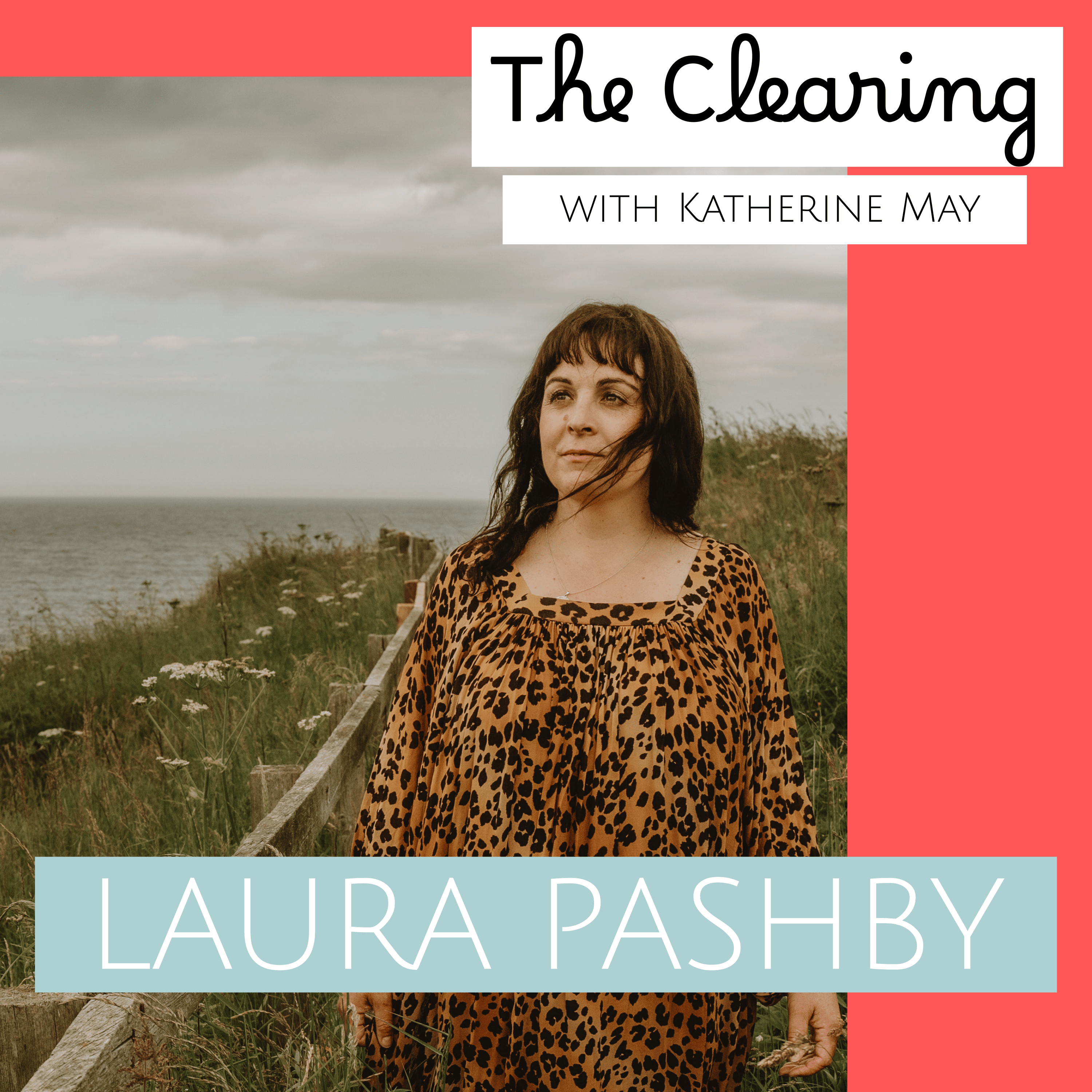
In this episode Katherine chats to Laura Pashby, author of the incredible book Chasing Fog and master of ethereal photography, about her vision for the perfect retreat when things get tough.
A magical dreamscape unfurls of a fog-bound lighthouse on an island in the Arctic circle; a liminal space filled with books and a favourite painting which acts as a portal through which Laura can step whenever she needs to escape.
The perfect, escapist listen for anyone needing to give their mind and body a fleeting moment of rest and retreat.
Transcript
Please note this is an automated transcript and as a result it may contain errors
Katherine May (00:08)
Hello, Katherine May here. And as you may be able to hear, I’m in my garden sweeping up leaves. ⁓ I was supposed to be raking up leaves, but I can’t find my rake and I strongly suspect that it’s buried underneath all these leaves. It’s that time of year. Actually, it’s past that time of year.
I have a big ash tree that overhangs my garden and every year, I love it incidentally, no complaints, but every year it drops all its leaves in sort of one fell swoop and I make it my mission to get them all onto my flower beds as a mulch ready to
sink into the soil over the winter and fertilise everything in the coming year.
It’s a fun job, think. Hard work, but very satisfying. A lot easier when you can actually find your rake though, I would say. ⁓ But I am a very patchy gardener. And although I do enjoy it.
I’m a big kind of procrastinator and a lot of the time I just don’t have time. Winter is such a busy season for me because of the Wintering promotional cycle that rises up every November and demands my attention for a few months. Life goes on.
but things get left. Anyway, I’m here now. The leaves have already turned brown. Of course, some of the work is done for me, I think. And I’m just corralling them all onto the soil. I had a really great conversation, which I’m going to share with you in a minute, a couple of days ago.
with Laura Pashby, who many of you will know either from her books or from Instagram. She has a really well-beloved account on Instagram called Circle of Pines, where she specialises in taking self-portraits. We talk about this a little bit in the interview.
And there’s something very unusual, I think, about women in midlife enthusiastically taking portraits of themselves. And it’s kind of a joy to see. But Laura’s real subject is fog. And that is the subject of her latest book too, which is out recently in paperback. It’s called Chasing Fog. She adores these kind of mysterious, gothic,
foggy landscapes and she often photographs herself. ⁓ I might take a break. Floating through them in white dresses like a lost Victorian ghost. There’s something very Emily Bronte about the whole thing and it’s delightful. But Chasing Fog is just a wonderful biography of
a weather phenomenon that we’re losing. We’ll talk about that more in the interview.
exploration
of hauntedness itself.
The way that people, places, ideas, moods dwell in us. And are kind of reignited in certain landscapes, certain slants of the light, certain seasons.
I’m always so interested in the connection between human beings and the landscapes they inhabit. I think it is something we are sometimes losing. We’re losing our lifelong connections to landscape. And we’re losing a lot of the meanings that once made our landscapes into places
that we could almost read like a storybook. Well, then simply move through. Anyway, I think you’ll really enjoy meeting Laura if you’ve never met her before. And if you haven’t, I think you’re going to really like her choice of a retreat. It’s definitely a location close to my own heart.
I’m very jealous that she thought of it and not me, honestly. And of course, as you might have guessed, there’s definitely plenty of fog.
see you out the other side.
Katherine May (05:54)
welcome to The Clearing. How are you today?
Laura (05:57)
Good, thank you. It’s a really stormy, ⁓ rainy day where I am. I don’t know if it is where you are.
Katherine May (06:03)
Yeah,
we’ve not got it yet, but it is it’s a really grey day. Like it’s it’s one of those days where you just can’t get light into the house. It seems so dingy. I know we’ve been we’ve been sort of trying to put lamps on and it’s yeah, it makes everything feel a bit grubby, doesn’t it? When it’s so dark.
Laura (06:21)
It does, it does. Yeah, it’s very grey out there, but it’s quite nice to be cosy inside, so you know, I don’t mind.
Katherine May (06:26)
Yeah.
Yeah, there’s, you know, as
we know, I don’t mind winter too much and I don’t think you mind it very much either.
Laura (06:35)
Give me bit of murky weather it’s fine.
Katherine May (06:38)
Yeah, we’re
quite, this is, mean, this is our season starting. It’s just taking us a while to get into it. So I’m gonna welcome you into my clearing in the woods where you’re gonna imagine your dream retreat. So I’m hoping that’s gonna be a lovely relaxing hour for you. But I just wanted to start by asking like, what brings you to the clearing today to retreat? how’s life been and where do we find you?
Laura (06:40)
It is. It is.
Well,
that’s a good question. I actually did think that today was a very good day to be invited to retreat, partly because it’s blowing an absolute gale outside. And when I tried to walk to the high street, I just got knocked over. And partly because I was dealing with lot of teenage angst this morning. ⁓ And also ⁓ I’m sort of in the process of writing another book.
Katherine May (07:10)
You
Hmmmm
Laura (07:35)
⁓ and I’m at the point where my head is quite busy, there’s a lot going on. So actually the thought of, well the thought of being in your clearing is wonderful but the thought of retreating is exactly what I need right now. ⁓
Katherine May (07:41)
Thank
I was about to say, like, are you the sort of person that goes on retreat to write books? But I know that you went on probably my dream retreat this year already, didn’t you? You’ve been to an amazing retreat venue this year.
Laura (08:02)
I did, I did. So I did a writing residency at the end of August on an island in the Arctic Circle, which was, yeah, incredible.
Katherine May (08:16)
I mean you
take beautiful photos which I think we’ll probably talk about at some point today but your photos were so, I mean just filled me with yearning to be there, they were so lovely.
Laura (08:26)
⁓
it was, yeah, it was just a dream spot really. And the place that I retreated to that I was resident at is a sort of a center for the arts, but it’s a very old homestead on the island of Arnoya. So the buildings are historic, but they’re also filled with just incredible pieces of ⁓ sort of history and…
⁓ There’s a house, but there’s also a boat shed and a workshop and each of those was just absolutely full with gorgeous items. yeah, and so it’s, it was it was a writer’s dream because it was somewhere so unique and quiet, but it was also a photographer’s dream because they were everywhere I looked. There were just these amazing vignettes.
Katherine May (09:02)
Objey!
Laura (09:23)
know, beautiful things.
Katherine May (09:25)
Did you, like, did you get much done? Like, my experience of going on writing retreats is that I tend to not write. don’t know, I just…
Laura (09:35)
Yeah, I mean that is essentially what happened is that in my head, I was going to write pretty much the whole book while I was there. was like, this is, yeah, I’ve sorted it now. I’ll just go to the Arctic. I’ll write the book and then I’ll come home and it’s done. ⁓ And what actually happened was that, I mean, the journey in itself is, it’s quite a,
Katherine May (09:42)
The whole thing, yeah, was just, you were just gonna be super productive, yeah.
In real life.
Laura (10:02)
long way obviously and it was two flights and a ferry. So just getting there and it was the first time I’ve travelled such a long way on my own. I have travelled on my own but since I had my kids I haven’t done such a big kind of trip and so actually when I first got there I was just kind of ⁓ getting used to being there really and kind of processing the journey ⁓ and so probably for about the first three days
Katherine May (10:08)
wow.
Mmm.
Right, yeah. Yeah. Yeah.
Mm-mm.
Laura (10:32)
all I did was take lots of pictures of everything and I did write in my notebook. I was writing a lot of notes. ⁓ But yeah, I was like walking on the beach and ⁓ I got overexcited and cycled to the next town and then realised I needed to cycle back. ⁓ And then eventually sort of halfway through I did get to the point where I sort of things sort of came together in my head a bit and I did do some writing. But
Katherine May (10:48)
You
Laura (11:01)
not as much as I planned at all. ⁓ But I think sometimes, you know, I sort of think the writing’s the thing I need to go and do. And actually, I don’t think it was. I think it was the thinking and the just sort of being, you know.
Katherine May (11:18)
Yeah, I I was about say the writing’s kind of mechanical in a way when you can get to do it, but the thinking is what’s really hard to achieve. And if you write without thinking, you get complete nonsense. Most of my experience you do, Yeah, it’s lovely.
Okay, well,
today
get to come back on retreat and it’s interesting that the journey was the thing. I wonder if there’ll be any journeys involved in this, but…
Welcome to my clearing in the forest. Tell me what I’m going to find there for your retreat. Like, where are we in the world? What kind of landscape is it? Do you dream of this being in? Like, what does this look like?
Laura (11:48)
Thank you.
So can it be anywhere or is it a sort of specific form of…
Katherine May (12:06)
It can be anywhere and it
definitely doesn’t have to be real.
Laura (12:09)
Okay, okay.
I mean, actually, I found this really difficult, not because I couldn’t think of somewhere, but because I could think of quite a lot of different places. And I was like, I’ve got to narrow this down. Because first of all, I thought that I wanted to go to Venice, because I love Venice, and it’s one of my favourite places. And I went there when I was researching my previous book, Chasing Fog. And I had this moment in Venice where
Katherine May (12:17)
Yeah.
Mmm.
Your fog, chasing fog. Yeah, the lovely chasing fog.
Laura (12:38)
like a real sliding doors moment and I knew that I had to go home the next day and I just thought, but what if I didn’t? What if I just stayed here and found a little room and sat in the room and wrote? ⁓ And so that was my first thought. Maybe this is my chance to go to Venice, but actually I think where I want to be, and I think this might be somewhere you will hopefully like. So when I was on this retreat,
Katherine May (12:57)
you
I liked Venice!
Laura (13:07)
This
is also good. When I was on the retreat in Norway, in the Arctic Circle island, we were talking, Hannah, who hosted the residency and there were two other creatives there, and we were talking about there is currently, in the Arctic Circle, there is a lighthouse, and in this lighthouse, an artist and a filmmaker, amazing, an artist and a filmmaker are living for a year.
Katherine May (13:29)
you
Laura (13:36)
in a lighthouse in the Arctic Circle. And then I think, ⁓ I think that Instagram is called the light alone. And there’s not an awful lot on it because what they’ve done is you will be looking it up. So they’ve got the Instagram and I think they have a Patreon where they maybe share more. But ⁓ so we were talking about this and Hannah was trying to figure out, you know, where they could be. And actually, I just think
Katherine May (13:46)
I will be looking that up just as soon as we finish recording. Notes are being taken.
Laura (14:06)
That would be the dream, not just to be in the Arctic Circle on an island, which is incredible, but to be actually living in a lighthouse. And I know that you love lighthouses too.
Katherine May (14:09)
you
Mm. I do. Talk
Lighthouse to me, because yeah, you did. You wrote about Lighthouses in Chasing Fog. ⁓ I mean, obviously they are, we should announce to anyone who hasn’t read your book, you are a fog aficionado, and you will travel for fog. ⁓ And of course, Lighthouses are generally in areas where fog collects. That’s part of what they do.
Laura (14:23)
I did.
I will try this one. This is true.
Katherine May (14:45)
What is the appeal of the lighthouse? I feel it deeply, but it’s a curious one, isn’t it? It’s not for everyone, maybe.
Laura (14:50)
It is.
I think for me, it’s something about being on the edge. It’s quite a liminal space. know, it is on the land, obviously physically, but it’s very close to the sea and it’s kind of quite an in-between space. ⁓ And it’s a very out of the way place. You know, don’t…
really sort of accidentally tend to happen on a lighthouse, you you tend to know you’re going to a lighthouse. You’ve got there intentionally. think, yeah, I think, and I think for so, so, you know, if you’re looking for solitude, which obviously is quite important for a retreat, I think it’s a really good place for that. ⁓ And I think, you know, obviously the lighthouse light itself is really fascinating. ⁓
Katherine May (15:21)
You’ve got there intentionally. You weren’t just passing. ⁓
Laura (15:44)
but also the light within the lighthouse. know, the way that the lighthouse, the windows face outwards to all the different ⁓ angles of the coast. And so the way that you can, I suppose you can watch the sea from there in a totally different way to, from anywhere else. And you know, I mean, I do feel that if I went to a lighthouse, there would be a good chance of fog. And I do.
Katherine May (15:53)
you
Laura (16:13)
I love being in the fog. I do find that a very kind of calming, meditative… and maybe a bit of foghorn… Exactly. that would be the dream. That would be the dream. I like, mean, yeah, the lighthouse was one of those beautiful, big, black, curved ones
Katherine May (16:16)
yeah and maybe a bit of foghorn
A proper one, yeah. I mean, the lighthouse
I stayed in didn’t have a proper foghorn anymore. I was a bit surprised when I heard it the middle of I was like, ⁓ is this, is this your foghorn?
Laura (16:31)
Yeah.
It’s slightly less romantic, isn’t it, when it’s kind of… beep, beep… I’m sure the ships were very glad of it, but… ⁓
Katherine May (16:40)
It was like, beep, beep. Yes, that’s right, it’s
functional. I mean, in Whitstable we have a foghorn that doesn’t, I mean, you hear it so, so rarely because of the kind of coast we are, but ⁓ when it goes off, it’s quite haunting, I think.
Laura (16:54)
Mmm.
It’s really
haunting, isn’t it? The first time I heard it when I was researching my book is I went to, there’s a little churchyard on the edge of the River Severn on a little hill. And I’d gone there just because it was foggy and I’d been researching this churchyard and I wanted to go to it in the fog. And it didn’t even cross my mind that I would hear a foghorn, but there is a foghorn at the mouth of the River Severn that sounds. And it’s such a sort of mournful sound, doesn’t it? It’s very eerie. It’s very kind of…
Katherine May (17:09)
Mmm.
Yes.
Yeah, it is.
Laura (17:27)
Yeah, melancholic really.
Katherine May (17:27)
Particularly because fog changes the way sound seems to operate anyway. And so it carries in a really different way than I think it would do if there wasn’t. it’s a very, very lovely thing. OK, so you have a lighthouse with its own foghorn and I can guarantee you some fog. That’s fine. That’s not a problem. That seems to be within my powers. What kind of coast are you on, though? Do you prefer some, you know, different kinds of coasts?
Laura (17:31)
Mmm.
It is.
Yes. Perfect, perfect, this is good.
I think I would stick with the Arctic Circle Islands because when I was there, the light, it was the end of the summer, so obviously what would be interesting in an Arctic Circle Lighthouse is that it would be very, very completely dark at certain points of the year and then at other points of the year fully light. I would quite like to experience a full year of that. I think that would be really interesting.
Katherine May (18:14)
Yeah, yeah
Mm.
so you’re retreating for a whole year. Brilliant. Ideal. I’d love that. ⁓ And how will you cope with the solitude of that? a year is a long time. You live in a very busy house with three children, like I imagine, or three big, big guys actually now. I imagine that’s quite noisy and chaotic. Like, how’s that going to land for you?
Laura (18:24)
Yes, if I could please. Not just for today.
It is a long time.
Yeah. ⁓
Yeah, I mean, maybe that’s why I’m dreaming of retreating for an entire year, just because it’s the absolute antithesis of what my actual life is like. It’s complete chaos. mean, in an ideal world, I’d probably take them with me for at least some of the time, because I think they would love the lighthouse, my kids, and you know, but…
Katherine May (18:44)
You need a year to recover. That’ll be fine.
I, full permission here, no one’s judging you.
Laura (19:10)
In terms of the coast, whilst I was on this island, we saw the whale that went past daily, there were dolphins and Arctic terns. And I just think, yeah, it would be really interesting, I think, for me to see the sort of sea life. Yeah, I think so.
Katherine May (19:29)
to watch the wildlife change across the year and to kind of get to know its patterns and yeah, that would be amazing.
Okay, this sounds gorgeous. Tell me about the interior then, take me inside the lighthouse. Are we, you know, is this a Spartan kind of Arctic station affair or is there a little more fluff inside your Arctic lighthouse than that?
Laura (19:38)
Thank
Wow.
I think you’re-
Yeah,
I think if I was designing my own lighthouse, I think I’d stick with the white walls and the quite simple, but they’d obviously have to be a lot of books. That would be really important.
Katherine May (20:03)
Yes. Yeah.
Well, it’s just a giant circular library, right? I mean, like a library tube you could have. ⁓
Laura (20:11)
It’s a library
that goes up to the sky. And maybe, I always quite fancy, you know, the ladders in Toppings bookshops, have those move along ladders. I wonder whether in a lighthouse you could have nice tall ladders. Yeah, I’m feeling like.
Katherine May (20:14)
Yes.
⁓ yeah, library ladders, yeah.
Yeah, okay. And other,
you know, is it, the personal things luxurious? Do you have a, you know, what sort of bed are you having? Are you, are there any, I don’t know. Do you have a lighthouse jacuzzi? Maybe a sauna is more appropriate.
Laura (20:41)
I mean,
yeah, actually the place where I stayed, they had a sauna on the grounds and it was a little, so there is a little lighthouse, not one you can actually go inside, but there is a lighthouse in the grounds of ⁓ the place where I stayed in Norway. And they had a sauna, was a sort of wooden hut that had been constructed to hold the
paraphernalia for the lighthouse. I’m not quite sure what it was, but the things they needed to look after the lighthouse were in this hut and then afterwards they converted it to a sauna. So yes, one of those please. One of those outside.
Katherine May (21:19)
Okay, you’ve a nice
little warm space to kind of, yeah, anything else.
Laura (21:23)
And then,
I mean, I think if it’s going to, if you know it’s going to be really wild outside, you definitely need a very cosy bed, feather duvet, lots of cushions, that kind of ⁓ snugness, blankets. Yeah.
Katherine May (21:32)
Yeah.
So lighthouse cosy. This is an aesthetic that we’re not used to yet but I think it could really take on.
Okay,
so you are in your gorgeous, cosy inside, foggy outside lighthouse. There are whales circling, hopefully not in a menacing way as I’ve made it sound. Not orcas. They’re not very keen on humans at the moment, I gather, ⁓
what you’re going to eat when you’re there, first of all. Are you cooking for yourself in the lighthouse or does food magically appear if you’re retreating?
Laura (22:12)
I think, yeah, I think ideally I would not be cooking. And food would you know, I’d come down in the morning and there’d be a lovely breakfast spread with a big, you know, thermos jug of coffee that just kept topping up all through the day. Eternal coffee in my lighthouse, please. So the Arctic Elves are going to deliver yes, I think that would be perfect.
Katherine May (22:25)
Eternal coffee all day. Lovely. Excellent. So the Arctic Elves are going to deliver.
And what kind
of, I mean, what food feels really nourishing to you in those moments? Are you a comfort food eater? Are you a, you know, I don’t know, super healthy, like, what would feel really lovely for a whole year, apparently?
Laura (22:56)
I think, I mean I do, yeah, I try to be healthy but I think nourishing and cosy is definitely, yeah, a good description of the kind of food I like. Yeah, and maybe, you know, not every day but some nice Norwegian waffles for breakfast, that kind of thing.
Katherine May (23:04)
could rib sticking.
Okay, yeah. Do you go in for
the Norwegian brown cheese or have you ever had the Norwegian brown cheese? Yeah.
Laura (23:17)
I did try it.
Yeah, I did try it it was quite nice actually. I’m not sure if I’d want it every day but I could get into that. ⁓
Katherine May (23:22)
Yeah. I think it’s a
bit of a like sweet cheese is a bit of an acquired taste, isn’t it? Caramelized cheese.
Laura (23:29)
It is, it is. And then maybe some kind
of home comfort food like some macaroni cheese or jacket potatoes, those kind of very… Definitely, definitely Marmite.
Katherine May (23:36)
Yeah. Would you bring your own jar of Marmite is what I’m asking. I would.
Marmite,
like if it’s a whole year, you’re gonna need the vitamin B anyway, so that’s fine. I actually think that all of the retreats imagined in this podcast come with a jar of Marmite as standard even for people that don’t like Marmite. I think that’s the right thing to do for like world peace or whatever it is, you know. Yeah.
Laura (23:49)
Exactly, exactly, it’d be good for me.
yeah. You can’t retreat
You can’t retreat without Marmite. It would just, it would be wrong.
Katherine May (24:06)
This is going to
be controversial for the Americans, but we can convert them.
I’ve got a theory
Laura (24:11)
well you just have to keep going.
Katherine May (24:13)
that coffee drinkers don’t like Marmite on toast though, but that doesn’t work for you, obviously. No, give me marmite on toast with coffee thank you very much with coffee. Okay. All right. That’s the end. I think it goes with tea you see and not coffee, two bitter things. Yeah. Yeah. I, This was revealed to me in a dream once that I dreamt I was on the Oprah Winfrey show.
Laura (24:17)
No, give me Mama on taste with coffee, thank you very much. ⁓
Katherine May (24:33)
And what I was doing was explaining to her that if Americans drank more tea, they would like my marmite on toast. And I woke up and I was like, my God, that’s right.
Laura (24:38)
You
I mean, I think, yeah, I do agree. If you were giving me a choice, if I’ve got Marmite on toast and you say coffee or tea with it, I think your right tea would go better with it. That’s true.
Katherine May (24:51)
I’m a Marmite sommelier. Okay,
so, so we invited you to bring a cherished object with you to your retreat. Something that would comfort you, maybe remind you of home or maybe that just would inspire you. What are you bringing with you?
Laura (24:59)
Yes.
Okay,
so it’s probably not going to massively surprise you, but I’m going to bring a camera. And the camera that I’m bringing, it’s a little SLR, it’s an Olympus Trip, it’s about this big, should have brought it with me. And it’s, my dad gave it to me for my 15th birthday. So when I turned 15, he gave me this little Olympus Trip camera, and he turned our downstairs loo into a dark room.
Katherine May (25:14)
Yes. ⁓
Laura (25:37)
And so that was the moment. Yeah, amazing. So cool. So he did photography at college. So he had a he had an enlarger. So he set it all up. And it was definitely the best present I’ve ever received. You just can’t top that. I’ve got the camera, not the enlarger. I don’t know what happened to the enlarger. Yeah, so that’s how that’s when I learned how to develop photographs.
Katherine May (25:37)
Wow, great dad.
Do you still have it? Do you s- Right.
Laura (26:04)
And so it’s, I mean, it’s a really treasured object for me. And also it’s kind of the start of where I started taking photographs. And so I would take that and I would also take loads of rolls of film. Cause it would be, I would really like just to kind of shoot film without having to think, ⁓ you know, I’ve got 22 left and what am I going to do? I’d just like to able to take them. But also there’s something quite nice about not developing them straight away.
Katherine May (26:07)
Mm.
Laura (26:31)
And I think, you know, because I almost always shoot digital now, actually when I do shoot on film, there’s that little gap in between taking the photograph and seeing the photograph that I love that kind of ⁓ anticipation and not quite knowing what you’re going to see. ⁓ And so when I came, the surprise, yeah. And when I came back from my retreat to the lighthouse, I just have a big sack of
Katherine May (26:31)
Bye.
Mmm.
little bit of a surprise element. Yeah.
Laura (27:00)
rolls of film to get developed. I mean, could, couldn’t I? could add a dark room to my lighthouse. That’s true. Maybe I’ll do that. Put that in. That would be a good, yeah, a good addition. Okay, maybe we’ll do that. Yes.
Katherine May (27:02)
So you’re not going to develop in the lighthouse, you’re not going to set up a little… You could. You could have a dark room, You could do that. We could allow that for sure. ⁓
Right in the top, I think, before the light,
but a little bit before the light, you could have like a little…
Laura (27:23)
Oh,
with a nice clothesline to pin them all up on. I love that. prints can dry. He did.
Katherine May (27:27)
So your dad gave you this camera when you were 15. Did you
Did you immediately take to photography or did you circle it for a while? How did you develop as a photographer? Because you take such incredible photos now.
Laura (27:40)
Oh, thank you. I mean, when I was 15, I think I remember at that point really feeling like I didn’t know what to take photographs of. You know, I think at that age, I kind of thought, well, if it’s not something really strange or interesting or different, what there’s nothing here to take a picture of. And so it took me
Katherine May (27:56)
Yeah.
Laura (28:10)
⁓ a long time I think even though you know I kept taking photographs and I did it in sixth form and then I did it still when I was at uni I used the darkroom at uni ⁓ but I don’t think it was until after my children were born actually ⁓ that I started to look at photography in a slightly different way and maybe look at it with a lens of kind of story and
finding a story in really small and simple things. And I think before that point, I kind of thought of a photograph as making a picture. And actually now I think of a photograph as telling a story, but just doing it in a visual way. And so, you know, now my approach to photography is very much that I want a photograph to make me feel something. And if…
Katherine May (28:53)
Yeah.
Mmm.
Laura (29:03)
If there’s not a sort of feeling there, I just don’t think there’s a picture there. And I think a lot of photographs, sometimes it’s to do with just with how the light looks or the shape of something, but there’s always got to be something there that just makes you feel something. And so I think at that point I was learning the technical stuff. I was learning about aperture and exposure and all of that kind of stuff. But I think it took me a long time to sort of…
Katherine May (29:19)
Yeah.
Laura (29:32)
get a sense of the emotional elements of photography and kind of, guess, why you take photos and what they mean.
Katherine May (29:40)
There’s a maturity almost that most of us need to attain to understand that. Your first book, Little Stories of Your Life, is about this, isn’t it? It’s about how to use your camera to tell a story or to kind of capture people’s attention in a way that isn’t flat, that there’s kind of depth of understanding to it.
Laura (29:42)
⁓
Mm.
And also, suppose, I mean, that book is about and also what I sort of learnt eventually is that, yeah, that small things are just as interesting to photograph as, you know, big things. And actually, I think that’s what I’m more interested in now is the kind of little everyday details and the way the light falls and… ⁓
Katherine May (30:13)
Yeah.
Laura (30:26)
crumbling paintwork, anything like that. This sort of ⁓ evidence of living, that kind of thing, is what appeals to me now, I think.
Katherine May (30:29)
Yeah.
Yeah.
And you could, and I mean, I don’t know if everyone here will know your, they might know your Instagram account without knowing that, without connecting you to it now, because actually, and we’ll of course link in the show notes, but you are a professional Victorian ghost on Instagram. we glimpse you all the time, drifting through like sort of haunting landscapes. How did that begin? Because it’s such an interesting.
Laura (30:43)
Yeah, that’s true. ⁓
It’s true. It’s true.
Katherine May (31:02)
motif that you’ve kind of created for yourself.
Laura (31:04)
Yeah.
⁓ So, I started, there came a point where, because where I live, I live in a town sort of under a hill and up on the hill where there are some woods and in the woods it is really frequently quite foggy just I think because of the way that the cloud hits the top of the hillside. So I used to take my camera out for sort of fairly regular walks in the woods. ⁓
And then I started taking photographs when it was foggy ⁓ and it became very addictive. There’s something about the sort of way in which fog visually changes the landscape, which I just, I really love. I like the mystery of it. I like the way it softens everything. I like the way it completely transforms very familiar paths into like just a total other world.
And then I think, I’m not sure why I decided that I wanted to include myself in the photograph, but I decided that I was gonna sort of extend these foggy photographs into self-portraiture. And Really by trial and error, I worked out that the best way to make myself visible in the fog when I was taking a photograph of myself was to wear white, So counter-intuitive that tried You’d think it would sink
Katherine May (32:09)
Yeah.
Mm.
So counterintuitive that, isn’t it? You’d think that would make you sink
into it. Yeah.
Laura (32:29)
you’d think you’d fade
away, but you don’t. know, if you wear dark clothes, it kind of sucks the colour and you can’t really see yourself. So I did eventually discover that if I wear a white dress, you can sort of see me against the fog. ⁓ yes, now quite frequently, if there is a foggy day, one or other local dog walker will sort of happen across me with my white dress.
Katherine May (32:55)
while you’re drifting through in your white
dress, yeah.
Laura (32:58)
Yeah,
with my tripod set up. ⁓ Yeah, so and I suppose that’s become a kind of sort of motif in my photography, but like a kind of ongoing story really. ⁓ And what’s quite interesting is it’s always the same white dress, so you know kind of year on year, fog on fog, the sort of landscape changes.
Katherine May (33:11)
Yeah, yeah.
Do you only have one
copy of this white dress or do you have like multiples of them hanging up in the wardrobe just in case?
Laura (33:24)
No,
just one. One Marks and Spencer’s white dress, which when I bought it was not intended for photography. It has got a slightly grimy hem now from walking through the woods. Yeah, and that’s so it’s, yeah, that’s what I wear. And yeah, it kind of, it’s like a recurring story, I suppose. It’s almost like
Katherine May (33:29)
Hehehehe. Hehehehe.
Ha ha ha
Yeah, that’s
right.
Laura (33:52)
You could link
all the photographs and I’m just sort of walking through the words and walking, walking, walking.
Katherine May (33:56)
Yeah, you have to animate them all together. But it’s
actually really delightful to see because I think so many women, particularly anyone over like 25, hate being photographed, won’t be photographed at all, feel hideously, you know, and if you do take a photograph, we’re sort of grimacing because we’re so embarrassed to be visible. It’s actually quite subversive to…
Laura (34:10)
Mmm.
Katherine May (34:21)
Therefore, photograph yourself and to
Laura (34:21)
Yeah. Mmm.
Katherine May (34:24)
romanticise yourself in that way as well. It is actually quite uncommon.
Laura (34:27)
Yeah.
Yeah, and I guess, I mean, the thing about photographing yourself is that you’re in control of how you want the image to look and of what you want the story to be. And I definitely do think of those sort of, those self-portraits as a sort of story version of myself. know, I mean, it is me walking through the woods, but it’s also, as you say, a slightly romanticised, yeah, like a kind of storybook self.
Katherine May (34:37)
Yeah.
Mm.
Laura (35:00)
Yeah, I actually, I don’t like having my photograph taken by other people, full disclosure, but it is, there’s something very, it’s quite empowering and positive about, and also I just love having those, having that record, having those photographs. ⁓
Katherine May (35:07)
Hey.
Mm-mm.
Laura (35:24)
And actually, I’ve also got a few sets of photographs from when I’ve taken my camera up, I’ve set up my tripod, I’ve taken the self-portraits that I want to take, and then sometimes if I’ve got my kids with me or my husbands up there, then I’ll just take some photos with the tripod with them in the fog, and those are some of my favourite photographs of all. I just love them because there’s something about the kind of atmosphere up there and the ⁓ mystery of it that just even very sort of…
normal family photographs just us standing in a group suddenly looks completely different when you’re up in the fog. yeah and I do think using a tripod and and sort of controlling the image yourself just gives you a really nice kind of sense of agency and yeah vision.
Katherine May (36:00)
Yeah, yeah.
Definitely, definitely.
I mean, I hope we’ll, I think we’ve, we’ve maybe all got a bit more used to seeing ourselves. I I was just thinking as you were speaking, like I’m watching myself on Zoom right now, not Zoom, Riverside, but I’m watching my own video right now, which at the beginning of the pandemic felt so affronting to me, like, oh my God, I’ve got to see my weird face over and over again, have I apparently, well, I’m not going to survive that. But now I’ve kind of got to know my own face a bit better in a strange kind of a way. And I feel…
Laura (36:29)
Yeah.
Katherine May (36:40)
less protective over its you know, over kind of trying to, what am I trying to say? I feel less protective over trying to only appear nice on camera. I feel a little bit more like I can just look like myself and it’s sort of okay because I’ve realised I love seeing other people’s real faces.
Laura (37:02)
That’s it. And I mean, it is hard, isn’t it, when you are online a lot and, you know, you do need to sort of share photographs of yourself because it’s not something really that comes very naturally, is it? You know, it’s not something I would seek out. It’s just something that is kind of necessary. But, you know, I just, I sort of think, well,
Katherine May (37:08)
Mmm.
though.
you
Laura (37:30)
I’ve only got one, you know, this is me. I can’t change it.
Katherine May (37:32)
Yeah, yeah, that’s right.
No, but it’s also, it’s lovely to see. mean, there’s nothing, there’s just nothing horrible about it. It’s just that we are so self-conscious, I think, so often, and it’s kind of… So, are you taking, what are you doing in this lighthouse? Like, are you gonna be taking foggy self-portraits? Are you doing other things too?
Laura (37:45)
you
I mean,
I think that would definitely be, I would have to do that, definitely. I’d have to pack my white dress. Maybe I could get a new white dress with a clean hemline. That would be exciting, wouldn’t Or give it a wash Yeah, that too, that too. Scrub it. And also, I think ⁓ I would quite like to do some knitting while I’m in the lighthouse because… ⁓
Katherine May (38:02)
Mm, mm. ⁓ you know, give it a wash. don’t know. Scrabbit.
⁓ okay.
Laura (38:21)
That was actually how I first started out writing online was with a knitting blog. I did not know this about you tell me more Yeah, started with a knitting blog. ⁓ I think it was probably about 2010, something like that. And my best friend was living in Washington, DC at the time. And so we started this blog. I think there was another knitting blog.
Katherine May (38:26)
I did not know this about you. This is interesting. Tell me more.
the Odin days.
Laura (38:50)
that was like letters between people and we were like, hey, we could do that because we both knit and we both crochet or we did at the time. So we started this blog where we were writing each other letters ⁓ on sort of alternate weeks, talking about what we’d been making, what we’ve been sewing, what we’ve been knitting. And actually, yeah, that’s probably when I started getting into photography ⁓ because I was photographing what I was making and I sort of needed to learn.
Katherine May (39:12)
Right.
Laura (39:16)
having not really picked up a camera for lots of years in between when my kids were tiny, apart from to take pictures of them, obviously. ⁓ Many pictures of the children, not many pictures of anything else. So yeah, I did pick up the camera again to take pictures of the knitting. I mean, yeah, knitting kind of has gone by the wayside for me since then, really. But the writing obviously didn’t. Yeah, but that was, mean…
Katherine May (39:16)
Mm-mm.
Yes, many, many pictures of the children always.
Yes, yeah, that’s interesting.
Laura (39:45)
That was the old
Katherine May (39:45)
Yeah.
Laura (39:46)
days of blogging
Katherine May (39:48)
I was a blogger in those days too. It was such
a simple world comparatively. What kind of knitter are you? What do you like to knit? And are you a well… Because I’m very angry knitter, I imagine everyone else is much calmer than me.
Laura (39:54)
I know.
Yeah, I mean, I do find it quite relaxing. I am quite a slow knitter. So one of my kids said to me the other day, could you knit me a jumper? And I was like, no, but I’ve in all of your life, I’ve knitted you one jumper and you were two. And I only just got it finished by the time you were two before you turned three. So it would actually fit you. So I was so slow. So I’m more of, like, you know, I knit hats, I’ll knit hand warmers, nice fast kind of.
Katherine May (40:13)
⁓ No, buy one.
you
Laura (40:33)
fairly chunky yarn, yeah. I can do cables and bit of lace, but I’m not very technical. But I think in the lighthouse, maybe I could learn, you know, do a bit of fairisle Yeah, that’s what I’m thinking. A giant fairisle sweater or something Yes, exactly. Proper Norwegian, you know, complicated.
Katherine May (40:39)
No.
Okay. So yeah, so if you’ve got a project that you’re gonna pursue, a giant fair isle sweater or something.
But
it’s an interesting, well yes, of course Norwegian knitting tradition is top down, isn’t it? Top down from the neck, I think. So that’s a bit more attainable. It’s interesting, this idea of, you you go on a retreat and you make something. There’s something in there, isn’t there? is it keeping your hands occupied or is it wanting to bring something back that’s tangible from this time away?
Laura (41:00)
Mm.
Yeah.
Mm.
I mean there’s something about the physicality of knitting isn’t there, the texture and the, erm, and I always find it really hard to do.
Katherine May (41:31)
Mm.
Did you learn when you
were young? Because that often makes a…
Laura (41:38)
I didn’t actually, I learned when my first son was born, husband’s mum taught me, she’s an amazing knitter and she taught me to knit. And yeah, I just got really into it. I think I probably wanted to make a baby hat, I’m guessing. And so sort of took it from there or maybe a baby blanket, something like that. So I did knit all of my boys a blanket while I was sort of pregnant with them. ⁓ I quite liked that kind of intentional, I’m creating something for you.
Katherine May (41:47)
Mm.
Yeah.
wow.
Yeah.
Laura (42:08)
and then I’m giving it to you. But I almost always, I think with knitting, I always enjoy the process more than the, there are a few things, but mostly I enjoy the process more than the end product, you know. There’s something about the action of it, I think, that is very calming.
Katherine May (42:22)
Yeah.
Yeah, I mean, it’s interesting thinking about knitting in pregnancy because you’re almost trying to manage your waiting by knitting, aren’t you? It’s like this thing is coming that is taking up all of my attention and how do I mark off the time? How do I create something that shows the importance back to myself, almost? How do I provision this time that’s yet to come that seems far too far away always?
Laura (42:35)
Mmm.
Yeah. Yeah.
Mmm.
And it’s almost like it’s a kind of, or I found it, making a blanket, it’s kind of like a focus for your love that is slightly unformed because you don’t know exactly who it is that you love yet, but you know that you’ve got these kind of feelings and actually to kind of create something in advance, I found that quite centering, I think.
Katherine May (43:05)
Yeah.
Yeah,
and it’s almost something that you can say, I was thinking of you before you arrived. was there. OK, so we’re knitting, we’re photographing, we’re saying hi to the orcas every day. We can name them all separately by now. We also suggest that you bring a cultural artefact that you can experience while you’re there, like a ⁓ record or a film or a…
Laura (43:22)
Yes, exactly.
Every morning. ⁓
Katherine May (43:45)
piece of art or a giant novel or maybe a very slim volume, who am I to comment? What are you bringing with you to entertain you?
Laura (43:54)
So I think, I was thinking about this and I think I would bring a painting and I think I’d bring a Hammershoi painting, you know, those beautiful, so he’s a Danish painter, 19th century Danish painter and I saw an exhibition of his in Copenhagen a few years back and he does these incredible interiors. There’s usually a window, they’re very muted rooms, sort of painted in white or grey and then often there’s a
Katherine May (43:59)
Ooh.
Mm.
Mm.
Laura (44:24)
the figure of a woman, which I think his wife was often the model for, but the figure of a woman, and actually I’m only thinking this now, but they’re not dissimilar. It’s almost like a kind of inverse of the photos I take of the fog, because when I take photos of the fog, I’m there in a white dress, usually from, know, photographed from behind, of lone figure of a woman. And in his paintings, it’s white, but then the figure is usually wearing a dark dress, dark hair, and then, you know, she’s sort of got her back to the…
Katherine May (44:39)
Right.
Yeah.
Okay.
Laura (44:55)
to the painter and she’s in the corner or by the window. ⁓ And I think, I mean, I just, find his paintings very, they’re sort of very serene and they’re very, he’s, know, the way he captures light is incredible and the way he captures a sort of sense of solitude and that kind of, they’re quite mysterious. You know, it’s hard to know sort of it.
Katherine May (45:12)
Mm.
Yeah,
sounds very enigmatic. You know, your figures are enigmatic as well that you photograph.
Laura (45:22)
Yeah, very mysterious, very enigmatic.
They’re very muted, almost slightly eerie. And the one that I would take is, I think it’s called Interior Sunlight on the Floor. And it’s basically a sort of grey-y white room. And on the left-hand side, there’s the sort of edge of a table with a white tablecloth. And then on the right-hand side of the wall, there’s a door. And then to the side of the door, there’s a window with lots of small panes.
Katherine May (45:29)
Mm-mm.
Laura (45:52)
and then there’s sunlight shining through the window and it creates, you know, when the sunlight creates the pattern of the window on the floor. ⁓ And that’s really all there is. It’s very simple and it’s very still. ⁓ But I think you can kind of get lost in that. I think you can really, it’s very reflective. And I kind of think if I’m in a lighthouse and I’m surrounded by sea and orcas and all of that, then a sort of interior themed piece of art is maybe,
Katherine May (46:09)
Mmm.
what you will… Do you have a lot of art at home? Is that something you spend time doing in your normal house, not your retreat house, kind of gazing at? Yeah.
Laura (46:22)
Yeah, maybe what I need.
⁓ Yeah, I do collect
quite a lot of art and ⁓ photographs and then in my office, which I’m not in at the moment but upstairs, ⁓ I have lots of ⁓ postcards and photographs and stuff all behind my desk, ⁓ often kind of themed on what I’m writing about. I find that quite helpful, a bit of visual inspiration as well as kind of the… yeah.
Katherine May (46:54)
It sounds very
contemplative, this. I mean, it sounds like a very kind of still calm image, but with some intrigue in it. But the idea of being alone with the same painting for a long time, mean, even a day, but actually in your in your vision of this months on end, sounds I mean, it sounds like a fascinating process to really go deep into this picture and to really become intimate with it.
Laura (47:02)
Mmm.
Mm.
Laura’s Links
Things mentioned in the episode
Laura Pashby tells stories using words and photographs. She is the author of the narrative non-fiction book Chasing Fog, which is published by Simon & Schuster and was described by Literary Review as ‘a frequently beguiling and thought-provoking book’. She shares stories with her engaged Instagram following, on her bestselling Substack, and in beautiful magazines.